Mastering the Art of Storytelling
Understanding Storytelling
The Power of a Good Story
Storytelling isn't just for campfires or bedtime. It's a fundamental way we communicate. At its core, a story is an account of connected events, real or imaginary. But it's more than a simple list of facts. A good story takes the listener on a journey, creating an experience that resonates on an emotional level.
Think about the last time someone told you a compelling story. You didn't just hear words; you felt something. You were transported to another place, saw through another's eyes, and felt their joys or struggles. This is the magic of narrative. It packages information inside an emotional wrapper, making it more memorable and impactful than raw data alone.
Stories are how we make sense of the world. They give structure to our experiences and help us share meaning with others.
Why Our Brains Love Stories
Our brains are hardwired for narrative. When we listen to a story, our brains react as if we're experiencing the events ourselves. This neural coupling allows the listener's brain to mirror the storyteller's. If you describe a delicious meal, the listener's sensory cortex lights up. If you tell a story about running, their motor cortex activates.
This process does more than just engage our minds; it builds trust. Hearing a personal story can trigger the release of oxytocin, a neurochemical associated with empathy and social bonding. This creates a powerful connection between the storyteller and the audience, fostering a sense of shared experience and understanding.
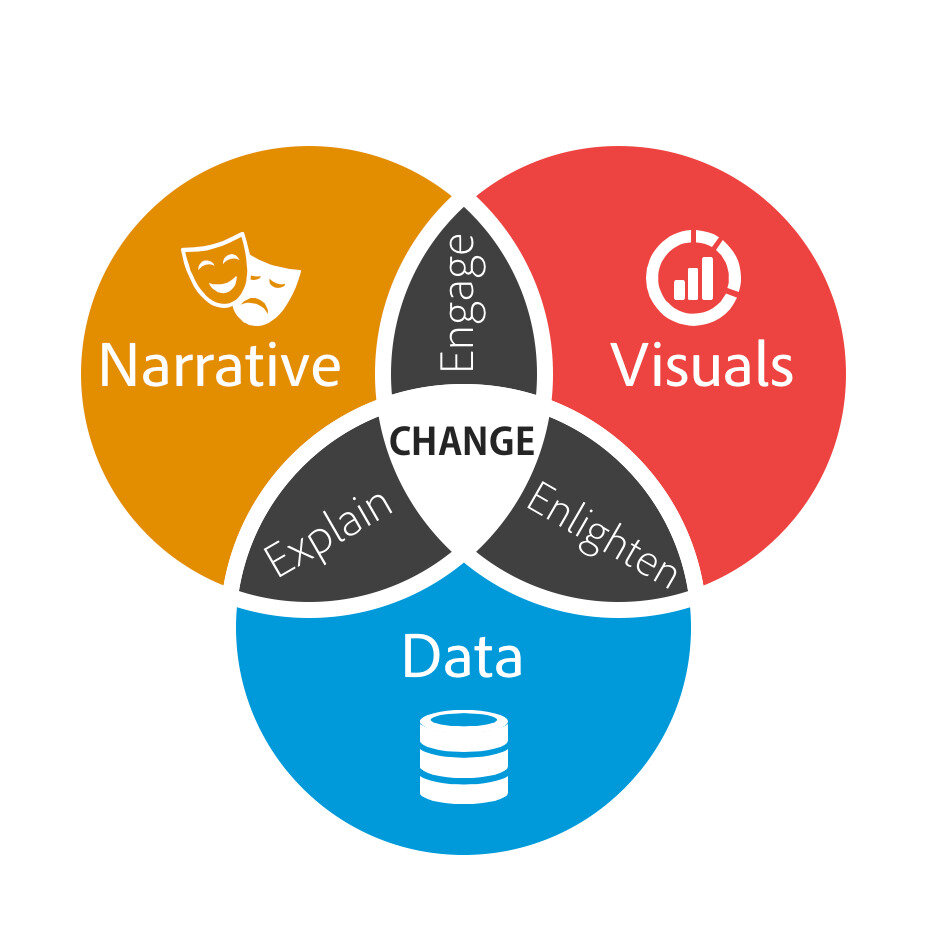
This is why a story can be more persuasive than a list of facts. It bypasses our analytical defenses and speaks directly to our emotions, making the message feel more personal and true.
The Four Core Elements
While stories can be infinitely varied, most compelling narratives are built on a few key pillars. Understanding these elements is the first step to crafting your own.
Setting is the 'where' and 'when' of your story. It grounds the audience and establishes the mood. Is it a bustling city in the future or a quiet village in the past? The setting is more than just a backdrop; it influences the characters and the events that unfold.
Characters are the 'who.' They are the heart of the story. Your audience experiences the narrative through their eyes. A character doesn't have to be perfect or even likable, but they must be relatable in some way. We need to understand their motivations and what's at stake for them.
Conflict is the engine of the story. It's the challenge, the obstacle, or the question that the character must face. Without conflict, there is no tension and no reason for the audience to stay invested. Conflict creates the drama and drives the narrative forward.
Resolution is the outcome. It's how the conflict is resolved and what has changed as a result. The resolution doesn't always have to be a happy ending, but it should provide a sense of closure and show the character's transformation or the lesson learned.
The classic storytelling arc—introduction, conflict, climax, and resolution—provides a clear framework for conveying your message.
These four elements work together to create a cohesive and satisfying narrative arc. By establishing a clear setting and relatable characters, introducing a meaningful conflict, and building to a clear resolution, you can create a story that captures attention and delivers a powerful message.
What is the primary way a compelling story makes information more memorable and impactful?
The phenomenon where a listener's brain activity mirrors the storyteller's brain is known as: