Mastering the Art of Modern Learning
Neuroplasticity and Chunking
The Brain's Two Gears
Your brain has two fundamental ways of thinking, and they work in partnership. The first is the focused mode. This is your mental heavy lifter, the state you enter when you concentrate intently on a problem, like multiplying 37 by 12 or carefully following a recipe. In this mode, your attention is a tight spotlight, illuminating a narrow patch of familiar neural pathways. It's efficient for executing tasks you already know how to do.
Then there’s the diffuse mode. Think of this as your brain's big-picture setting. It's what happens when you let your mind wander while taking a shower, going for a run, or just spacing out. Instead of a tight spotlight, your attention becomes a broad floodlight, making loose connections between distant ideas. This mode isn't great for detailed, step-by-step work, but it's essential for creativity and for finding a new way forward when you're stuck on a problem. Effective learning relies on switching between these two modes. You use the focused mode to absorb details and practice, and the diffuse mode to connect those details to the broader landscape of your knowledge.
Building Mental LEGOs
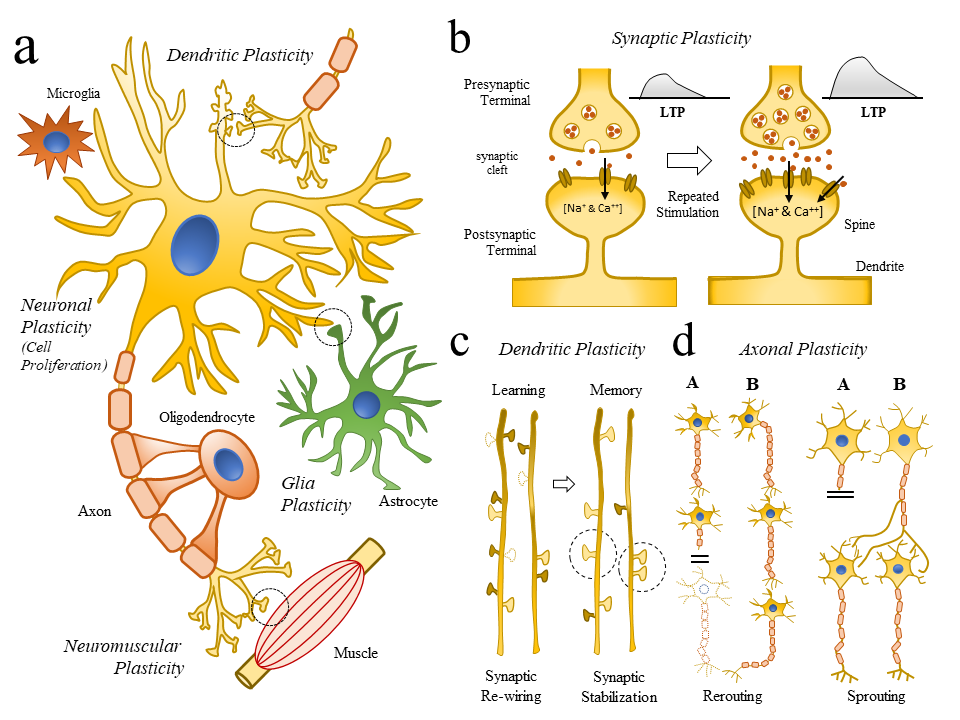
Every time you learn something new, from a word in a new language to a complex physics equation, you are physically changing your brain. This process is called —the brain's ability to reorganize itself by forming new neural connections throughout life. When you first encounter a new idea, the connection between the involved neurons is weak, like a faint footpath in a forest. With practice and repetition, that path gets wider and more established. Eventually, it becomes a well-paved highway, allowing information to travel quickly and efficiently.
This leads to the idea of a 'chunk.' A chunk is a network of neurons that are accustomed to firing together. Think of it as a mental LEGO brick. At first, you have a bunch of tiny, individual LEGO pieces—isolated facts, steps, or concepts. Through focused attention and practice, you snap those pieces together into a solid, coherent structure. That structure is a chunk.
A chunk binds together separate pieces of information through meaning, creating a single, easy-to-access mental unit.
For example, when you first learn to drive, you consciously think about every single step: check the mirror, press the brake, shift to drive, release the brake, press the accelerator. Each is a separate piece of information. After a few weeks, these actions merge. 'Backing out of the driveway' becomes one single, smooth chunk of action. You don't think about the individual steps anymore; you just think the one big idea, and your brain executes the routine.
How to Build a Chunk
Creating a solid mental chunk involves a few key steps. First, you need focused, undivided attention. You can't build a chunk if you're checking your phone every two minutes. Your brain needs to know which specific neurons to link together, and distractions break that signal.
Second, you must understand the basic idea. Simply memorizing something without comprehension is like trying to snap together LEGO pieces that don't fit. You need to grasp the 'why' behind the information, not just the 'what.' This initial understanding provides the meaning that glues the chunk together.
Third, you need context and practice. This is how you see where your new chunk fits into the bigger picture. Practicing with the chunk helps you see when to use it and how it connects to other chunks you've already built. This transforms it from an isolated piece of knowledge into a useful tool in your mental library.
The main benefit of this process relates to your , the brain's temporary scratchpad for holding information. Working memory is notoriously limited; it can only hold a few items at once. This is where comes in. It suggests that learning is hampered when the working memory is asked to process too much information simultaneously. By creating a chunk, you take several pieces of information and compress them into a single slot in your working memory. This frees up mental bandwidth, allowing you to tackle more complex problems and think more creatively.
A master chess player doesn't see individual pieces; they see a collection of chunks representing patterns of attack and defense. By chunking, they bypass the limits of working memory.
Ready to check your understanding of these core concepts?
If you are struggling with a complex problem and feel stuck, which mode of thinking is most likely to help you find a new approach?
What is the term for the brain's ability to physically change and form new neural connections as you learn?
By understanding how your brain builds these mental structures, you can take direct control of your own learning process, making it more efficient and less stressful.