Mastering the Art of Learning
Understanding Learning Processes
How Your Brain Learns
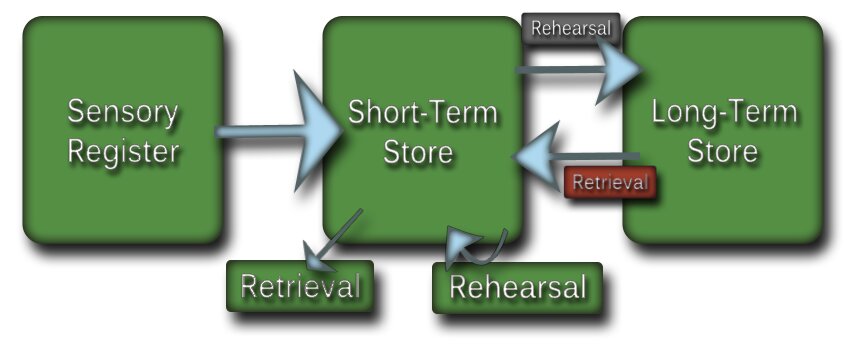
Learning isn't magic. It's a biological process with a few key steps. Think of your brain like a busy mailroom. First, information arrives through your senses—what you see, hear, and touch. This is sensory memory, a very brief holding area.
If you pay attention to that information, it gets forwarded to your working memory (often called short-term memory). This is your mental workbench, where you actively process and think about new ideas. But this workbench has limited space. It can only handle a few pieces of information at a time.
To make something stick, you need to move it from the workbench into the warehouse of long-term memory. This process is called encoding. It happens when you connect new information to what you already know, making it meaningful. That's how you go from hearing a random fact to truly understanding and remembering it.
You're the Architect
Learning isn't like filling an empty container. It's more like building a structure. According to a theory called constructivism, you actively build, or construct, your own understanding of the world. Every new piece of information is a building block that you have to connect to your existing knowledge.
Imagine you're building a tower with LEGOs. If someone hands you a new, interesting brick, you can't just toss it on top. You have to find the right place for it, see how it connects to the other pieces, and make it part of your structure. If it doesn't fit, the tower becomes unstable.
Learning is an active process of creating meaning from experience, not a passive one of absorbing facts.
This is why simply reading a textbook or listening to a lecture often isn't enough. True learning happens when you engage with the material. You might ask questions, explain the idea to someone else, or find a real-world example. You're not just receiving information; you're doing something with it. You're finding where that new LEGO brick fits.
Give It Some Space
Have you ever crammed for an exam, only to forget everything a week later? That's because our brains aren't designed for binge-learning. We learn and retain information far better when we spread our practice out over time. This is known as the spacing effect.
Think of it like building muscle. You wouldn't go to the gym for eight hours on a Sunday and expect to be strong for the rest of the month. It's more effective to work out for 30 minutes a few times a week. Spaced learning works the same way for your brain.
Each time you return to a topic after a break, you force your brain to work a little harder to retrieve that information. This effort of recalling strengthens the neural pathways associated with that memory. It signals to your brain that this information is important and worth holding onto. Cramming, on the other hand, keeps information only in your short-term memory, where it quickly fades.
By spacing statistical learning activities over different courses and skills training sessions throughout the curriculum, students are given time to digest essentially complex concepts and meanwhile encounter opportunities to apply their understanding.
So, instead of one long study session, break it up into several shorter ones. A little bit of practice distributed over time is far more powerful than a single, massive effort.
Ready to check your understanding of these core learning processes? Let's see what you've learned.
When you first encounter new information, like hearing a sentence, it briefly enters your sensory memory. What is the crucial next step for that information to move into your working memory?
According to the theory of constructivism, learning is most like...
Understanding these fundamental processes is the first step toward learning more effectively. By knowing how your brain works, you can start to work with it, not against it.