Mastering the Art of Language Adoption
Architectural Phonology
The Architecture of Your Voice
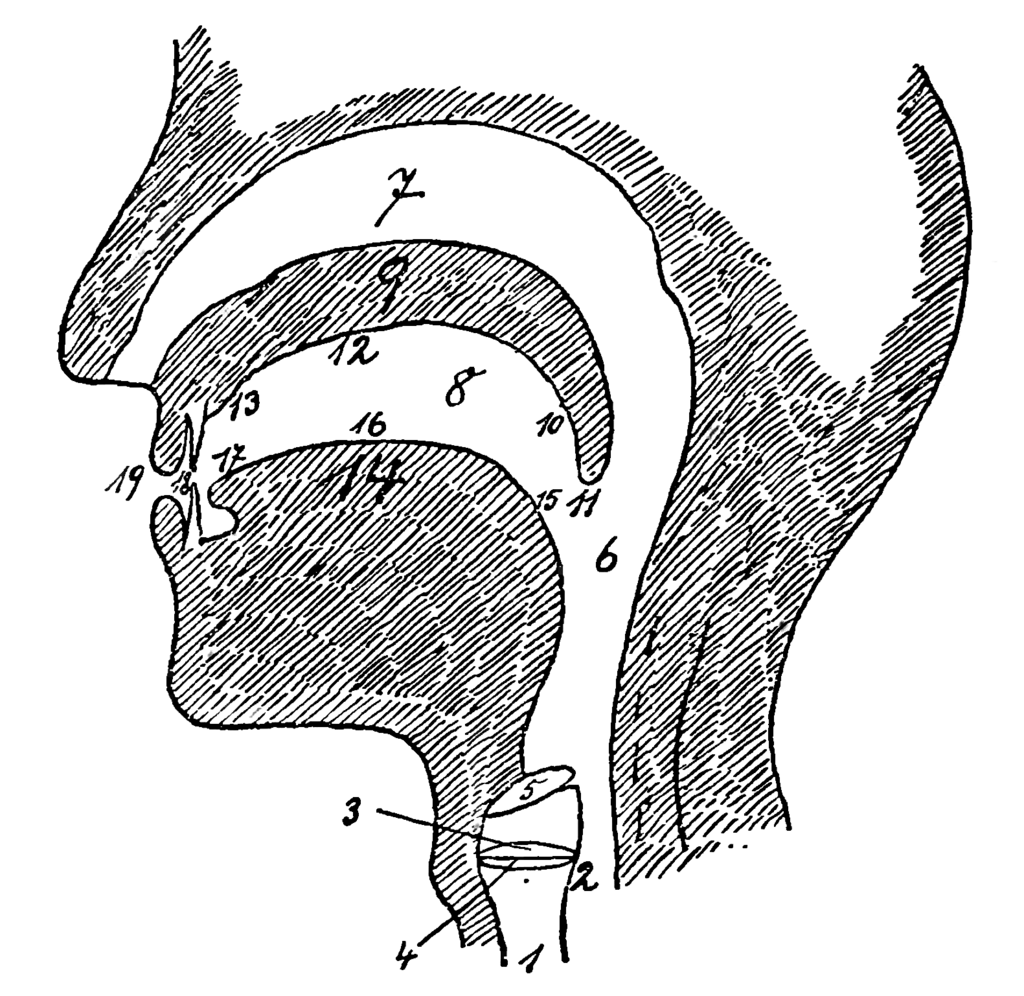
Think of your voice as an instrument. To play it well, you need to understand its physical structure. Just as a violinist holds their bow a certain way, a speaker adopts a default physical configuration for their native language. This is often called the or vocal posture. It's the baseline position of your tongue, jaw, lips, and soft palate before you even utter a sound.
For example, the neutral tongue position in American English is often relaxed and low in the mouth. In contrast, Russian requires a tongue that is generally held higher and further back, creating a different resonant space. Changing your vocal posture is the first mechanical step to sounding more like a native speaker. It changes the resonant cavity of your vocal tract, fundamentally altering the quality of every sound you produce.
Mapping Your Soundscape
Every language has a unique set of significant sounds, its This isn't just a list of vowels and consonants; it's a system where each sound exists in relation to the others. The English /p/ in 'pin' is different from the /p/ in 'spin'—the first is aspirated (a puff of air), the second isn't. But this difference doesn't change the meaning, so they are both considered part of the same sound category, or phoneme.
To master a new language, you must map its phonetic inventory onto your own. This reveals the critical differences. You might find sounds that don't exist in your native tongue, or sounds that seem similar but are produced in a subtly different part of the mouth. This mapping shows you exactly where your vocal habits need to be retrained.
| Feature | General American English | Japanese | Key Difference |
|---|---|---|---|
| Liquid Consonant | /l/ vs. /r/ distinction | A single liquid phoneme /ɾ/ | English speakers must merge two sounds; Japanese speakers must learn to separate one sound into two distinct articulations. |
| Vowel Length | Not phonemically distinct | Short vs. Long vowels change word meaning | English speakers must learn to treat vowel duration as a critical feature, not just a stylistic one (e.g., obasan [aunt] vs. obaasan [grandmother]). |
| Syllable Structure | Complex (e.g., 'strengths') | Simple (CV or CVC, where final C is 'n') | English speakers must simplify their syllable endings and timing to match Japanese rhythmic patterns. |
The Music of Language
Beyond individual sounds, every language has a unique rhythm and melody. This is called prosody, and it includes stress, timing, and intonation. Some languages, like English, are stress-timed. The rhythm is determined by the interval between stressed syllables, and unstressed vowels often get reduced to a neutral 'schwa' sound (like the 'a' in 'about').
For example, in the sentence "I want to go to the store," the time between 'go' and 'store' feels roughly equal to the time between the start and 'go', even though more syllables are present.
Other languages, like Spanish or French, are syllable-timed. Each syllable takes up roughly the same amount of time, creating a more machine-gun-like cadence. Adopting the correct rhythmic structure is often more important for intelligibility than perfecting every single vowel. It’s the framework upon which the sounds are built.
Acoustics and Perception
Ultimately, speech sounds are just sound waves. Acoustic phonetics studies the physical properties of these waves. The shape of your vocal tract acts as a filter, amplifying certain frequencies and dampening others. These amplified frequency bands are called formants, and they are what allow our brains to distinguish one vowel from another.
When you learn a new language, you're not just training your mouth to make new shapes; you're training your brain to perceive new acoustic patterns. Your native language has created perceptual 'magnets' that pull unfamiliar sounds toward the closest native category. This is why a Japanese speaker might hear both English 'rock' and 'lock' as the same word. Consciously studying the acoustic properties of target sounds can help break these old perceptual habits.
By understanding the architecture of your vocal tract, mapping the target sound system, and tuning into the language’s unique rhythm, you move beyond simple mimicry. You begin to re-engineer the very instrument of your voice to resonate with a new linguistic world.