Mastering the Art of Influence
Core Psychological Drivers
The Two Minds
Your brain runs on two different operating systems. One is fast, automatic, and intuitive. It's the gut feeling that tells you a dark alley is dangerous or that you recognize a friend's face in a crowd. This is System 1.
The other is slow, deliberate, and analytical. It's what you use to solve a math problem, compare two different phone plans, or learn to drive a car. This is System 2. System 1 is always running in the background, making instant judgments and decisions. System 2 only kicks in when things get difficult, when you need to focus, or when System 1 gets stuck.
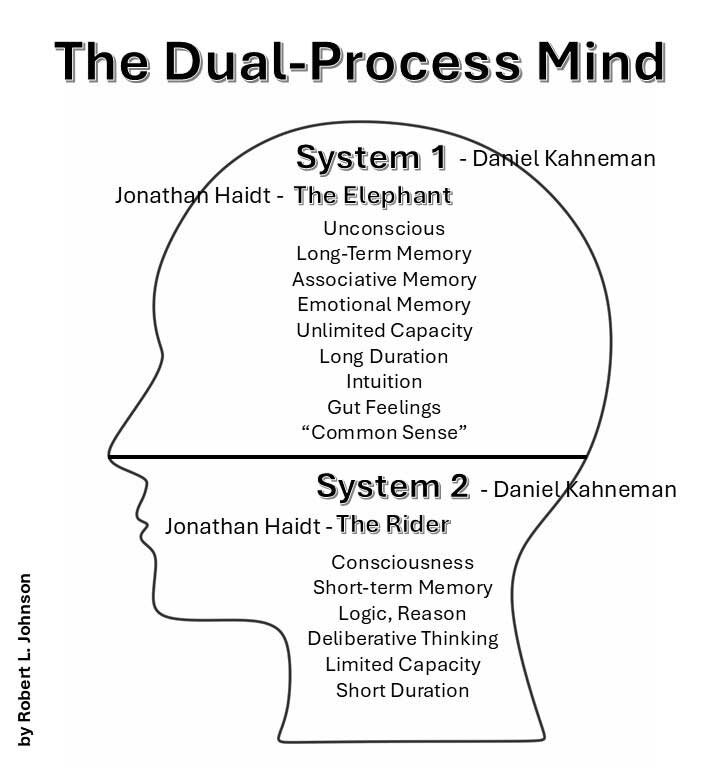
The Elephant and the Rider
A useful way to think about these two systems is the analogy of an elephant and its rider. The rider is your conscious, analytical mind—System 2. It holds the reins and seems to be in charge. The elephant is your subconscious, emotional mind—System 1. It's massive, powerful, and has its own desires.
The rider can try to steer the elephant, but if the six-ton animal decides to go its own way, the rider is powerless. Most of the time, the rider isn't steering at all; it's simply rationalizing the path the elephant has already chosen. To influence behavior, you can't just speak to the rider with logic and facts. You must motivate the elephant.
Persuasion is the art of speaking to the elephant. Logic is often just the excuse the rider creates afterward.
Why We Use Shortcuts
Why does the elephant have so much control? It's a matter of energy conservation. Our ancestors needed to make quick decisions to survive. Is that rustling in the bushes a predator or just the wind? Waiting to analyze every piece of data with System 2 would be a fatal mistake.
Instead, our brains evolved to use mental shortcuts, or heuristics. We rely on cues from our environment to make fast, good-enough decisions. Two of the most powerful cues are social proof and authority. If everyone else is running, you run too. If the tribal leader points to a certain plant and says it's safe to eat, you trust them. These shortcuts saved immense mental energy and kept us safe. They are deeply wired into our System 1.
Cognitive Ease
noun
A state in which the brain operates effortlessly, typically associated with System 1. Information that is familiar, clear, and simple to process creates cognitive ease, making it feel more true and trustworthy.
Persuasion works by creating this feeling of cognitive ease. When an idea is presented clearly, comes from a credible source, or is supported by many others, our System 1 accepts it with little resistance. The brain's gatekeeper, System 2, doesn't even get alerted because the path feels smooth and safe.
This is why trying to win an argument with facts and figures alone often fails. You're trying to convince the rider while the elephant is already walking in the other direction. To be truly persuasive, you need to address the elephant's core motivations. You must shape the path so the elephant wants to go where you're leading. When you do that, the rider will dutifully follow, convinced it was their idea all along.
Now, let's test your understanding of these core drivers.
Which of the following best describes System 1 thinking?
In the elephant and rider analogy, the rider represents our conscious, analytical System 2.
Understanding this dual-process model is the first step in moving from simple discussion to genuine influence.