Mastering the Art of Flirting
Understanding Attraction
The Building Blocks of Attraction
Attraction is the force that draws people together. It's more than just a single feeling; it's a complex mix of interest, liking, and desire. While it can feel mysterious, psychologists and biologists have identified key factors that consistently play a role in who we find attractive.
We can break attraction down into a few main types. Physical attraction is based on appearance. Emotional attraction is about connecting with someone's personality and inner self. Intellectual attraction is an interest in someone's mind and ideas. These types rarely exist in isolation. Often, one type of attraction can spark another, creating a layered and powerful connection.
The Psychology of Liking
Several psychological principles consistently predict who we're drawn to. One of the simplest is proximity. We tend to form relationships with people we see and interact with regularly. Think about friendships formed at work or in school—they often start because you share the same physical space.
This leads to the mere-exposure effect: the more we're exposed to something or someone, the more we tend to like them, as long as our initial interactions are neutral or positive. Familiarity doesn't breed contempt; it often breeds comfort and affection.
Similarity is another powerful force. We are generally attracted to people who share our attitudes, values, and interests. This principle, often summarized as "birds of a feather flock together," suggests that shared ground makes interactions easier and more validating. It feels good to have someone agree with our worldview.
Finally, there's reciprocity. We like people who like us. Knowing that someone has positive feelings toward you can be a powerful catalyst for developing your own positive feelings in return. It’s a simple but potent social dynamic.
Proximity, familiarity, similarity, and reciprocity are the cornerstones of interpersonal attraction. They shape our social circles and romantic choices more than we often realize.
The Chemistry of Connection
Beyond our thoughts and experiences, our biology plays a huge role in attraction. When we feel a connection with someone, our brains release a cascade of chemicals that create feelings of excitement, pleasure, and bonding.
Dopamine, a neurotransmitter associated with reward and pleasure, surges during the initial stages of attraction, making us feel giddy and euphoric. Serotonin levels can also change, sometimes leading to the obsessive thinking characteristic of a new crush. Hormones like oxytocin and vasopressin are crucial for long-term attachment and bonding. Often called the "cuddle hormones," they are released during moments of intimacy and help solidify feelings of closeness and trust.
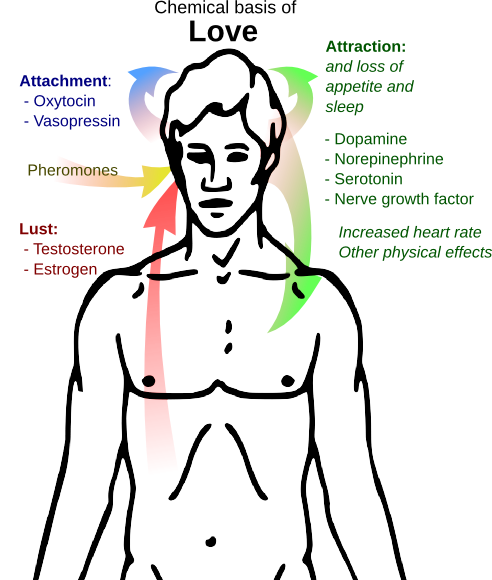
From an evolutionary standpoint, physical features can act as signals of health, fertility, and good genes. For example, facial symmetry is often perceived as attractive across cultures. The subconscious reasoning is that a symmetrical face indicates a stable development, free from disease or genetic issues. These biological responses are ancient, automatic processes that guide our attractions without us even being aware of them.
An Evolutionary Perspective
Evolutionary psychology proposes that our modern minds still carry the imprints of our ancestors' survival and reproductive challenges. According to this view, our preferences for certain traits evolved because those traits signaled a good potential mate—someone who could provide resources, protect, and produce healthy children.
For example, traits that signal health and fertility, such as clear skin, bright eyes, and a well-proportioned body, are almost universally considered attractive. The idea is that our ancestors who were drawn to these traits were more likely to have successful offspring, passing those same preferences down through the generations.
This perspective doesn't suggest that we are consciously making these calculations. Instead, it argues that these preferences operate as deep-seated instincts, shaping our sense of who is and isn't attractive on a fundamental level.
According to the mere-exposure effect, what is the most likely outcome of regularly seeing and having neutral interactions with a new coworker?
If you are primarily drawn to someone because of their wit, insights, and the way they think, you are experiencing which type of attraction?