Mastering the Art of Film Photography
Camera Systems and Mechanics
How You See the Shot
Unlike digital cameras where an electronic sensor is a given, film cameras come in several distinct mechanical flavors. The biggest difference between them is how you, the photographer, see and compose your image. This viewing system dictates not just the camera's design but also its feel and best use cases.
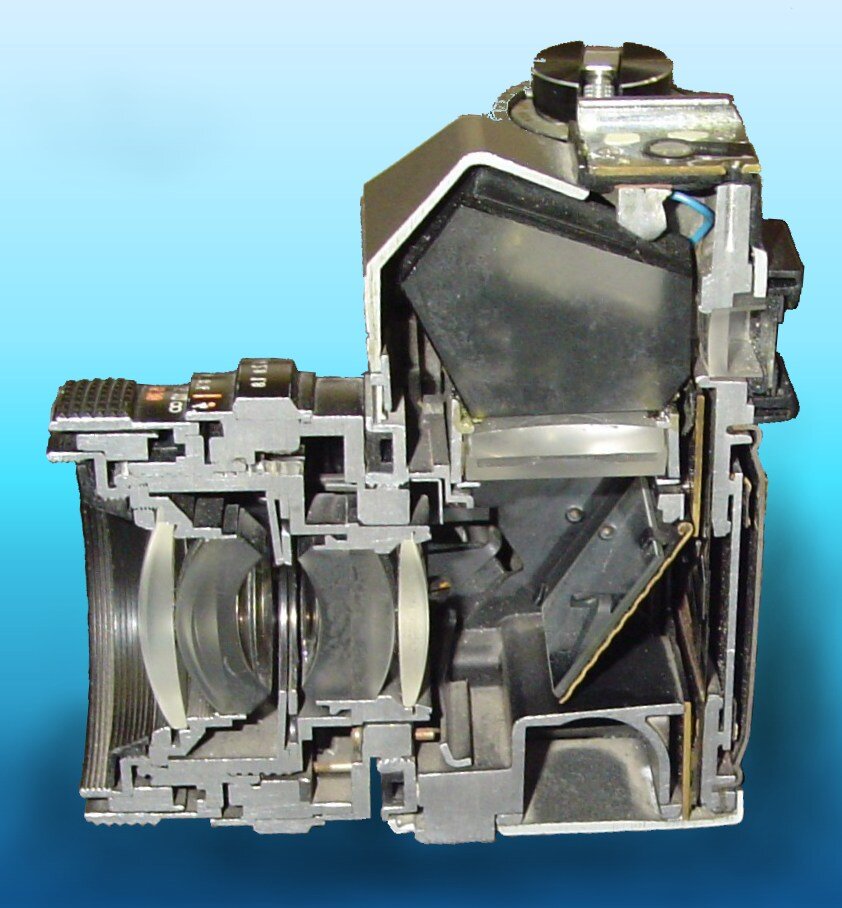
The most familiar system for those coming from DSLRs is the Single-Lens Reflex (SLR). In an SLR, a mirror reflects the exact image coming through the lens up into a pentaprism, which then directs it to your eye. What you see is precisely what the lens sees. When you press the shutter button, the mirror flips up, the shutter opens, and the light hits the film. This direct, through-the-lens (TTL) viewing eliminates guesswork in framing and focus.
Rangefinder cameras operate differently. You look through a separate viewfinder window, not through the lens. To focus, you see a second, superimposed image in the center of your view. As you turn the focus ring on the lens, the two images move. When they align perfectly into one sharp image, your subject is in focus. Rangefinders are often smaller, quieter, and have no mirror blackout when a picture is taken, making them great for discreet street photography.
Then there's the Twin-Lens Reflex (TLR). These cameras, often medium format, have two lenses stacked vertically. You compose your shot by looking down into a waist-level viewfinder, seeing the image from the top lens. The bottom lens is the one that actually exposes the film. The two lenses are linked, so focusing one also focuses the other. Their unique viewing style and larger film format create a very deliberate shooting process.
The Parallax Problem
Because the viewfinder on a rangefinder or a TLR is in a different position than the lens taking the picture, what you see isn't a perfect match for what the film will capture. This discrepancy is called parallax error and it becomes more noticeable the closer you are to your subject.
Think of it like this: hold your thumb out at arm's length and close your left eye. Now switch, closing your right eye and opening your left. Your thumb appears to jump against the background. That's parallax. Your eyes are the viewfinder, your thumb is the subject, and the shift is the error. On a camera, this might mean you perfectly frame a portrait in the viewfinder, but the final photo has the top of the person's head cut off.
SLR cameras completely avoid parallax error because you are always looking directly through the taking lens.
The Feel of Film
Beyond the viewfinder, film cameras offer a tactile experience lost in digital automation. There's no motor automatically advancing your film. Instead, you use a manual advance lever, a physical action that transports the unexposed film into place and cocks the shutter for the next shot. This process forces a slower, more deliberate pace.
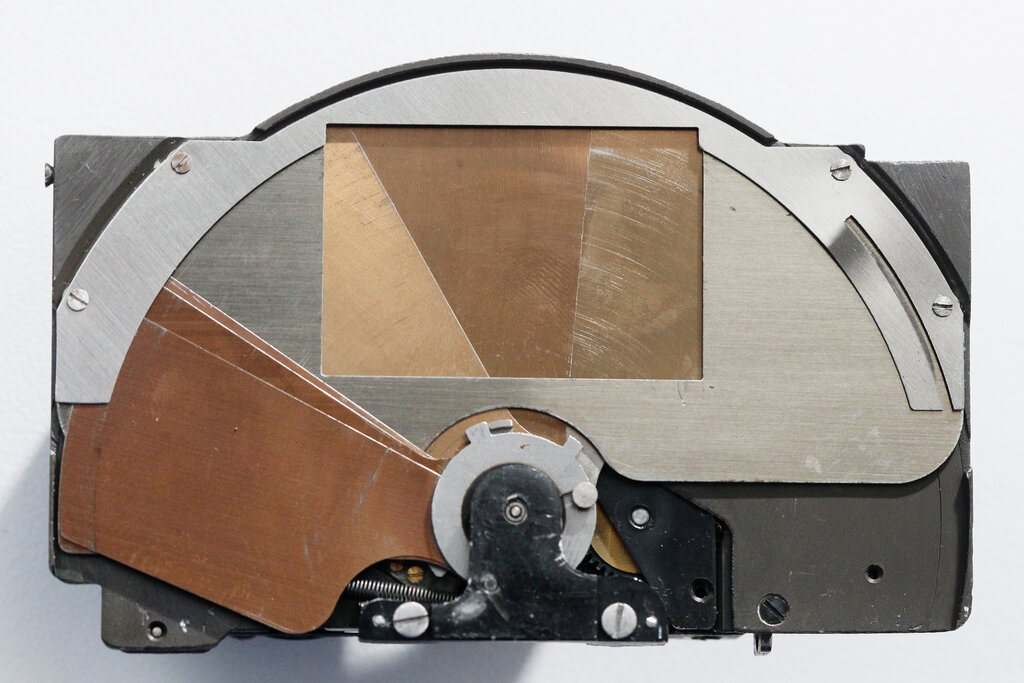
This leads to another key distinction: the shutter mechanism. Many film cameras use a mechanical , a set of curtains that travel across the film plane to make the exposure. In a fully mechanical camera, the shutter speeds are controlled by a clockwork-like system of springs and gears. This means the camera can operate without any batteries at all. Other film cameras use electronic shutters, which rely on battery power to time the exposure with greater precision, especially at very slow or very fast speeds.
Checking Your Gear
Since film cameras are mechanical devices, it's crucial to check their physical condition. A 'dry' mechanical check, without film, can save you from wasted rolls and disappointment.
First, inspect the shutter curtains. Open the back of the camera and, while looking through the lens mount toward a light source, fire the shutter at its slowest speed. Watch the curtains travel. They should move smoothly without any hesitation. Then, cock the shutter and carefully inspect the curtain material for any wrinkles, tears, or pinholes, which would cause light leaks.
Next, check the light seals. These are typically strips of black foam or yarn found in the channels of the camera back and around the film door. Over time, this material degrades, becoming sticky or crumbling to dust. Degraded seals are the number one cause of light leaks, which appear as strange streaks of color on your photos. If the seals feel gummy or are visibly falling apart, they need to be replaced.
Finally, examine the film pressure plate. This is the metal plate on the inside of the camera's back door. Its job is to keep the film perfectly flat against the focal plane as it's exposed. The plate should be clean, smooth, and have a bit of spring to it when you press on it. Deep scratches could damage your film, and a weak spring could cause focusing issues.
A quick check of the shutter, seals, and pressure plate can tell you almost everything you need to know about a film camera's mechanical health.
Understanding these mechanical systems is the key to choosing the right film camera and ensuring it's ready to capture images the way you intend.