Mastering the Art of Eight Limbs
Broken Rhythm Combinations
Breaking the Rhythm
You've already mastered the basic 1-2, the jab-cross-hook, and other fundamental combinations. They're the bread and butter of striking. But experienced opponents learn to anticipate that familiar one-two beat. They feel the rhythm and time their defense accordingly. The next level is to become unpredictable by intentionally breaking that rhythm.
This isn't about throwing random, sloppy strikes. It's a calculated chaos. By disrupting the expected cadence of your attacks, you overload your opponent's defensive processing. You create openings that simply don't exist when you're fighting on a predictable beat. It's the difference between a drummer playing a simple rock beat and a jazz drummer playing a complex, syncopated solo. Both have structure, but one is far harder to predict.
Same-Side Attacks
Most combinations alternate between the left and right sides of the body. A jab (left) is followed by a cross (right), which might be followed by a lead hook (left). This pattern is effective, but it's also what defenders are trained to handle. A same-side combination shatters this expectation by launching multiple attacks from the same side before the opponent has time to reset their guard.
Imagine throwing a quick lead hook. Your opponent instinctively brings their rear hand up and across to block it. Their guard is now committed to defending that side. Instead of switching to your rear hand, you immediately follow up with a lead uppercut or a lead elbow. Because their guard is out of position from blocking the hook, this second strike has a clear path. You've overloaded one side of their system.
The goal is to make one side of their body solve two problems in the time it normally takes to solve one.
Off-Beat Timing
Another way to break rhythm is to play with the cadence of your strikes. Instead of a steady one-two-three, you might use a one... two-three pattern. This pause, or off-beat, disrupts the defender's ability to time your attacks.
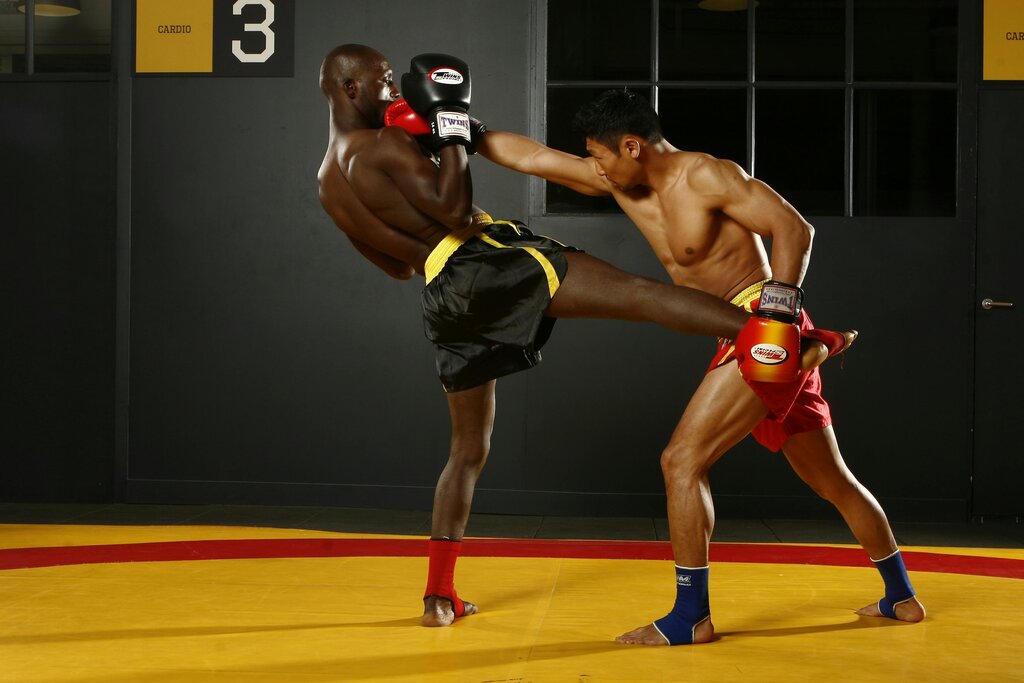
A classic example is using a not to do damage, but simply to disrupt your opponent's balance and occupy their attention. As they react to the jab, you introduce a slight, almost imperceptible delay before throwing a powerful low kick. That pause is everything. It arrives just when their brain expects the next beat to have already passed, catching them between defensive actions.
Eliminating Dead Time
True mastery of combinations means there is no wasted motion. The end of one strike is the beginning of the next. This is especially crucial when your combinations force you to switch stances. Any pause or awkward reset is 'dead time'—a moment where you are vulnerable.
Consider landing a rear-leg switch kick. To execute it, you switched your feet, which means you now find yourself in a southpaw stance. An amateur fighter might pause here, resetting their feet to their original orthodox stance before attacking again. This is dead time.
An advanced practitioner uses the landing of the kick as the pivot point for their next strike. As the kicking foot lands forward in the new southpaw stance, the momentum is already loaded into what is now their rear hand (the left). They can immediately fire a powerful cross from the new stance, catching the opponent completely off guard. The transition itself becomes part of the attack.
Master the art of transition—go from block to strike seamlessly.
By linking your strikes through smooth, efficient transitions and breaking the expected rhythm, you become a much more complex and dangerous opponent. It forces the other fighter out of their comfort zone and into a state of reaction, which is right where you want them.
What is the primary strategic advantage of intentionally breaking the rhythm of your striking combinations?
How does a 'same-side combination' effectively disrupt an opponent's defense?