Mastering the Art of Driving
Control Coordination
The Dance of the Pedals
You already know what the accelerator and brake do. The next step is mastering their relationship. Driving smoothly isn't about just pressing one pedal then the other; it's about the graceful transition between them. The goal is to make acceleration and deceleration so seamless that your passengers barely notice the change in momentum.
Think of it as a seesaw. Slamming on the gas is like one person jumping off, sending the other crashing down. A jerky stop has the same jarring effect. Smooth driving is about applying pressure progressively, anticipating the car's response, and easing off with equal care. This fine control over the pedals directly impacts the car's weight transfer and balance, which is the foundation of all advanced driving techniques.
Smooth throttle application is about squeezing the accelerator, not stomping it. When pulling away from a stop, apply gentle, steady pressure to build speed. This prevents the car from lurching and maintains traction. The same principle applies in reverse when you lift your foot off the pedal; do it gradually to avoid an abrupt slowdown.
Mastering the Stop
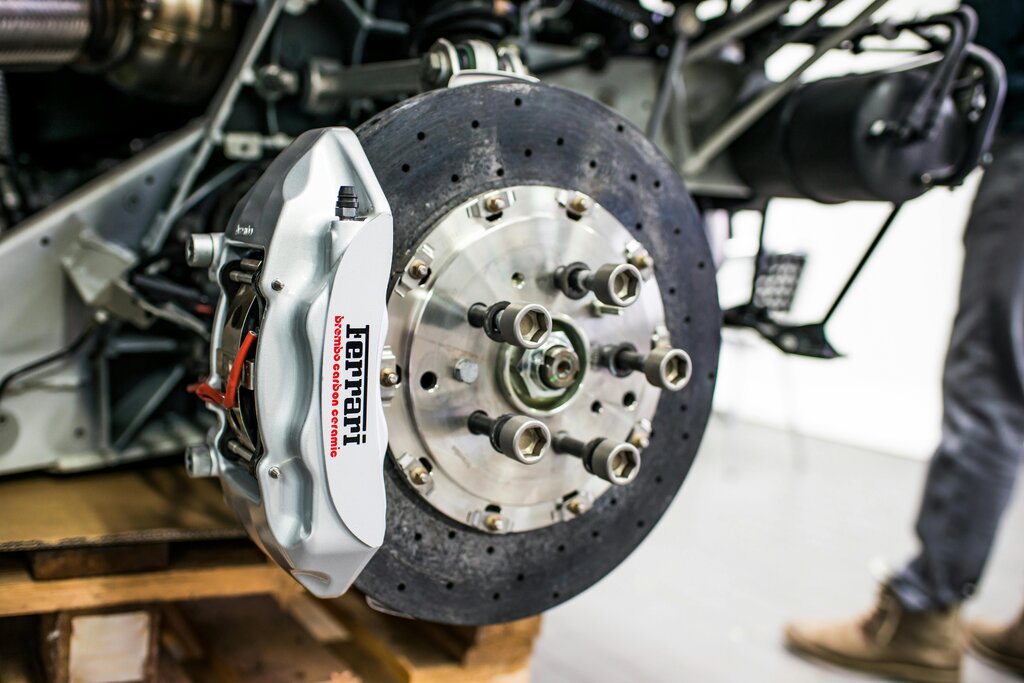
Just as important as a smooth start is a smooth stop. The key is progressive braking. Instead of applying full brake pressure at the last second, begin to apply light pressure earlier. Gradually increase the pressure as you get closer to your stopping point, then slightly release it just before the car comes to a complete halt. This final release prevents the common "lurch" that happens at the very end of a stop.
Aim to stop so gently that you could have a full glass of water on the dashboard and not spill a drop.
For more urgent situations, there's s. This technique involves applying maximum brake pressure without locking up the wheels (or activating the ABS). You're braking right on the edge, or threshold, of the tires' grip. The goal is to achieve the shortest possible stopping distance while still maintaining steering control. While modern ABS systems automate this process, understanding the principle helps you become a more responsive and aware driver, especially in cars without ABS or in situations where you want to feel the limit of your traction.
Steering with Precision
Smooth pedal work needs to be paired with precise steering. Your hands are your primary connection to the road, and how you use them affects the car's balance just as much as the pedals do. The two most common techniques are hand-over-hand and shuffle steering.
Build Muscle Memory: Develop the “push-pull” steering technique and foot coordination before entering a real car.
Shuffle steerings, also known as push-pull, is the preferred method for most driving situations. Your hands slide along the wheel, one pushing up while the other pulls down, without ever crossing over the center. This keeps both hands in a ready position, prevents your arms from getting tangled, and allows for small, precise adjustments. It's the smoothest and most stable way to navigate gentle curves and everyday traffic.
Hand-over-hand steering is for much sharper, lower-speed turns, like navigating a tight parking lot or making a U-turn. In this method, one hand pulls the wheel down, and as it nears the bottom, the other hand crosses over to continue the turn. It allows for rapid steering input but is less stable at higher speeds and can be problematic if an airbag deploys.
Coordinating your steering and pedal inputs is the final piece of the puzzle. As you steer into a turn, you should be easing off the brake or accelerator. Apply gentle throttle as you exit the turn to stabilize the car. All these actions should flow into one another, creating a single, fluid motion that keeps the vehicle balanced and under control.
To prevent the common "lurch" just as a car comes to a complete stop, what should the driver do?
What is the principle of "threshold braking"?