Mastering the Art of Driving
Precision Maneuvering Mechanics
The Art of Smooth Control
Controlling a car smoothly isn't about knowing which pedal is which; it's about the feel. Think of the accelerator and brake pedals not as on/off switches, but as dimmers. Your goal is progressive pressure. When you accelerate, gently squeeze the pedal so the car glides forward. When you brake, apply steady, increasing pressure to slow down without a sudden jolt. It's like squeezing a tube of toothpaste – you want a controlled, even flow, not a sudden burst.
Imagine you have a full cup of coffee in the cupholder. Drive in a way that doesn't spill it. This simple mental model is the key to smooth acceleration and braking.
This technique, especially for braking, is about anticipating the stop. Look ahead and start applying light pressure early, gradually increasing it until you come to a complete stop. Just before the car stops fully, you can even ease off the pressure slightly to avoid the final, subtle lurch. This is the foundation of precise, comfortable driving.
Steering with Purpose
How you turn the wheel is just as important as how you press the pedals. There are two main methods for different situations: push-pull and hand-over-hand.
Push-Pull Steering: For most driving, including gentle curves and highway driving, the push-pull (or shuffle) method is safest. If turning right, your left hand pushes the wheel up, and your right hand slides up to meet it, then pulls the wheel down. Your hands never cross over the top of the wheel. This keeps you in a stable, balanced position, ready to react quickly without getting your arms tangled.
Hand-Over-Hand Steering: This method is for slow, tight maneuvers, like parking or making a sharp turn from a standstill. To turn right, you'll pull down with your right hand. As it nears the bottom of the wheel, your left hand comes over the top, grabs the wheel, and continues pulling down. It's a more aggressive turning method that sacrifices some stability for turning speed in tight quarters.
Understanding Your Car's Footprint
Every car rotates around a specific point when it turns, much like a spinning top. This is its . For most front-wheel-drive cars, the pivot point is near the front wheels. When you turn, the front of the car swings out, while the rear end cuts in more sharply. The longer the car, the more pronounced this effect is. This is why you see buses and large trucks make very wide turns—they need to swing their front end way out to give their rear wheels enough room to clear the corner.
This concept directly affects your turning radius—the smallest circle your car can make. When parking or making a U-turn, you need to be aware of how much your front end will swing out and how much your rear end will cut in. Before turning into a tight parking spot, you might need to pull forward a little more than you think to let your rear wheels clear the adjacent car.
Mastering Reverse
Reversing is where these skills come together. The most confusing part for new drivers is that steering inputs feel inverted. To make the back of the car go right, you turn the steering wheel right. It seems simple, but it feels counterintuitive because you're used to the front of the car going where you steer.
A simple trick is to look in the direction you want the rear of the car to go and turn the wheel that way. If you want the tail of the car to end up on your right, turn the wheel to the right.
Before you even start, it's crucial to set your mirrors correctly. Your rearview mirror should frame the entire rear window. Your side mirrors should be adjusted outward so you can just barely see the side of your own car. This positioning minimizes your , the areas around your car that you can't see in your mirrors.
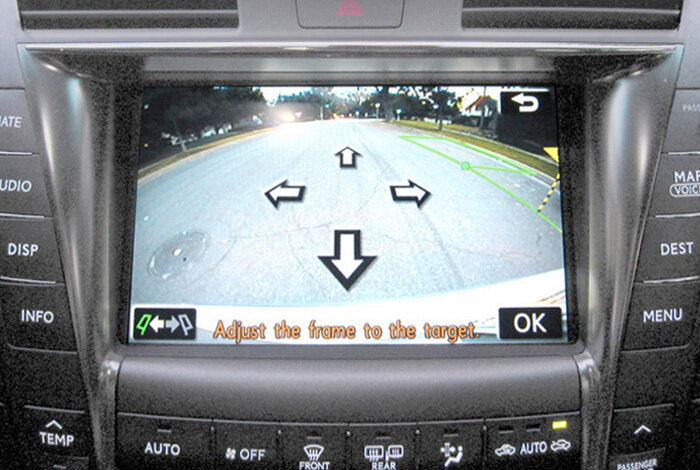
When reversing, use all your tools: glance at your backup camera for the immediate path, check your side mirrors for obstacles to the left and right, and physically turn around to get the full picture. Never rely on just one.
With a solid grasp of these physical mechanics, you're building the muscle memory needed for smooth and confident control. The next step is to apply these skills in more complex traffic situations.
According to the principles of smooth driving, how should you think of the accelerator and brake pedals?
For which of the following situations is the hand-over-hand steering technique most appropriate?