Mastering the Art of Driving
Vehicle Controls
Your Command Center
Before you even turn the key, it's worth getting to know the controls at your fingertips. Understanding what each button, lever, and pedal does is the first step toward becoming a confident and safe driver. Think of it as learning the layout of your command center.
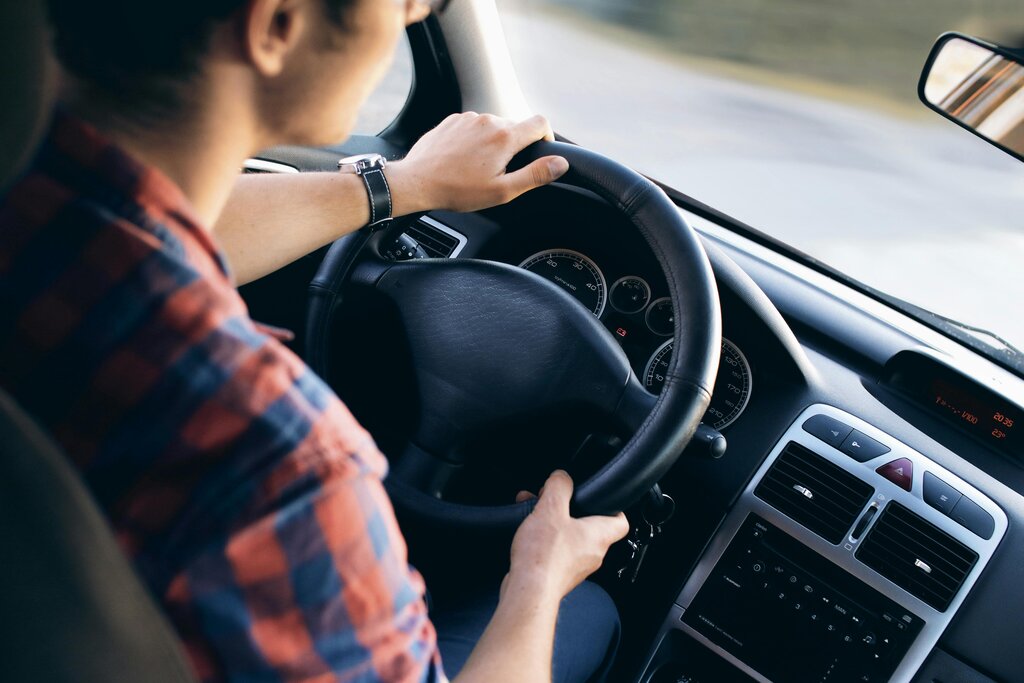
Let's start with the most direct controls you have over the car's movement: the steering wheel, the pedals, and the gear selector.
Steering and Stopping
The steering wheel controls the direction of the front wheels. Turning it left makes the car go left, and turning it right makes the car go right. For good control, it's best to hold the wheel with both hands, imagining it as a clock face. Place your hands at the 9 and 3 o'clock positions. This grip gives you a balanced and responsive feel for the car's movement.
Down at your feet are the pedals. In an automatic transmission vehicle, you'll have two: the accelerator on the right and the brake on the left. The accelerator, often called the gas pedal, controls your speed. The more you press it, the faster the engine works and the faster you go. The brake pedal slows the car down. Gentle pressure slows you gradually, while firm pressure stops you more quickly.
In a car with an automatic transmission, always use your right foot for both the accelerator and the brake. Your left foot can rest comfortably to the side.
If you're in a car with a manual transmission, you'll see a third pedal to the left of the brake. This is the clutch. The clutch engages and disengages the engine from the wheels, allowing you to change gears. You'll press the clutch with your left foot every time you shift.
Changing Gears
The gear selector, or gear shift, tells the car whether to move forward, backward, or stay put. Its location can vary—sometimes it's between the front seats, other times it's a stalk on the steering column.
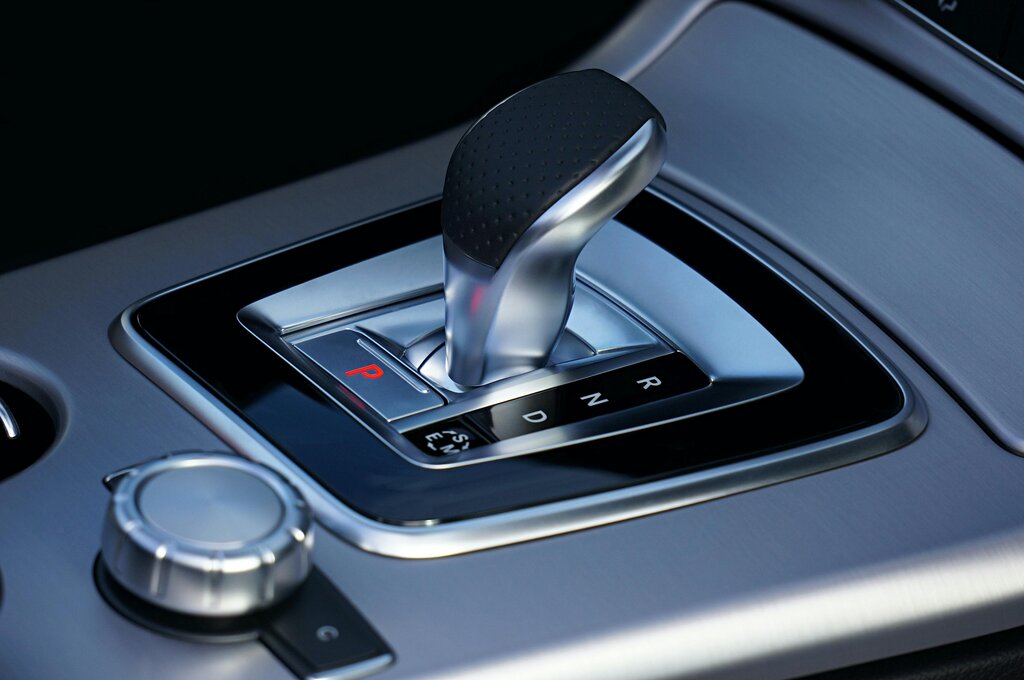
In an automatic car, the settings are pretty standard.
| Setting | Name | Function |
|---|---|---|
| P | Park | Locks the transmission. Use when the car is stopped and you are leaving it. |
| R | Reverse | Makes the car move backward. |
| N | Neutral | Disengages the engine from the wheels, like the clutch being held down. |
| D | Drive | Used for moving forward. The car will automatically select the right gear. |
In a manual car, you select the gears yourself using the gear shift in coordination with the clutch. The pattern of the gears is usually displayed on top of the shift knob. First gear provides the most power for starting from a stop, while higher gears are for higher speeds.
Communicating with Others
Some of your car's most important controls are for communication and visibility. These help you see the road and let other drivers know what you're planning to do.
Turn signals are your way of telling others you intend to turn or change lanes. They're usually operated by a lever, or stalk, on the side of the steering column. Pushing the lever up signals a right turn, and pushing it down signals a left turn. The signal will typically cancel itself after you complete the turn.
The same stalk or a nearby one often controls the headlights. You can usually twist the end to turn on your parking lights and your main headlights. There might also be a setting for automatic lights, which turn on by themselves when it gets dark. Pushing or pulling this lever will switch between your regular low beams and your high beams, which provide more light but should only be used when no other cars are coming toward you.
Know where the controls while driving are, such as windshield wipers, headlights, emergency brake, and hazard lights.
For bad weather, you have windshield wipers. Another stalk on the steering column usually controls them. It will have different settings for speed, from an intermittent wipe for light drizzle to a fast, constant speed for heavy rain. Pushing or pulling the stalk might also spray washer fluid on the windshield to clean it.
Understanding Your Dashboard
The dashboard instrument cluster behind your steering wheel gives you critical information at a glance. While it can look complex, it's mostly showing a few key things.
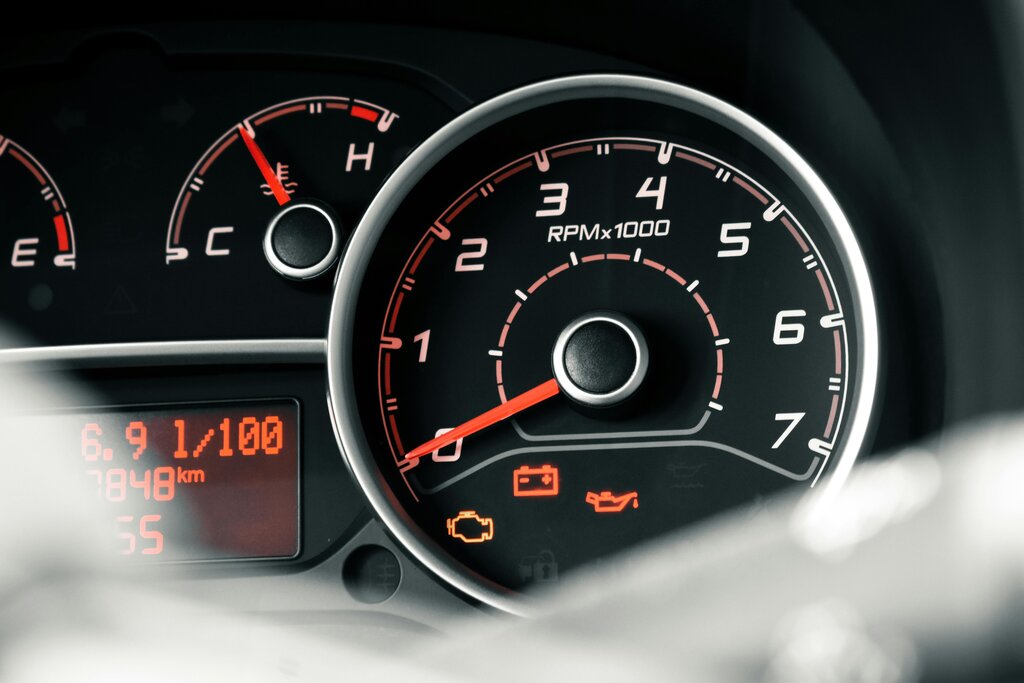
speedometer
noun
Shows your current speed in miles per hour (MPH) or kilometers per hour (KM/H). This is one of the most important gauges to watch to ensure you're driving at a safe and legal speed.
Other common gauges include:
- Tachometer: Measures the engine's speed in revolutions per minute (RPM). In a manual car, it helps you know when to shift gears.
- Fuel Gauge: Shows how much fuel is left in the tank. The 'F' means full, and the 'E' means empty. It's a good idea to refuel when you get down to a quarter tank.
- Temperature Gauge: Indicates how hot the engine is running. If the needle moves into the red 'H' zone, your engine is overheating, and you should pull over safely and turn it off.
Your dashboard also has various warning lights. These lights briefly turn on when you start the car, which is a normal self-check. But if a light stays on or comes on while driving, it's signaling a problem. Common ones include the check engine light, oil pressure warning, and battery charging warning. Your car's owner's manual is the best place to learn what each specific symbol means.
Before You Drive
A quick check before you drive can prevent problems on the road. This isn't a full mechanical inspection, just a simple routine to make sure everything is in order.
- Walk Around: Take a quick walk around the car. Look at the tires to see if any look low on air. Check for any obvious leaks under the car.
- Adjust Your Seat and Mirrors: Once inside, adjust your seat so you can comfortably reach the pedals and steering wheel. Then, adjust your rearview and side mirrors so you have a clear view of the area behind and to the sides of your car.
- Buckle Up: Fasten your seatbelt. It's your most important safety device.
Getting comfortable with these controls and checks is the foundation of driving. Take your time to learn where everything is and what it does while the car is parked. This familiarity will make your first few times on the road much smoother.
For the best control, what is the recommended hand position on the steering wheel, imagining it as a clock face?
In a vehicle with an automatic transmission, which two pedals will you find?
Now that you're familiar with the basic controls, you're ready to learn about the next steps in operating a vehicle safely.