Mastering the Art of Debate
Introduction to Debate
What Is Debate?
At its core, a debate is a structured argument between two or more parties about a specific topic. It's not a shouting match or a casual disagreement. It's a formal process where participants present and defend their viewpoints, aiming to persuade an audience or a judge.
The main purpose of debate isn't just to win, but to explore an issue from multiple angles. It forces you to think critically, organize your thoughts, and communicate them clearly. By researching a topic and anticipating counterarguments, you develop a deeper understanding of complex ideas. It's a workout for your brain that builds skills in logic, public speaking, and persuasion.
Think of it as a controlled collision of ideas, where the goal is to find the strongest, most well-supported position.
A Brief History
Debate has been a cornerstone of civilized society for thousands of years. The ancient Greeks are often credited with formalizing it. Philosophers like Socrates used structured questioning to challenge assumptions, and public debates in the Athenian Agora were central to their democracy.
This tradition was carried on by the Romans in their senates and forums. Later, during the Enlightenment in the 17th and 18th centuries, debate became a vital tool in European parliaments and universities, shaping modern governance and education. Today, debate continues in courtrooms, legislative halls, and classrooms around the world.
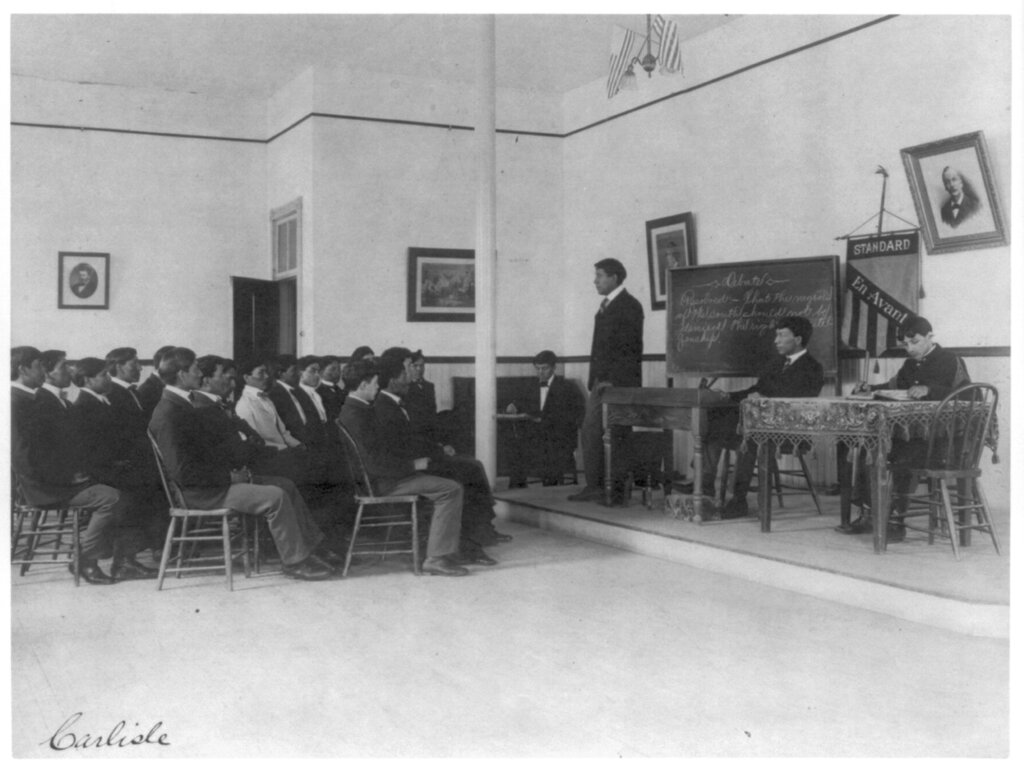
Common Debate Formats
While all debates share a common foundation, different formats have evolved for different purposes. Each has its own rules, time limits, and structure. Here are a few of the most popular styles you might encounter.
| Format | Participants | Focus |
|---|---|---|
| Lincoln-Douglas | 1 vs. 1 | Competing values and ethics. Asks "what ought to be." |
| Parliamentary | 2-person teams | Government policy and current events. Quick thinking is key. |
| Public Forum | 2-person teams | Current events, designed to be understood by a general audience. |
| Policy (Cross-Examination) | 2-person teams | In-depth analysis of a single, year-long topic. Heavy on research. |
The Key Players
A formal debate isn't a free-for-all. Participants have specific roles that ensure the discussion stays organized and fair. The topic of the debate is called the resolution or motion.
The Affirmative (also called the Proposition or Pro) side argues in favor of the resolution. Their job is to build a case explaining why the resolution is true or why the proposed action should be taken.
The Negative (also called the Opposition or Con) side argues against the resolution. They must refute the Affirmative's case and provide reasons why the resolution is false or why the proposed action should not be taken.
Overseeing the whole process is the Moderator (or Speaker). This neutral third party ensures that the rules are followed, keeps track of time, and facilitates the flow of the debate.
Structure of a Debate
Most debates follow a similar pattern of speeches, allowing each side to present their arguments and respond to their opponents. The order and timing vary by format, but the basic stages are consistent.
First come the constructive speeches, where each team lays out their main points. This is where they introduce their evidence and reasoning. After these speeches, there is often a cross-examination period, where one side gets to ask questions of the other. This is a chance to clarify points and expose weaknesses.
Next are the rebuttals. During this phase, debaters directly attack their opponent's arguments and defend their own. No new arguments can be introduced here; the focus is solely on clashing with what has already been said.
Finally, the debate concludes with closing statements or summaries. Each side makes a final appeal to the audience or judge, crystallizing the key issues of the debate and explaining why their position is superior.
Rules and Etiquette
Structure is nothing without rules and respect. Good debate etiquette ensures that the focus remains on the ideas, not the people presenting them. Participants are expected to be civil, listen actively, and address the arguments, not attack the person making them. Adhering to strict time limits is also crucial, as it ensures fairness and forces speakers to be concise.
Debaters often keep a detailed record of the arguments made during the round on a piece of paper called a "flow." This helps them track every point and ensure they respond to all of their opponent's arguments.
The goal is constructive discourse. Even in disagreement, the foundation of debate is mutual respect for the process and the participants.
Now that you understand the basic framework, you're ready to see how these elements come together to create a powerful tool for learning and communication. Let's review some key terms.
Ready to test your knowledge?
What is the main purpose of a debate, as described in the text?
Which ancient civilization is often credited with formalizing debate in their public Agora as a central part of their democracy?
Understanding these fundamentals—the definition, history, formats, and structure of debate—provides a solid foundation for developing strong arguments and engaging in productive discussions.