Mastering the Art of Cinematic Storytelling
Narrative Blocking Strategies
Beyond the Static Shot
You already know how to frame a shot. A wide shot establishes location, a close-up reveals emotion. But what happens between those shots? The real storytelling magic lies in movement, both of the characters and the camera. This is the art of blocking and staging.
Think of the set as more than just a backdrop. It's a three-dimensional space where relationships are defined by proximity and power dynamics are shown through position. Good blocking isn't just about moving actors from point A to point B. It's about choreographing every step, turn, and gesture to reveal subtext and advance the narrative before anyone says a word.
The Power of Depth
Most filmmakers are comfortable with the X-axis (left to right) and Y-axis (up and down) of the frame. The true narrative power, however, often lies along the Z-axis: the imaginary line running from the foreground to the background. Movement along this axis directly influences the audience's psychological connection to the characters.
A character moving toward the camera (closer to the audience) can feel intimate, confrontational, or even threatening. They are entering our space. Conversely, a character walking away from the camera, shrinking into the background, can evoke feelings of loneliness, loss, or resolution. You're not just showing movement; you're manipulating emotional distance.
This use of depth is amplified by your control over the depth of field. A shallow focus can isolate a character, blurring out the rest of the world and emphasizing their internal state. A deep focus, where everything is sharp, can connect a character to their environment or show two characters at different depths in the same frame, forcing the audience to see their relationship.
A powerful technique that combines depth and focus is the , where the lens shifts focus from a subject in the foreground to another in the background, or vice-versa. This isn't just a technical flourish; it's a narrative device that can redirect the audience's attention, reveal a hidden character, or signify a shift in a character's thoughts or priorities.
Mapping the Movement
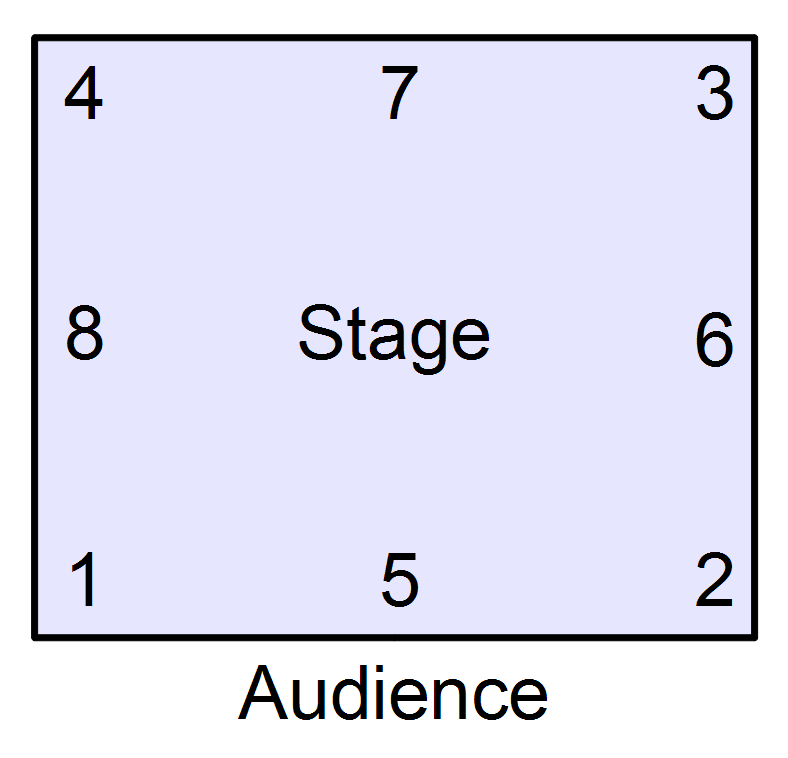
Complex scenes require careful planning. A floor plan is a top-down diagram of the set, showing walls, furniture, doors, and windows. On this map, the director can draw the positions of the actors at key moments and the paths they take to get there. It’s a blueprint for the physical narrative of the scene.
Blocking diagrams go a step further by including camera positions and movements. Will the camera be static? Will it pan to follow a character? Or will it move on a dolly, tracking alongside them? This plan isn't just for the director and actors; it's crucial for the cinematographer and lighting crew. The placement of lights and equipment must support the planned movements, not obstruct them. A well-designed floor plan ensures that a character’s emotionally charged cross to a window won't be blocked by a light stand.
Shooting Strategies
Once you've planned the blocking, you need to decide how to film it. The standard approach is shooting coverage. You film the whole scene in a wide shot, then repeat the action for medium shots of each character, and again for close-ups. In the edit, you cut between these angles. This method is safe and provides lots of options, but it can sometimes feel choppy and break the flow of a performance.
An alternative is the . This involves designing a single, complex shot—often called a "master shot" or a "oner"—that captures the entire scene in one continuous take. The camera might move, the actors hit multiple marks, and the framing changes dynamically as the scene unfolds. This approach requires meticulous rehearsal but can result in a powerful, immersive experience that preserves the integrity of the actors' performances. The camera's movement becomes part of the choreography, motivated by the characters' actions.
For example, if one character stands up to leave, the camera might tilt up and pan with them, then crane down to reveal the reaction of the character left sitting. This is camera motivated movement, where the camera isn't just a passive observer but an active participant in the storytelling, guiding the audience's eye with purpose.
Staging is how you go about setting up your scene, from the placement of the characters, to the background and foreground elements, the character’s mood, and how the camera angle is set up.
Ultimately, every choice in blocking and staging should serve the story. Where a character stands, how they move, and how the camera follows (or doesn't follow) them are all powerful tools for building tension, revealing relationships, and creating emotional impact. By moving beyond static frames and embracing dynamic space, you can tell richer, more nuanced stories.
In filmmaking, what is the primary narrative function of movement along the Z-axis (towards or away from the camera)?
A director wants to visually suggest a sudden shift in a character's focus from the conversation they're having to a person who has just appeared in the background. Which technique is specifically designed for this purpose?