Mastering the Art of Chicken Curry
Advanced Aromatic Foundations
The Soul of the Curry
The foundation of any great curry isn't the meat or the main vegetables; it's the aromatic base. This is where flavor is born. For most curries, this begins with a paste of ginger and garlic. While you can roughly chop them, mincing them into a fine paste with a bit of salt is a non-negotiable step for authentic flavor. The salt acts as an abrasive, helping to break down the tough fibers and draw out moisture. This process ruptures the cell walls, releasing the maximum amount of allicin from the garlic and zingerone from the ginger. These compounds are highly volatile and aromatic, forming the first layer of deep, savory flavor in your pan.
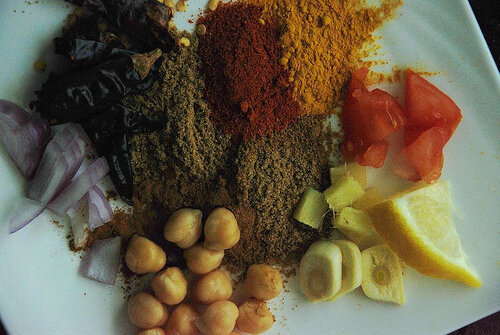
Beyond the ginger-garlic paste, the onion is king. How you cook it determines the final color, thickness, and sweetness of your curry. You have two main paths: sweating or browning.
- Sweating: Cooking onions gently in fat over low heat until they become translucent. This softens them and releases their sweetness without adding any color. It's a common technique in lighter, creamier curries where you want a delicate flavor profile.
- Browning: Cooking onions over medium to high heat until they caramelize. This is where the magic happens for most Indian curries. The Maillard reaction and caramelization not only create a deep, nutty sweetness but also develop rich brown colors. These browned onions act as a natural thickener, breaking down into the sauce to give it body and a luxurious texture. Achieving the perfect jammy, dark brown consistency without burning the onions is a skill that takes patience. Rushing this step is the most common mistake in curry making.
The color of your finished curry is decided in the first ten minutes. The depth of your onion caramelization sets the tone for everything that follows.
Choosing Your Fat
The cooking fat you choose is more than just a medium to transfer heat; it’s an ingredient in its own right. The choice depends on the regional style of the curry and the temperatures you'll be using.
For many North Indian curries, ghee (clarified butter) is traditional. With its high smoke point (around 485°F or 250°C) and nutty flavor, it’s perfect for browning onions and blooming spices without burning. Mustard oil, with its pungent, slightly bitter flavor, is a staple in Bengali and Punjabi cooking. It has a lower smoke point, so it's often heated until it just begins to smoke to mellow its flavor before adding aromatics. In contrast, South Indian and many Southeast Asian curries favor coconut oil for its sweet, tropical aroma that complements ingredients like coconut milk and tamarind.
| Fat | Smoke Point (Approx.) | Flavor Profile | Best For... |
|---|---|---|---|
| Ghee | 485°F / 250°C | Nutty, rich | North Indian curries, high-heat searing |
| Mustard Oil | 480°F / 250°C | Pungent, sharp | Bengali & Punjabi dishes, pickles |
| Coconut Oil | 350°F / 177°C | Sweet, tropical | South Indian & Southeast Asian curries |
| Neutral Oil | 400°F / 205°C | Neutral | All-purpose, when you don't want to add flavor |
Once your fat is hot, you infuse it with flavor. This technique, known as tadka or chaunk in India, involves briefly frying whole spices like cumin seeds, mustard seeds, or cinnamon sticks in the hot oil. This process, called blooming, releases their essential oils and perfumes the entire dish. The sound of seeds crackling in hot oil is the true start of a curry. Ground spices are added later, often with a splash of water, as their fine texture makes them prone to burning.
Regional Foundations
While the Indian style often relies on building a flavor base from caramelized onions and dry-roasted spices, many Southeast Asian curries, like those from Thailand, take a different approach. Their aromatic base is a fresh paste, or kroeung, made by pounding fibrous roots and herbs in a mortar and pestle. Ingredients like lemongrass, , and kaffir lime leaves don't release their full flavor through heat alone. The physical act of crushing them is necessary to break down their cellular structure and release their intensely fragrant essential oils. This paste is then sautéed in oil (often coconut oil) to meld the flavors before liquid, like coconut milk, is added. This results in a curry that is brighter, more herbaceous, and aromatic in a completely different way.
Understanding these foundational techniques is what separates a passable curry from a truly memorable one. It’s a process of chemistry and patience, where simple ingredients are transformed into a base of profound complexity and depth.