Mastering the Art of Beat Making
Introduction to Beat Making
What Makes a Beat?
At its heart, a beat is the rhythmic pulse of a song. It’s the foundation that everything else is built on, like the heartbeat that gives a track its life and energy. The beat sets the tempo—how fast or slow the music feels—and establishes the groove that makes you want to nod your head or dance. It's the skeleton of the track, providing structure for melodies, harmonies, and vocals to follow.
Think of the beat as the steady rhythm that tells you how to move to a song before you even know the words.
Your Digital Studio
To make beats today, you don't need a room full of instruments. All you need is a computer and special software called a Digital Audio Workstation, or DAW. A DAW is like a recording studio, an instrument, and an editing suite all rolled into one program. It’s where you’ll arrange sounds, record ideas, and build your beats from the ground up.
There are many DAWs out there, each with its own workflow, but they all accomplish the same goal. Popular choices for beginners and professionals alike include FL Studio, known for its quick and intuitive pattern-based sequencer, and Ableton Live, which is famous for its powerful live performance capabilities.
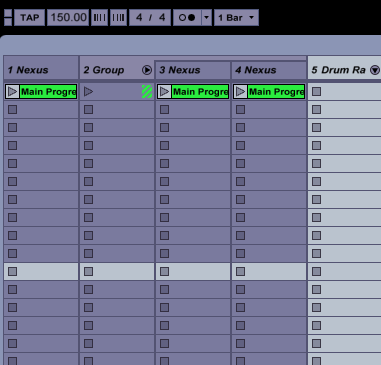
Inside the DAW, you'll work with two main types of ingredients to build your beats: audio samples and MIDI.
MIDI
noun
Musical Instrument Digital Interface. It's a type of data that tells a computer what notes to play, how long to play them, and how loud. It doesn't contain any actual sound, just instructions.
Audio samples are short recordings of actual sounds. This could be anything: a single drum hit, a guitar chord, or a vocal snippet. You can arrange these audio clips directly on a timeline to create your rhythm.
MIDI is different. It's not sound; it's information. Think of it like a set of instructions for a player piano. A MIDI file tells a virtual instrument which notes to play and when. You can write MIDI patterns and then experiment by assigning different instrument sounds to them, giving you incredible flexibility.
The Core Ingredients
While a beat can be made from any sound imaginable, most modern music is built around three core drum elements: the kick, the snare, and the hi-hat. Understanding their roles is the first step to creating rhythms that feel right.
| Component | Sound & Feel | Typical Role |
|---|---|---|
| Kick Drum | A low, punchy sound like a thump. | The anchor. Often hits on the main beats (e.g., 1 and 3) to create a steady pulse. |
| Snare Drum | A sharp, crisp crack. | The backbeat. It typically accents the off-beats (e.g., 2 and 4), providing energy. |
| Hi-Hat | A short, sharp sizzle. | The timekeeper. It plays faster patterns (e.g., every eighth note) to create rhythmic drive. |
Let’s look at how these three elements come together in a very common and simple beat. This pattern is often called a "four-on-the-floor" beat, and you can hear it everywhere from disco to house music. The grid below shows 16 steps, which equals one bar of music. Each filled circle means that drum sound is played on that step.
Notice how the kick provides a steady pulse, the snare adds the energetic backbeat, and the hi-hats fill in the space to keep the rhythm moving forward. By simply changing which steps these sounds land on, you can create entirely new grooves and feelings. This is the fundamental process of beat making.
What is the primary function of a beat in a piece of music?
What does the acronym "DAW" stand for?
With these basics, you have the building blocks to start creating your own rhythms. The key is to listen, experiment, and have fun.