Mastering the Art of Arc Welding
Equipment Calibration and Safety
Dialing in the Perfect Arc
You already know how to strike an arc and lay a basic bead. Now, let's move beyond the basics. Professional welding is about precision and control, turning a good weld into a flawless one. This means mastering your equipment's settings to match the specific demands of the job.
For Gas Metal Arc Welding (GMAW), the key is the relationship between voltage and wire feed speed (WFS). Think of it as a delicate dance. Voltage controls the height and width of the arc, essentially setting the energy level. A higher voltage creates a hotter, flatter, and wider bead. Wire feed speed determines how much filler metal is deposited, which directly correlates to amperage.
Getting these two in sync is crucial. If your WFS is too high for your voltage, the wire will stub into the workpiece, creating a choppy, inconsistent weld. If the voltage is too high for the WFS, the wire will burn back towards the tip, resulting in a sputtering, weak arc. The goal is a stable arc that produces a smooth, consistent crackling sound, often described as frying bacon.
A good starting point for short-circuit GMAW on mild steel is to set your wire feed speed (in inches per minute) to roughly 100 times the wire diameter (in thousandths of an inch) for every 100 amps. Then, adjust voltage until the arc is stable. For example, with .035" wire, you might start around 350 IPM and adjust from there.
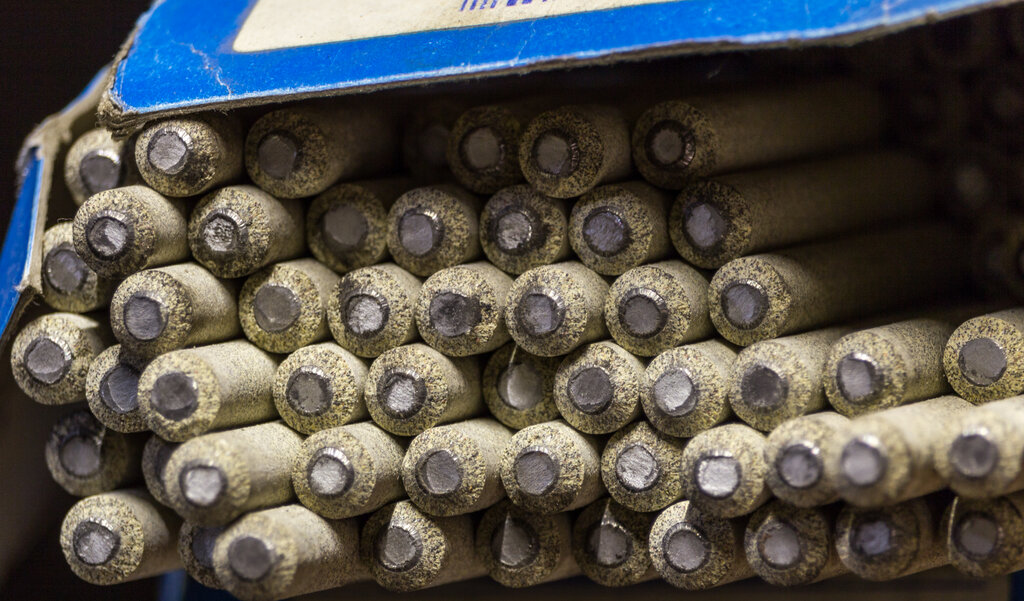
For Shielded Metal Arc Welding (SMAW), control comes from selecting the right electrode and understanding its properties. Let's look at two workhorses for structural steel: E6010 and E7018.
| Electrode | Coating Type | Arc Characteristics | Key Application |
|---|---|---|---|
| E6010 | Cellulose | Deeply penetrating, forceful, aggressive | Root passes on pipe, rusty or painted metal |
| E7018 | Low-Hydrogen | Smooth, stable, low spatter | Structural steel, critical welds, fill/cap passes |
The numbers tell a story. The 'E' stands for electrode. The first two digits ('60' or '70') indicate the minimum tensile strength in thousands of pounds per square inch (60,000 or 70,000 psi). The third digit indicates the welding positions it can be used in, and the last digit reveals the coating type and required current.
E7018 electrodes are called 'low-hydrogen' for a reason. Their coating is designed to minimize the amount of hydrogen introduced into the weld, which is critical for preventing cracking in high-strength steels. This means they must be stored in a heated rod oven to keep them free of moisture. A damp 7018 electrode can defeat its entire purpose, creating a brittle weld that could fail under stress.
Shielding and Environment
The environment you weld in directly impacts the quality of your work. For GMAW, this is most obvious with your shielding gas. The flow rate, measured in cubic feet per hour (CFH), needs to be just right. Too little gas, and the weld pool is exposed to the atmosphere, leading to porosity—tiny bubbles trapped in the weld that weaken it.
Too much gas flow is just as bad. It creates turbulence around the arc, which can actually pull in atmospheric contaminants. It's also a waste of expensive gas. A general rule for indoor welding is a flow rate of 20-25 CFH. If you're welding outside or in a drafty area, you may need to increase it to 30-35 CFH and use windscreens to protect the weld zone.
Another critical machine setting is the duty cycle. This isn't about weld quality, but equipment longevity and safety. The duty cycle is the percentage of a 10-minute period that a machine can weld at its rated output without overheating. For example, a welder with a 60% duty cycle at 200 amps can weld continuously for 6 minutes at that amperage, but then needs to cool for 4 minutes.
Pushing past the duty cycle can permanently damage the welder's internal components. For heavy industrial work involving long, continuous welds, a machine with a 100% duty cycle is often necessary.
Advanced Safety Protocols
You know the basics: helmet, gloves, leathers. But specific situations demand upgraded protection. Welding out-of-position, especially overhead, is one of them.
When welding overhead, gravity is not your friend. Hot slag and sparks will rain down on you. Standard leathers are a must, but you should also add a fire-resistant (FR) welding hood or beanie under your helmet to protect your head and neck. Cape sleeves and a bib can offer extra protection for your shoulders and chest, which are directly under the weld.
Fire prevention also becomes more complex in an industrial setting. It's not just about clearing your immediate area. You need to be aware of what's on the other side of walls or below the floor you're working on. Sparks can travel surprisingly far and fall through cracks, igniting flammable materials you can't even see. Always have a designated fire watch—another person equipped with a fire extinguisher—monitoring the area during and after welding, especially during hot work on-site.
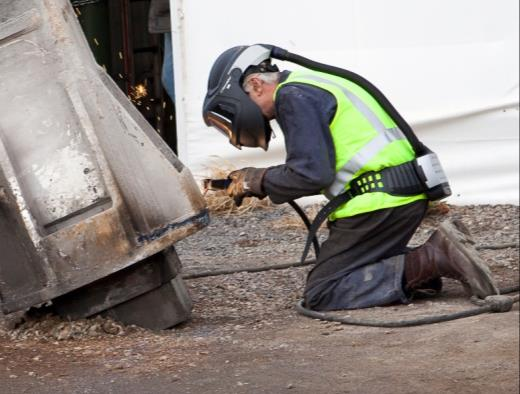
Finally, let's talk about fumes. Welding fumes are a cocktail of metallic oxides, silicates, and fluorides. One of the most hazardous is manganese, commonly found in steel alloys. Overexposure to manganese fumes can lead to a serious neurological condition called manganism, with symptoms similar to Parkinson's disease.
General ventilation is a start, but for production welding, especially in enclosed spaces, local exhaust ventilation (LEV) is critical. This involves using a fume extractor or smoke eater that captures fumes at the source, right near the arc, before they can reach your breathing zone. In situations where LEV isn't possible, a respirator is required. A Powered Air-Purifying Respirator (PAPR) offers the highest level of protection by supplying a constant stream of filtered air to the helmet.
When performing a GMAW weld, you hear a stable arc with a consistent crackling sound, often described as 'frying bacon'. What does this sound typically indicate?
In the electrode designation 'E7018', what does the '70' signify?
Mastering these details elevates your skill from a hobbyist to a professional, ensuring every weld is not only strong and clean but also created safely.