Mastering the Architecture of Persuasion
Cognitive Biases Fundamentals
The Brain's Shortcuts
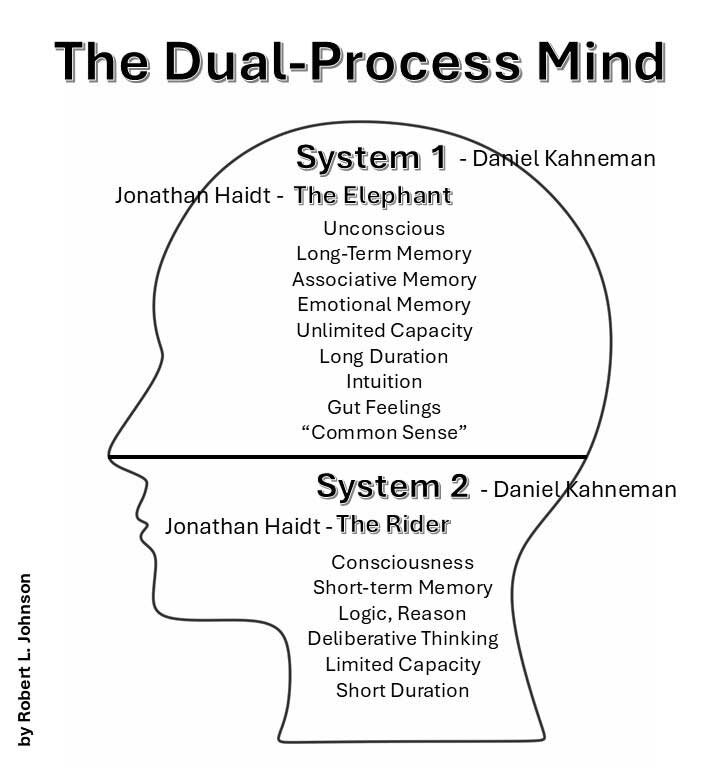
Your brain is lazy. Not in a bad way, but in an efficient way. It has to process millions of bits of information every second, so it develops shortcuts, or heuristics, to make quick judgments without using too much energy.
These mental shortcuts are the invisible architecture behind why a negotiation tactic works or why a marketing campaign resonates. They are predictable patterns in human irrationality. Understanding this psychological 'code' allows you to see the mechanics behind the decisions people make, whether they're at a bargaining table or scrolling through a product page.
To preserve cognitive resources, the human brain subconsciously takes mental shortcuts, called cognitive biases, whenever and wherever it can.
Instead of viewing marketing and negotiation as arts of persuasion, think of them as systems that tap into these pre-existing mental pathways. We're not changing minds so much as we are aligning our message with how minds already work.
Setting the Anchor
One of the most powerful heuristics is anchoring. The first piece of information someone receives heavily influences all subsequent judgments and decisions. This initial piece of information acts as an 'anchor,' and the mind rarely strays far from it.
In pricing, you see this constantly. A product is listed with a 'regular' price of $200, but it's on sale for $125. That $200 is the anchor. It makes $125 seem like a great deal, even if the item was never intended to sell for $200. The first number frames the value perception of the second.
In negotiation, the first offer on the table does the same thing. If you're selling a car and the buyer's first offer is extremely low, it drags the entire negotiation down. Your counteroffer will likely be lower than if they had started with a more reasonable figure. The person who sets the anchor often controls the negotiation's range.
Always try to set the first anchor in a negotiation. It defines the battlefield.
What Comes to Mind First
The availability heuristic describes our tendency to think that examples of things that come readily to mind are more representative than is actually the case. If you can recall something easily, you're more likely to think it's common or important.
This is why news reports about shark attacks, though statistically rare, can make people afraid to swim in the ocean. The story is vivid, emotional, and easy to remember, so the perceived risk skyrockets.
Marketers leverage this by creating memorable, emotionally charged campaigns. An ad showing a family devastated by a house fire makes the need for insurance feel immediate and probable. The vivid story is more powerful than a spreadsheet of fire statistics because it's more 'available' in the consumer's mind when they think about risk.
Finding What You're Looking For
Confirmation bias is the tendency to search for, interpret, favor, and recall information that confirms or supports one's prior beliefs or values. It's like our brains are lawyers, building a case for what we already think is true, rather than acting as scientists seeking objective truth.
In marketing, this means it's often more effective to target people who are already inclined to agree with your message. A company selling eco-friendly products will find more success with audiences that already value sustainability. Their marketing messages don't need to convince someone to care about the planet; they just need to confirm that this specific product is the best choice for someone who already cares.
When a message aligns with a pre-existing belief, it slips past mental defenses and is accepted as fact. When it challenges a belief, it's scrutinized, questioned, and often rejected, no matter how strong the evidence.
The Pain of Losing
People feel the pain of a loss about twice as strongly as they feel the pleasure of an equivalent gain. This principle is called loss aversion. Losing $100 feels much worse than finding $100 feels good.
This psychological quirk has huge implications. Free trials and money-back guarantees are built on this. Once a person has a product in their possession, giving it back feels like a loss. They've integrated it into their life, and the thought of losing it is more powerful than the initial desire to gain it.
This leads directly to the endowment effect: we overvalue things simply because we own them. The coffee mug you own is suddenly worth more to you than an identical one on the shelf.
In a negotiation, framing is key. Instead of saying, "You'll gain these three benefits by signing today," you could say, "You'll lose out on these three benefits if you don't sign today." The second version leverages loss aversion and is often more motivating.
Time to check your understanding of these mental shortcuts.
According to the text, why does the brain use heuristics, or mental shortcuts?
A car salesperson starts negotiations by stating the vehicle's high sticker price, even though they expect to sell it for less. Which principle is being used to influence the buyer's perception of value?
These heuristics are just a few of the many predictable patterns in human decision-making. By recognizing them, you can build more effective strategies and better understand the people you're trying to reach.