Mastering the Ancient Abacus
Abacus Origins
The First Calculators
Long before calculators fit in our pockets, and even before the numbers we use today were common, people needed to count. Ancient civilizations in Mesopotamia and Egypt were bustling with trade, construction, and agriculture. They had to track grain harvests, tally taxes, and measure land. But how do you add or subtract large numbers without a written system like ours?
You use a counting board. The earliest versions were incredibly simple: just a flat surface like sand, dust, or a wooden board with lines drawn on it. Pebbles or other small tokens were placed on these lines to represent numbers. By moving the pebbles from one line to another, a person could perform arithmetic much faster and more reliably than doing it in their head.
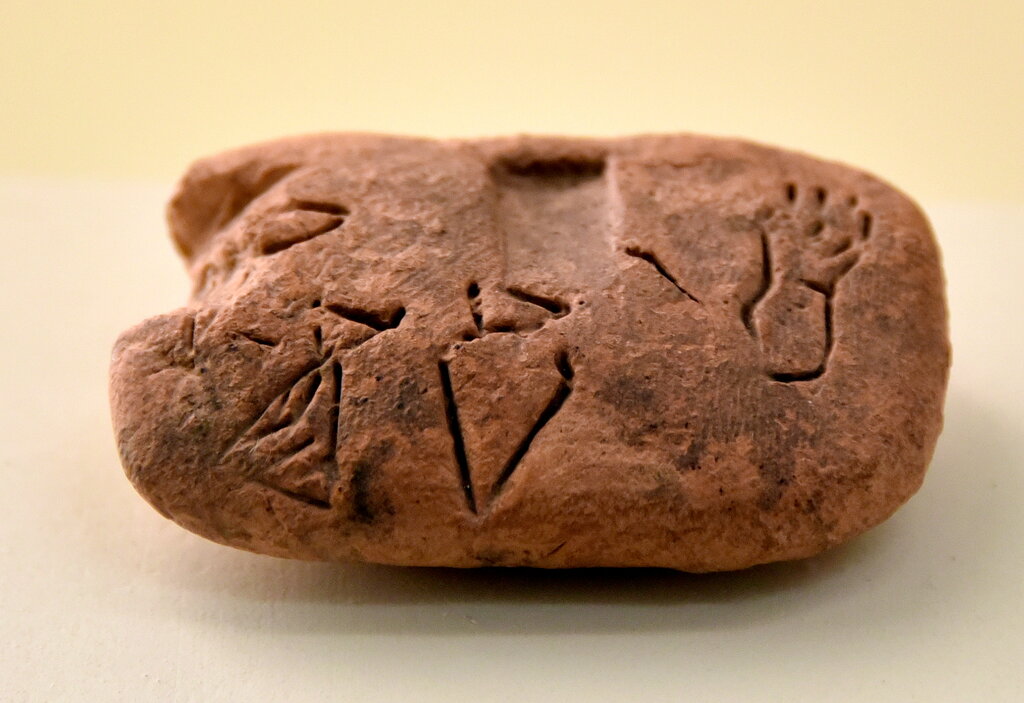
The Sumerians, in what is now Iraq, were among the first to formalize this. They developed a base-60 counting system, which we still see remnants of today in our measurement of time (60 seconds in a minute) and angles (360 degrees in a circle). Their counting boards allowed merchants to manage complex transactions without needing to write down every step.
These simple boards were the world's first data processing devices. They made complex math accessible and manageable for everyday tasks.
Greek and Roman Refinements
The Greeks and Romans adopted and adapted the counting board. The Greek version was often a marble slab or wooden table with marked lines for different values. The Roman abacus followed a similar principle but with a clever innovation: grooves or slots were carved into the board. Small counters, usually pebbles or metal beads, could slide up and down in these grooves.
This design was a significant step forward. The grooves kept the counters from being accidentally knocked out of place, making calculations more secure. Each groove represented a different place value, similar to our modern ones, tens, and hundreds columns.
abacus
noun
A calculating tool that uses beads or counters that slide on rods or in grooves, used for performing arithmetic.

A Roman counting board had several grooves for whole numbers and sometimes a few extra for fractions, which were crucial for currency and measurements. A user would represent a number by sliding counters towards a central bar. This system allowed for addition, subtraction, multiplication, and division with surprising speed.
From Grooves to Beads
The familiar image of an abacus with beads on rods is a later evolution, most famously developed in China as the suanpan. This design replaced the grooves with parallel rods and the loose counters with beads that were permanently strung on them. This made the device portable and even faster to use.
The suanpan typically has a horizontal beam dividing the rods. Beads in the lower section are worth one unit of their place value, while beads in the upper section are worth five. This two-part system, known as bi-quinary, is incredibly efficient for calculation.
From China, this design spread to other parts of Asia, evolving into different forms like the Japanese soroban, which simplified the design to one bead on top and four on the bottom. Long before written numerals became easy to use for arithmetic, the abacus was the essential tool that powered economies, enabled scientific inquiry, and helped build empires.
Ready to check your understanding?
What was a primary motivation for the development of early counting boards in civilizations like Mesopotamia and Egypt?
What key innovation did the Roman abacus introduce that made it more reliable than earlier Greek counting boards?
These early counting tools laid the groundwork for the complex mathematics and technology we rely on today.