Mastering the All Phonics Sound
Broad A Mechanics
The “All” Sound Shift
You're familiar with the short 'a' sound, /æ/, from words like 'cat' and 'map'. It’s a front vowel, made with the tongue pushed forward. But what happens when 'a' comes before a double 'l'? The sound changes completely.
Take the word 'ball'. The 'a' here doesn't sound like the 'a' in 'bat'. Instead, it makes a broad /ɔː/ sound, similar to the vowel in 'caught'. This happens because the 'l' that follows is a special kind of consonant. It has a 'liquid' quality that influences the vowel before it, pulling the sound from the front of the mouth to the back.
This shift from the /æ/ in 'cat' to the /ɔː/ in 'call' is a predictable pattern. Whenever you see 'a' followed by 'll', expect this broad vowel sound.
How to Make the Sound
Producing the /ɔːl/ sound correctly involves a two-part movement. It’s a smooth transition from the vowel to the consonant.
First, for the /ɔː/ vowel, your jaw drops slightly and your lips round a little. The key action is in the back of your tongue, which rises toward the soft palate. You should feel the sound resonating from the back of your mouth.
From there, your tongue tip moves forward and up to make the /l/ sound. It should lightly tap the bumpy area just behind your upper front teeth, which is called the alveolar ridge. As you do this, the air flows around the sides of your tongue. This complete sound is an alveolar lateral approximant., a core sound in English.
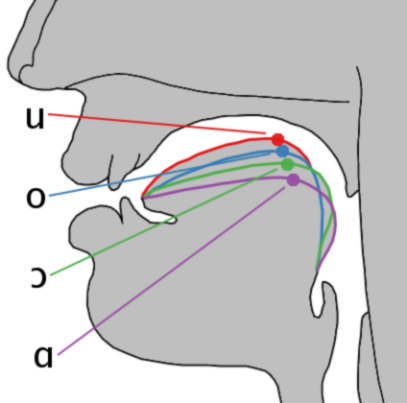
Let's practice the sequence:
- Start with your mouth slightly open and relaxed.
- Raise the back of your tongue and round your lips to make the /ɔː/ sound.
- Without stopping the sound, bring the tip of your tongue up to the alveolar ridge to finish with the /l/.
Spotting 'All' in the Wild
Once you recognize the sound, you'll start noticing the 'all' pattern everywhere. It’s a common building block for many words. The letters 'a-l-l' work as a team to create a single, consistent ., making it a reliable rule for reading.
Look around your home. You might see a 'wall' in a 'hall'. A toy might be 'small' or a person might be 'tall'. You might 'call' someone or play with a 'ball'. Each of these words uses the exact same phonetic mechanism we've just broken down.
| CVC Word (Short /æ/) | 'all' Word (Broad /ɔː/) |
|---|---|
| tan | tall |
| fan | fall |
| ban | ball |
| man | mall |
This pattern is a foundational piece of English phonics. Recognizing it quickly will improve both your reading speed and your pronunciation.
How does the sound of the letter 'a' in the word 'ball' compare to the sound of the 'a' in 'cat'?
What causes the vowel sound in a word like 'small' to be different from the one in 'map'?