Mastering the AI Frontier
Modern Model Architectures
The Efficiency of Sparsity
For years, the path to more powerful AI models seemed straightforward: just make them bigger. Adding more parameters to dense transformer models generally led to better performance. But this approach has a costly bottleneck. In a dense model, every single parameter is used to process every single piece of incoming data, or token. As models scaled into the trillions of parameters, the computational cost for each prediction became enormous.
The solution was to work smarter, not just harder. Enter the Mixture of Experts (MoE) architecture. Instead of one monolithic network, an MoE model is composed of many smaller, specialized "expert" networks. Think of it like consulting a team of specialists. When you have a legal question, you don't ask your entire team of doctors, engineers, and artists for their input. You route the question to the lawyer. Similarly, an MoE model uses a lightweight "router network" to send each token to only the most relevant experts, typically just two or four out of dozens or even hundreds available.
This is called sparse activation. While the model may have a staggering number of total parameters (like the 1.8 trillion in some versions of GPT-4), it only uses a small fraction of them for any given token. This allows models to scale their knowledge capacity dramatically without a proportional increase in the computational cost of inference. Models like Mistral's Mixtral 8x7B and DeepSeek-V2 are prime examples of this powerful and efficient design.
Models That 'Think' Longer
Another major shift is how models allocate computation during inference, or the process of generating a response. Traditionally, the goal was to make inference as fast as possible. But what if a problem requires deeper thought? For simple questions like "What is the capital of France?", a quick response is fine. For a complex query like "Devise a business plan for a new sustainable energy startup," a model might benefit from spending more time reasoning.
This is the principle behind Test-Time Compute. Instead of a fixed amount of computation for every query, these models can dynamically allocate more processing power and time for more difficult problems. Think of it as the model deciding to "think longer" when faced with a challenge. OpenAI's next-generation models, sometimes referred to as 'reasoning models', are built on this concept. They might use techniques like running internal simulations, evaluating multiple chains of thought, or iteratively refining an answer before presenting a final result. This allows for a significant leap in performance on complex reasoning, math, and coding tasks that have stumped previous architectures.
Unifying the Senses
AI is moving beyond text. True intelligence requires understanding a world filled with images, sounds, and videos. Early multimodal models handled this by using separate, specialized encoders for each data type. A vision transformer would process an image, an audio model would process a sound clip, and their outputs would be fed into a large language model to be reasoned about. This worked, but it was like trying to have a conversation through a series of translators—nuance was often lost.
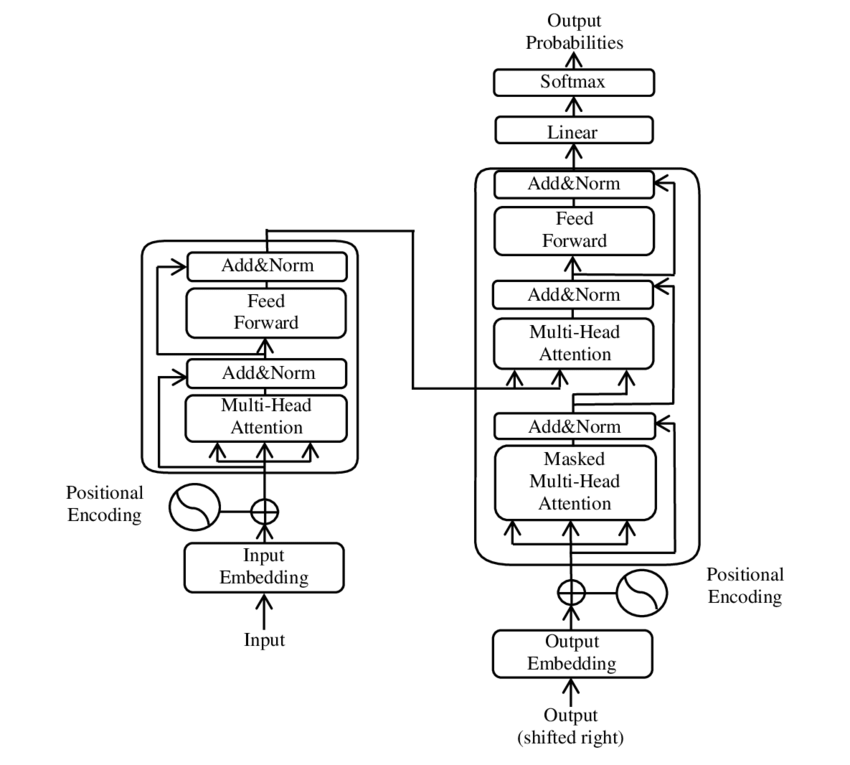
The frontier is now native multimodality. Instead of bolting on separate systems, modern architectures are designed from the ground up to process an interleaved sequence of data. An image, a snippet of text, and a sound wave can all be broken down into a shared representation—tokens—and fed into a single, unified transformer. This allows the model to build much richer, more interconnected understanding of the world. It can, for instance, directly correlate the sound of a braking car in a video with the visual of a tire skid mark appearing on the road, without an intermediate step. This unified approach is critical for creating more capable and intuitive AI assistants.
Hybrids for a Longer View
One of the transformer's main limitations is its handling of very long sequences of data. The computational complexity of its self-attention mechanism grows quadratically with the length of the input, making it inefficient for processing entire books, codebases, or hours of video. This has been a major barrier to true long-context understanding.
To solve this, researchers are creating hybrid architectures. A promising approach combines the powerful reasoning capabilities of transformers with the efficiency of other architectures, like State Space Models (SSMs). Mamba is a prominent example of an SSM architecture that processes data linearly, making it much faster and less memory-intensive for long sequences.
Models like Jamba are a prime example of this hybrid approach. They interleave transformer blocks with Mamba blocks, getting the best of both worlds: the high performance of transformers and the long-context efficiency of SSMs.
This hybrid design allows models to maintain high-quality understanding while dramatically expanding their context window, enabling them to analyze and synthesize information from vast amounts of data in a single pass.
What is the primary advantage of a Mixture of Experts (MoE) architecture compared to a traditional dense transformer model?
The concept of "Test-Time Compute" in advanced AI models is best described as the ability to:
These architectural innovations—sparsity, flexible compute, native multimodality, and hybrid designs—are what separate the frontier models of 2025 from their predecessors. They represent a fundamental shift toward building more capable, efficient, and versatile AI systems.