Mastering the Academic Poster Presentation
Understanding Academic Posters
More Than Just a Big Sheet of Paper
Think of an academic poster as a movie trailer for a research project. A full research paper can be long and dense, packed with details. A poster, on the other hand, is a visual summary designed to grab attention and start a conversation. It boils down months or even years of work into a format that someone can understand in just a few minutes.
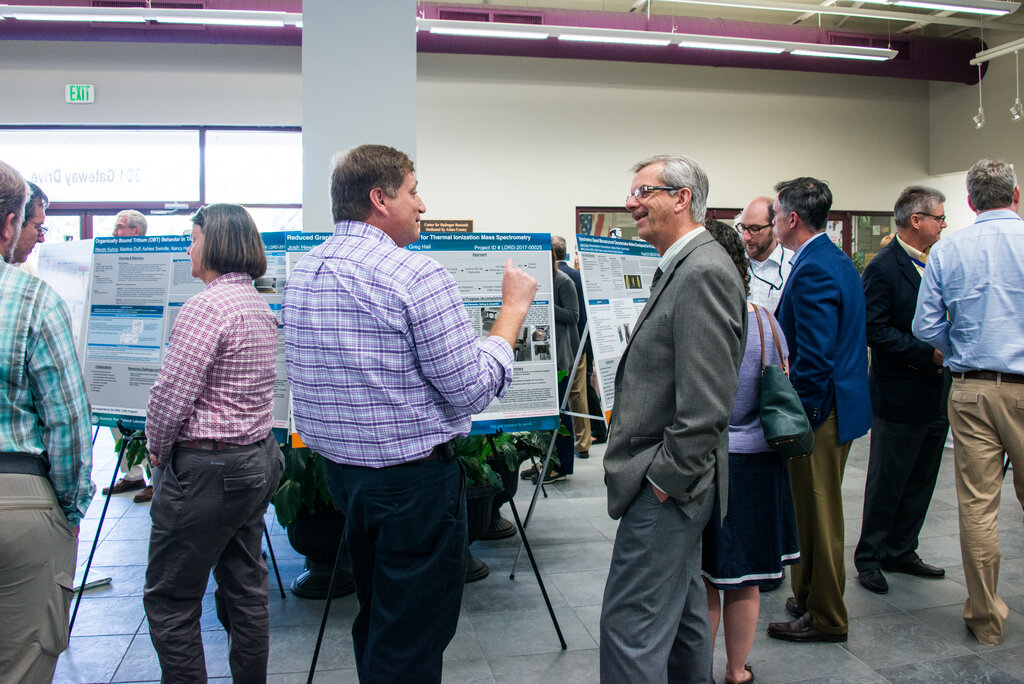
The main goal isn't to present every single detail. It's to communicate the most important findings clearly and quickly. At a busy conference, researchers walk through halls lined with posters. They scan for topics that catch their eye. A good poster tells a clear story, hitting the key points: what problem was studied, how it was studied, what was found, and why it matters. This visual format makes complex information easier to digest than a wall of text.
A well-designed poster should be able to stand alone, conveying the key points of your research even when you're not present to explain it.
This leads to the poster's second, equally important purpose: sparking dialogue. The poster is a backdrop for one-on-one conversations between the researcher and anyone who is interested. It’s a chance to ask questions, offer ideas, and build professional connections in a way that’s much more personal than a formal lecture.
Posters vs. Talks
In the academic world, the two most common ways to share research at events are oral presentations (often called talks) and poster presentations. While both aim to share knowledge, they offer very different experiences for the presenter and the audience.
| Feature | Poster Presentation | Oral Presentation |
|---|---|---|
| Interaction | High (direct, one-on-one) | Low (Q&A at the end) |
| Pacing | Audience-controlled | Speaker-controlled |
| Format | Visual and spatial | Linear and auditory |
| Time | Flexible engagement | Fixed, limited schedule |
An oral presentation is a performance. The speaker guides a room full of people through a structured narrative, usually with slides. The audience is passive until a short question-and-answer session at the end. It's a one-to-many form of communication.
A poster session flips this dynamic. It's a many-to-many environment. Dozens of researchers stand by their posters, and attendees are free to wander, stopping wherever they please. The viewer controls the pace, deciding how long to spend at each poster and what questions to ask. This format is less formal and more interactive, allowing for deeper, more personalized discussions.
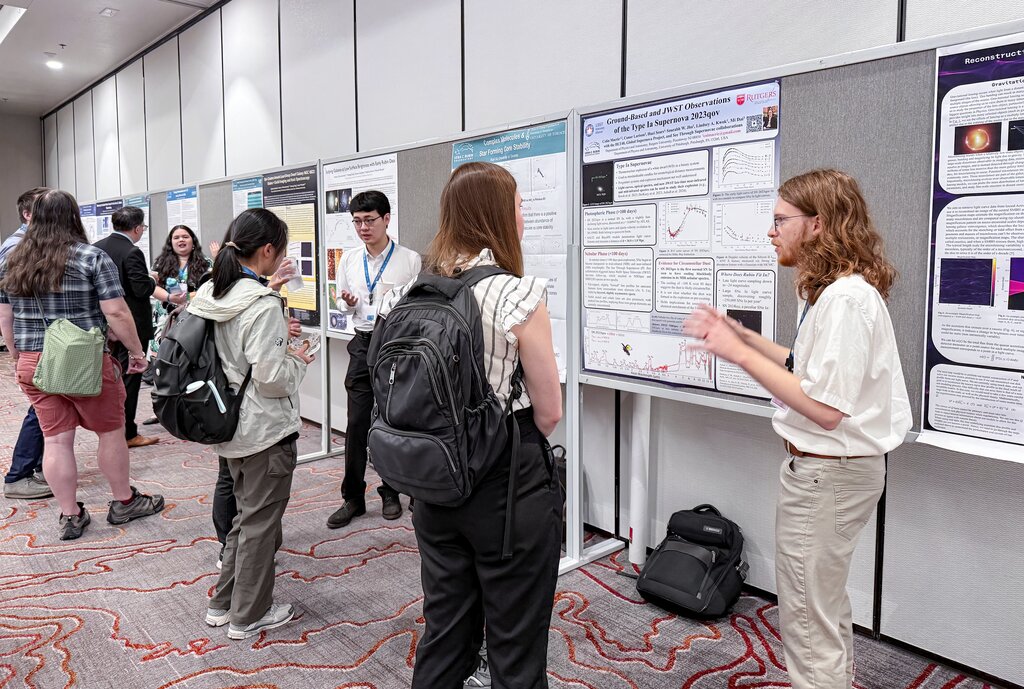
You'll find poster sessions at scientific conferences, academic symposia, and university research fairs. They are especially common for students and early-career researchers to present work that's still in progress, allowing them to get valuable feedback from experts in their field.
Key Elements of an Effective Poster
While we won't dive into design rules here, it's helpful to know the basic ingredients of a successful poster. A good poster is built on three pillars.
Clarity: The message should be unmistakable. A viewer should immediately grasp the main topic and findings. This means a descriptive title, logical flow, and simple language.
Think of it as telling a story. There should be a clear beginning (Introduction), middle (Methods & Results), and end (Conclusion). Each section should flow logically into the next.
Conciseness: Less is more. A poster cluttered with text is intimidating and unlikely to be read. Effective posters use bullet points, short sentences, and visuals to convey information efficiently.
The goal is to provide just enough information to be intriguing and facilitate a conversation. The finer details can be discussed in person or shared in a handout.
Visual Appeal: A poster is a visual medium. High-quality images, graphs, and charts are more effective at telling a story than dense blocks of text. A clean, organized layout with plenty of white space makes the poster inviting and easy to read from a distance.
These three elements work together to turn a simple summary of research into an effective tool for communication and connection.