Mastering the 90 Degree Hold
Bent-Arm Scapular Conditioning
Bent-Arm Scapular Strength
To achieve a 90-degree hold, standard pushing strength isn't enough. The challenge lies in conditioning the shoulder blades—the scapulae—to behave in a very specific way while your arms are bent. Unlike a regular push-up where your scapulae retract and protract freely, this hold demands sustained, active protraction (pushing forward) and depression (pulling down) under a significant horizontal load.
Think of it like this: your torso is a platform that must remain perfectly level. Your arms are the supports, but the real work happens where those supports connect to the platform—at your shoulder blades. Collapsing the chest or letting the shoulders creep up to your ears means the platform is unstable. The goal is to create maximum space between your shoulder blades and to push them down towards your hips, all while maintaining a 90-degree bend at the elbows.
This movement specifically targets the [{
}] and lower trapezius muscles, which are crucial for the stability required to keep your body parallel to the ground.
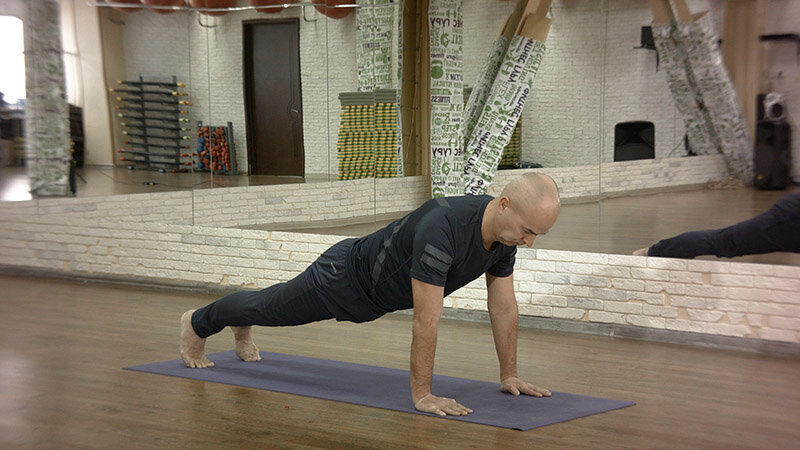
The Bent-Arm Planche Lean
The primary exercise for developing this specific strength is the Bent-Arm Planche Lean. It isolates the necessary scapular action and gradually introduces the forward lean that shifts your center of gravity. This is where you build the foundation for the full hold.
Here’s how to perform it:
- Start Position: Get into a push-up position, then lower yourself until your elbows are at a 90-degree angle. Your body should form a straight line from head to heels.
- Scapular Action: Without changing your elbow angle, actively push the floor away. Imagine spreading your shoulder blades apart across your back (protraction). At the same time, pull your shoulders down and away from your ears (depression).
- The Lean: Maintaining this scapular tension, slowly lean your body forward, shifting your shoulders past your hands. Go only as far as you can without losing the 90-degree arm bend or scapular position. Hold for time.
The key is to fight the urge to collapse. Your chest should feel open and your upper back broad and engaged.
Hand Positioning
How you place your hands matters. For the Bent-Arm Planche Lean, you have two primary options: neutral or supinated.
| Position | Description | Pros & Cons |
|---|---|---|
| Neutral | Palms face each other. Usually requires parallettes or push-up handles. | Pro: Puts wrists in a natural, less-strained position. Con: Requires equipment. |
| Supinated | Palms face forward (fingers pointing away from you). | Pro: Engages the biceps more for stability. Con: Can be very stressful on the wrists and elbows. Requires significant wrist flexibility and conditioning. |
Beginners should start with a neutral grip using parallettes to build strength without compromising wrist health. Only move to a supinated grip on the floor once you have strong, flexible wrists and can perform the lean with perfect form.
What are the two primary scapular actions required to maintain a stable 90-degree hold?
During a Bent-Arm Planche Lean, you notice your shoulders are starting to touch your ears. What specific scapular action do you need to focus on to correct this?
Mastering the bent-arm scapular push and lean is a non-negotiable step. It builds the specific muscular endurance and control that will support your entire body in the final hold.