Mastering the 5S Workplace System
Introduction to 5S
A System for Order
Think about the last time you couldn't find your keys, a specific file on your computer, or the right tool for a simple repair. How much time did you waste searching? That frustration and inefficiency is exactly what the 5S system is designed to eliminate.
5S is a method for organizing a workspace to make it safer, more efficient, and more productive. It originated in Japan as part of the Toyota Production System, a framework famous for its focus on eliminating waste. The name “5S” comes from five Japanese words, each representing a step in the process.
5S is a five-step methodology that creates a more organized and productive workspace.
Though it started in manufacturing, its principles can be applied anywhere, from an office to a hospital, or even your own garage.
The Five Pillars
The methodology is built on five core pillars. Each step builds on the last, creating a systematic way to achieve and maintain a clean, organized, and functional environment. Let's look at each one.
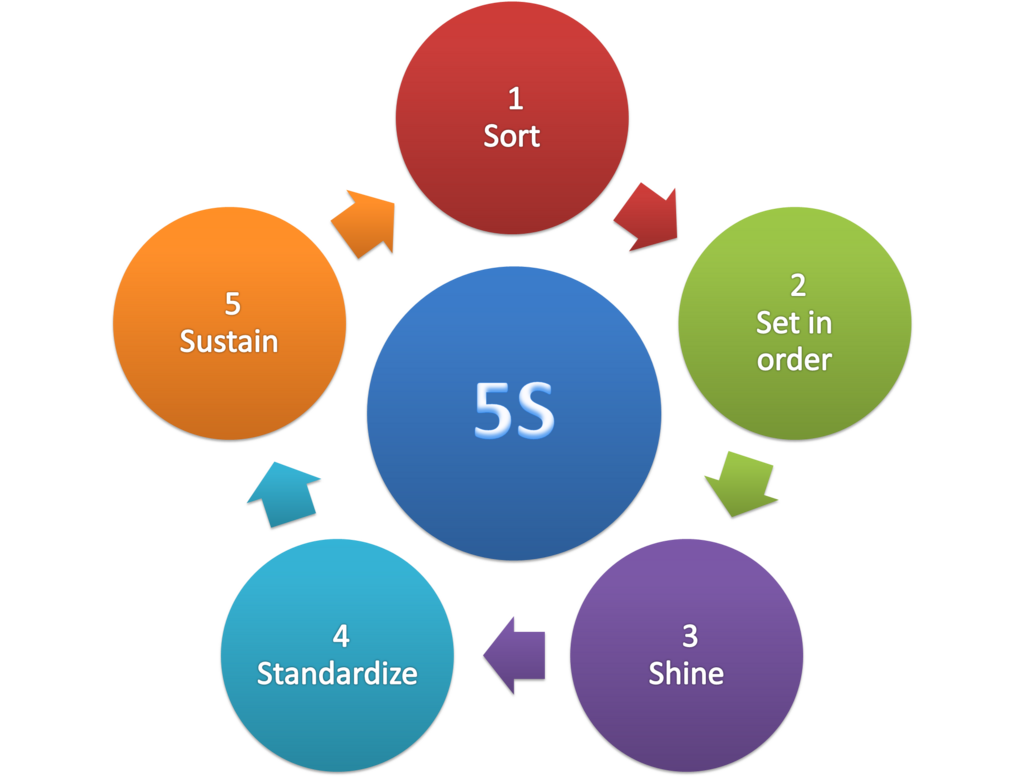
1. Sort (Seiri) This is the decluttering phase. The goal is to separate the necessary from the unnecessary. You go through everything in the workspace—tools, papers, equipment—and remove anything that isn't needed for the current work. If you don't use it, lose it.
Sort
2. Set in Order (Seiton) Once you've removed the clutter, you need to organize what's left. This step is guided by the principle: "a place for everything, and everything in its place." Items should be arranged logically, making them easy to find, use, and return.
Set in Order
3. Shine (Seiso) This means cleaning the workspace. But it's more than just sweeping the floor. It's about maintaining the equipment and the environment, which often helps you spot problems, like an oil leak or a frayed wire, before they become serious.
Shine
4. Standardize (Seiketsu) Now it's time to create rules to keep things in order. Standardization turns the first three steps into habits. This could involve creating schedules for cleaning, using labels and color-coding to mark where things belong, and documenting best practices.
Standardize
5. Sustain (Shitsuke) This is the hardest step. Sustain means making 5S a long-term habit. It requires discipline and commitment from everyone. The goal is to stick to the rules and continuously look for ways to improve, making 5S a part of the company culture.
Sustain
Why It Works
Implementing 5S brings tangible benefits. When a workspace is well-organized, work flows more smoothly. Employees spend less time searching for what they need and more time doing valuable work. This boosts productivity and reduces frustration.
A clean and orderly environment is also a safer one. Clear floors prevent slips and falls, and properly stored tools reduce the risk of accidents. This process also encourages employees to take ownership of their workspace, which can lead to higher engagement and morale.
Companies like Boeing have used 5S to streamline aircraft assembly lines, reducing the time it takes to build a plane. General Electric applied it in their manufacturing plants to improve efficiency and quality control, leading to significant cost savings. These examples show that a little bit of organization can go a long way.
Ready to check your understanding?
What is the primary goal of the 5S methodology?
The principle "a place for everything, and everything in its place" is the core idea behind which 5S step?
Ultimately, 5S isn't just a one-time cleanup project. It’s a foundational practice for creating a culture of continuous improvement, paving the way for more complex process enhancements down the line.