Mastering Texas Hold'em Poker Strategies
Preflop Fundamentals
Position is Everything
In Texas Hold'em, where you sit at the table is just as important as the cards you're dealt. Your "position" refers to the order in which you act during a betting round. Acting after your opponents gives you a massive advantage because you have more information. It's like having the last word in a conversation; you get to hear everyone else's opinion before you state your own.
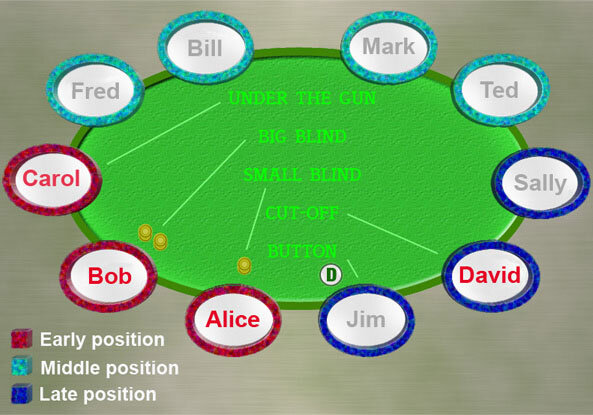
The positions rotate around the table with the dealer button after each hand. The seats to the left of the blinds are considered "early position." You have to act first with little to no information about what the other players will do. It's like walking into a dark room; you have to be careful.
The seats around the dealer button are "late position." From here, you get to see everyone else check, bet, or raise before it's your turn. This information is gold. It lets you make better decisions, control the size of the pot, and even bluff more effectively because you know how your opponents have acted.
Position is your most powerful weapon in Texas Hold’em – players in late position win approximately 60% more hands than those in early position
Choosing Your Cards
Your position directly influences which starting hands you should play. Since acting last is such a powerful advantage, you can afford to play a wider variety of hands from late position. Conversely, when you're in early position, you must be much more selective. You should only play your strongest hands because of the high risk of being raised by a player acting after you.
Think of it this way: from early position, you need a hand that can withstand pressure from multiple players. A hand like Ace-King is great, but a hand like 7-8 of the same suit is much riskier. From the button, however, that 7-8 suited becomes much more playable. If everyone has checked to you, you might be able to win the pot right there with a bet, or you could see a cheap flop and try to hit a straight or a flush.
The rule is simple: the earlier your position, the tighter your starting hand requirements. The later your position, the wider you can open your range.
How Much to Bet
When you're the first person to enter the pot, it's called "opening the pot." The standard advice is to open with a raise rather than just calling the big blind (known as "limping"). Raising is more aggressive and gives you two ways to win: either everyone folds and you take the blinds, or you go to the flop with the initiative, which allows you to continue telling a strong story on later streets.

So, how much should you raise? A good standard opening bet size is between 2.5 and 3 times the big blind. For example, if the blinds are $1/$2, a standard open would be between $5 and $6.
Why this amount? It's large enough to discourage players with weak hands from calling cheaply, but not so large that you risk too much if you get re-raised. Consistency is key. You should generally raise to the same size with all the hands in your opening range, whether you have pocket Aces or a more speculative hand. This makes you harder to read. If you bet big with your strong hands and small with your weaker ones, observant opponents will quickly pick up on it.
Now, let's test what you've learned about the preflop fundamentals.
What is the primary advantage of being in a "late position" (like the button) in Texas Hold'em?
How should your starting hand selection change when moving from an early position to a late position?
Mastering these preflop concepts—position, hand selection, and bet sizing—is the first step toward becoming a solid poker player. They form the foundation upon which all your later decisions are built.