Mastering Tennis Fundamentals
Tennis Fundamentals
Grips and Groundstrokes
Everything in tennis starts with how you hold the racquet. The way you grip the handle affects every shot you hit. Two fundamental grips will get you through most situations: the Continental and the Eastern.
The Continental grip, often called the “hammer grip,” is like shaking hands with the racquet. If you look at the end of the handle, you’ll see it’s an octagon with eight sides, or bevels. For a right-handed player, place the base knuckle of your index finger on bevel #2. This versatile grip is used for serves, volleys, and overheads.
The Eastern grip is the go-to for powerful, flat forehands. To find it, just shift your hand one bevel clockwise from the Continental grip, so your index knuckle rests on bevel #3. This grip makes it feel natural to meet the ball squarely.
The forehand is a groundstroke hit on your dominant side after the ball has bounced. For a right-handed player, this is on the right side of the body.
To hit a forehand, start by turning your body sideways, with the racquet back. As the ball approaches, swing forward, keeping your arm relaxed but firm. Make contact with the ball in front of your body, then follow through by bringing the racquet up and across your opposite shoulder. This smooth, fluid motion generates power and control.
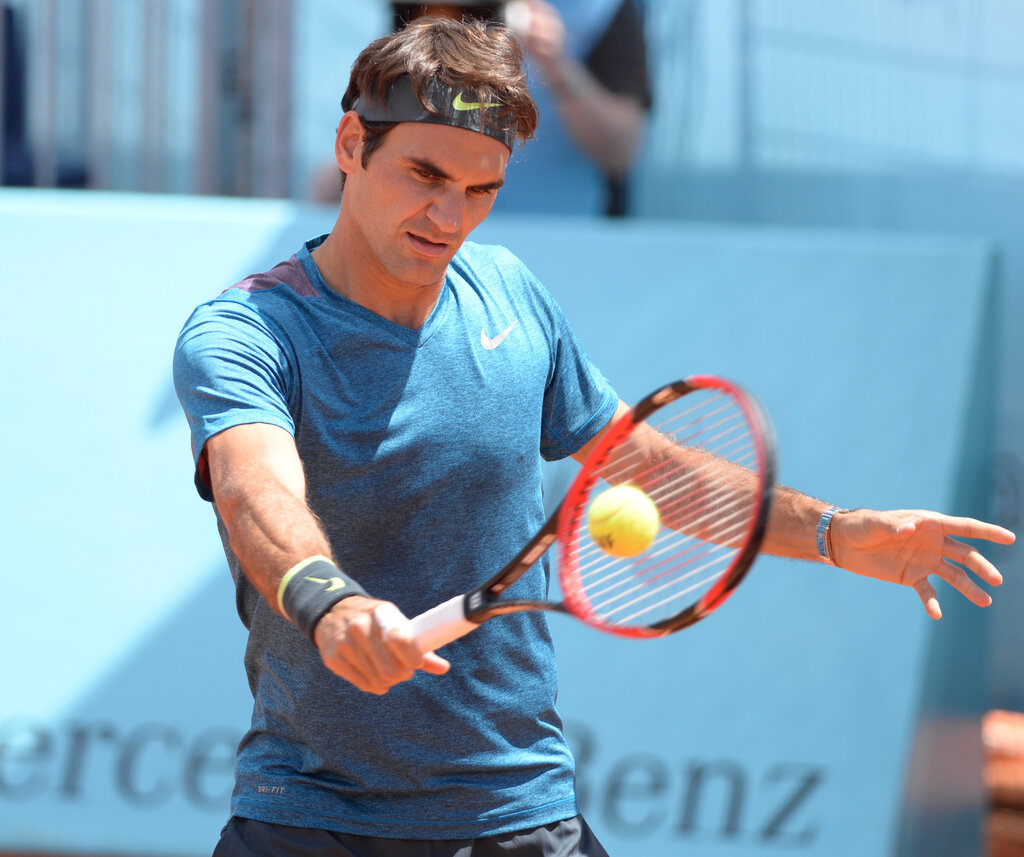
The backhand is hit on your non-dominant side. You can hit it with one or two hands. A two-handed backhand offers more stability and power, which is why many beginners and pros prefer it. The motion is similar to the forehand: turn your body, swing from low to high, and make contact out in front. For a one-handed backhand, the non-hitting hand helps position the racquet before the swing begins.
Serving and Net Play
The serve is the shot that starts every point. It's the only shot you have complete control over. While complex, the basic motion can be broken down into a few parts. Most players use a Continental grip for the serve.
First, stand sideways behind the baseline. Begin the motion by tossing the ball into the air with your non-racquet hand, just slightly in front of you and high enough to hit at the peak of your reach. As you toss, bring your racquet back and up. Reach up to meet the ball at its highest point, snapping your wrist forward to generate pace and spin.

When you approach the net, you’ll need to hit volleys. A volley is a short, punchy shot hit before the ball bounces. There’s no big backswing here. The key is to keep it simple. Use a Continental grip, keep the racquet face firm, and use your opponent's pace to redirect the ball. Think of it as blocking or punching the ball back over the net, not swinging at it.
Moving Your Feet
Tennis is a game of movement. Good footwork gets you to the ball in a balanced position so you can hit a good shot. It all starts from the ready position: feet shoulder-width apart, knees bent, and weight on the balls of your feet, with your racquet held up in front of you.
If you are worried about your technique, it is a good idea to have a couple of one-on-one lessons with a coach, who will teach you the fundamentals of all the different shots and is also likely to stress the importance of moving your feet well.
Just before your opponent hits the ball, take a small hop. This is called a split-step. It primes your body to move quickly in any direction, whether you need to run left, right, forward, or back. When moving along the baseline, use small shuffle steps to make minor adjustments. When you need to move to a short ball, run forward, hit your shot, and then shuffle back to your position.
Mastering these basic strokes and movements will build a strong foundation for your entire game. Practice them consistently, and you'll be well on your way to playing confident tennis.
For a right-handed player, placing the base knuckle of the index finger on bevel #2 results in which grip?
The Continental grip is most commonly recommended for which combination of shots?