Mastering Team Dynamics
Team Dynamics
How Teams Come Together
Think of any great team, whether it's a championship sports team, a band playing in perfect harmony, or the crew of a successful film. They don't just show up and perform brilliantly from day one. There's an underlying process at play, a set of invisible forces that shape how people work together. This is the essence of team dynamics.
Every team is a complex system of personalities, skills, and communication styles. Understanding how these elements interact is the first step toward building a group that doesn't just work together, but thrives. Just like a plant, a team has distinct stages of growth, and recognizing them helps everyone navigate the journey.
The Five Stages of a Team
In the 1960s, a psychologist named Bruce Tuckman developed a simple but powerful model to describe how teams evolve. He identified five distinct phases that most teams go through, from their initial formation to the completion of their project. This framework is still widely used today because it accurately captures the natural life cycle of a team.
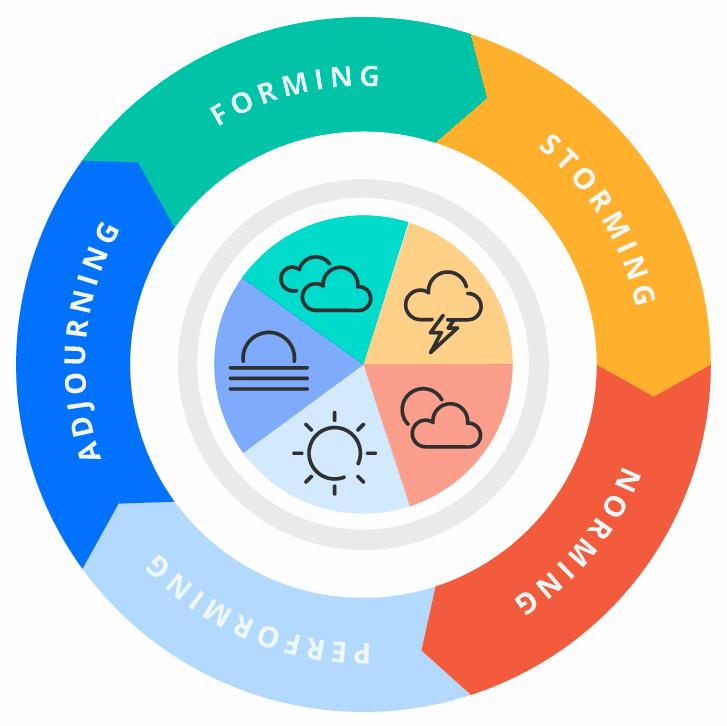
Let's break down each stage:
-
Forming: This is the polite, introductory phase. Team members are often cautious and focused on understanding the project and their colleagues. Think of it as a first date. Everyone is on their best behavior, and there's a lot of uncertainty. The group is more of a collection of individuals than a unified team.
-
Storming: Once the initial politeness wears off, reality sets in. People's different working styles and opinions start to clash. This stage can be full of friction and disagreement as members compete for status and control. It might feel uncomfortable, but this phase is crucial for building trust and figuring out how to work through differences.
-
Norming: After weathering the storm, the team starts to find its groove. Members begin to appreciate each other's strengths, establish ground rules, and develop a shared commitment to the goal. A sense of cohesion emerges, and people start helping one another. Communication becomes more open and productive.
-
Performing: This is the peak of a team's effectiveness. With established norms and clear roles, the group can focus its energy on achieving its goals. The team is confident, autonomous, and able to handle challenges without needing constant oversight. Work flows smoothly, and the team is highly productive.
-
Adjourning: All projects eventually come to an end. In this final stage, the team wraps up its work and disbands. This can be a bittersweet moment, filled with a sense of accomplishment and celebration, but also some sadness as the team's journey concludes.
Tuckman stated that these five stages are necessary for a team to progress, develop and deliver results successfully.
Finding Your Place
Just as the team evolves, so do the roles within it. These roles aren't always about official job titles. They're about the natural functions people take on to help the group succeed. One person might be great at generating new ideas, while another excels at organizing tasks and keeping everyone on track. Someone else might be the social glue, making sure everyone feels included and heard.
These informal roles often fall into three main categories.
| Role Category | Description | Examples |
|---|---|---|
| Task-Oriented | Focus on getting the work done. | Initiator, information-seeker, coordinator, evaluator. |
| Relationship-Oriented | Focus on maintaining group harmony. | Encourager, harmonizer, compromiser, gatekeeper. |
| Individualistic | Focus on personal needs, often at the team's expense. | Blocker, recognition-seeker, dominator. |
Effective teams have a good balance of task-oriented and relationship-oriented roles. The person who challenges the group's thinking is just as valuable as the person who ensures deadlines are met.
However, individualistic behaviors can hinder progress. When one person consistently puts their own needs first, it can disrupt the team's focus and create resentment. This is where awareness of team dynamics becomes crucial. By understanding your own tendencies and recognizing the behaviors of others, you can adapt your approach to better support the team's goals.
Your behavior, positive or negative, directly impacts the team's momentum. A single person's enthusiasm can lift the entire group, just as one person's negativity can drag it down.
Understanding these dynamics gives you a map for navigating teamwork. It helps you see where the team is in its lifecycle, identify the roles people are playing, and recognize how individual actions contribute to the collective success or failure of the group.