Mastering Team-Based Learning
Introduction to Team-Based Learning
Flipping the Classroom
Imagine a classroom where the focus shifts from a lecturing professor to active, problem-solving student groups. That's the core idea behind Team-Based Learning, or TBL. It's not just another name for group work; it's a structured teaching strategy designed to make learning more engaging and effective.
TBL was developed in the 1970s by Larry Michaelsen, a business professor at the University of Oklahoma. He was faced with a challenge: teaching a large class of over 100 students without losing the benefits of small-group discussion. His solution was a method that turned the traditional classroom model on its head. Instead of using class time to deliver information, TBL uses it to apply information.
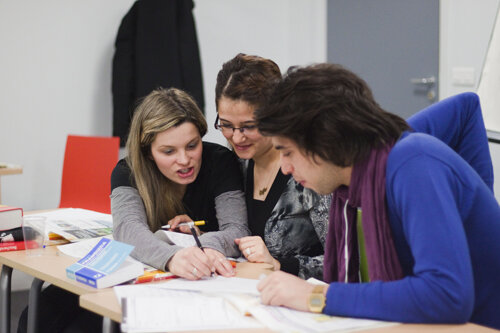
In a TBL setup, students prepare before class by reading or watching assigned materials. Class time is then dedicated to teamwork, where students collaborate to solve complex problems, make decisions, and defend their choices.
The Core Principles
Team-Based Learning is built on a few key principles that distinguish it from simple group projects.
Strategically Formed Teams: The instructor creates diverse teams of 5-7 students that stay together for the entire course. Unlike self-selected groups, these teams are carefully balanced to distribute skills and perspectives, preventing situations where one or two students do all the work.
Student Accountability: TBL holds students responsible for two things: their individual preparation before class and their contributions to the team. This is often managed through a process called the Readiness Assurance Process (RAP), where students first take a short quiz individually and then take the same quiz again as a team. This ensures everyone comes prepared and has a stake in the team's success.
Application-Focused Activities: The majority of class time is spent on activities that require teams to apply course concepts to make a significant choice. These aren't simple review questions. They are often complex scenarios that require discussion, debate, and consensus.
Frequent and Immediate Feedback: A core tenet of TBL is continuous feedback. During the team quiz, groups get instant clarification on what they know and what they don't. During application activities, teams must commit to a specific answer and then simultaneously report it to the entire class, leading to rich, instructor-guided discussions.
Why It Works
Shifting from a traditional lecture to TBL has several powerful benefits. The most significant is a move from passive memorization to active, deeper learning. Students don't just hear about concepts; they wrestle with them, debate them, and apply them. This process builds critical thinking and problem-solving skills that stick long after the final exam.
Engagement naturally increases because the learning process is social and interactive. It's difficult to be disengaged when your team is counting on you. Students also develop crucial teamwork and communication skills—the kind employers consistently say they are looking for.
Finally, TBL makes active learning scalable. Michaelsen's original problem of teaching a large class is solved. An instructor can facilitate meaningful learning experiences for hundreds of students at once because the teams provide the small-group learning environment.
Active teaching and learning activities (T/LA) include a wide range of strategies which share the common element of involving students in doing things and thinking about the things they are doing (Bonwell & Eison, 1991).
| Feature | Traditional Lecture | Team-Based Learning |
|---|---|---|
| Student's Role | Passive listener, note-taker | Active participant, collaborator |
| Instructor's Role | Information provider | Facilitator, discussion guide |
| Use of Class Time | Information transfer | Application of concepts, problem-solving |
| Learning Focus | Memorization | Critical thinking, teamwork |
Team-Based Learning represents a fundamental shift in the responsibility for learning. It empowers students to take ownership of their education, transforming the classroom into a dynamic, collaborative environment.