Mastering Tax Deductions and Credits
Tax Basics
What is Taxable Income?
When you think about your income, you probably think of the total amount you earn in a year. But the government doesn't tax you on every single dollar. The journey from your total earnings to what you actually owe taxes on involves a few key steps.
It all starts with your gross income.
Gross Income
noun
The total amount of money you earn in a year before anything is taken out. This includes your salary, wages, tips, investment income, and any other earnings.
Think of your gross income as the starting line. From here, you get to subtract certain expenses, called "above-the-line deductions" or adjustments. These can include things like contributions to a traditional IRA or student loan interest you've paid. Subtracting these adjustments from your gross income gives you a new, smaller number.
Adjusted Gross Income (AGI)
noun
Your gross income minus specific, allowable adjustments. AGI is a crucial number because it's used to determine your eligibility for many tax deductions and credits.
But we're not done yet. After calculating your AGI, you can subtract even more. This is where the standard deduction or itemized deductions come in. Once you subtract your deductions from your AGI, you finally arrive at your taxable income.
Taxable income is the portion of your earnings that the government actually uses to calculate your tax bill.
The Progressive Tax System
Once you know your taxable income, how is your tax bill calculated? The United States uses a progressive tax system. This means that people with higher taxable incomes pay a higher percentage of their income in taxes than people with lower taxable incomes.
It doesn't mean that all of your income is taxed at a single, high rate. Instead, your income is divided into different chunks, or "brackets," and each bracket is taxed at a different rate.
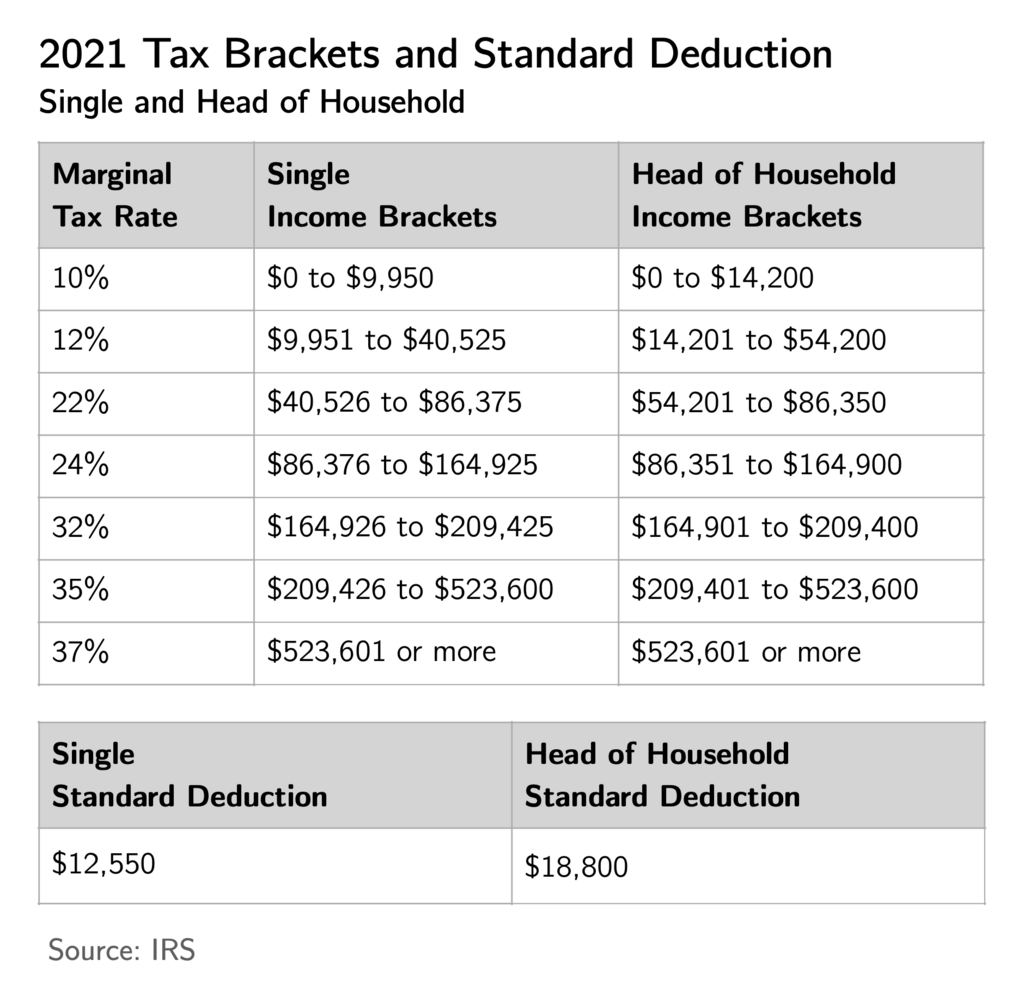
Think of it like filling buckets. You fill the first bucket with your income, and everything in that bucket gets taxed at the lowest rate. Once it's full, you start filling the next bucket, and the income in that bucket is taxed at the next-highest rate, and so on.
Let's walk through a simplified example using the 2023 tax brackets for a single filer. Suppose your taxable income is $50,000.
| Income Chunk | Amount in Bracket | Tax Rate | Tax Owed |
|---|---|---|---|
| First $11,000 | $11,000 | 10% | $1,100 |
| $11,001 to $44,725 | $33,725 | 12% | $4,047 |
| $44,726 to $50,000 | $5,275 | 22% | $1,160.50 |
| Total | $50,000 | $6,307.50 |
Even though your income falls into the 22% bracket, you don't pay 22% on your entire $50,000. Only the portion of your income in that top bracket is taxed at that rate. This is your marginal tax rate — the rate you pay on your last dollar of earned income.
Your effective tax rate, on the other hand, is your total tax divided by your taxable income. In this case, it would be $6,307.50 ÷ $50,000, which is about 12.6%. This number gives you a better sense of your overall tax burden.
Understanding these core concepts is the first step toward managing your finances effectively. Knowing how your taxable income is determined and how the tax system works empowers you to make smarter decisions.