Mastering Tai Commando Combat
Transitional Movement Drills
The Art of the Shift
In combat, standing still is an invitation for defeat. The space between your static stance and your first dynamic movement is where fights are won or lost. The key is fluid transition—moving from a neutral posture to a tactical one without wasting a single moment or ounce of energy. This isn't just about moving your feet; it's about mastering the transfer of kinetic energy from the ground, through your body, and into your opponent.
Every move an opponent makes creates energy. Instead of absorbing it, you learn to redirect it. A defensive shift isn't just a way to avoid a blow; it's the first step of your counter-attack. By maintaining your balance and readiness through the transition, you can use the momentum of their attack to fuel your own response. This transforms your defence into a coiled spring, ready to unleash.
The key to this final stage is a deep understanding of principles of efficient and effective movement in combat—posture, balance, body shifting, leverage, timing, distancing, relaxation, contraction, breathing, and mind-body connection—developed through years of basic and kata practice.
The Burst Step
Closing the distance is a critical skill. The Burst Step is designed for exactly that, but with a crucial difference: it's explosive without being predictable. It's not a simple lunge. It's a controlled fall, powered by a sudden drop in your centre of gravity.
Here’s the breakdown. From a neutral stance, you subtly shift your weight to your back foot, loading it like a spring. Then, instead of stepping forward, you drive off that back foot, propelling your body forward in a low, gliding motion. Your front foot lands softly, absorbing the momentum and instantly establishing a stable base. This entire movement should be a single, smooth action. The goal is to arrive in striking range balanced and ready, turning the act of closing distance into the beginning of your offensive combination.
Pivots for Angle Creation
Attacking head-on is a battle of force. Creating angles is a battle of intelligence. The Lateral Pivot is your primary tool for taking your opponent's centreline while protecting your own. It's a defensive manoeuvre that seamlessly becomes an offensive setup.
A pivot isn't just spinning on your foot. It's a full-body rotation originating from your hips. As an opponent moves in, you pivot on the ball of your lead foot, swinging your rear leg around to a new position. This takes you off their line of attack. More importantly, it opens up new lines for your own strikes to their flank or back. Throughout the pivot, your must remain low and stable. An unbalanced pivot is a failed move. A successful one uses the opponent's forward momentum to pull them off-balance as you glide into a dominant position.
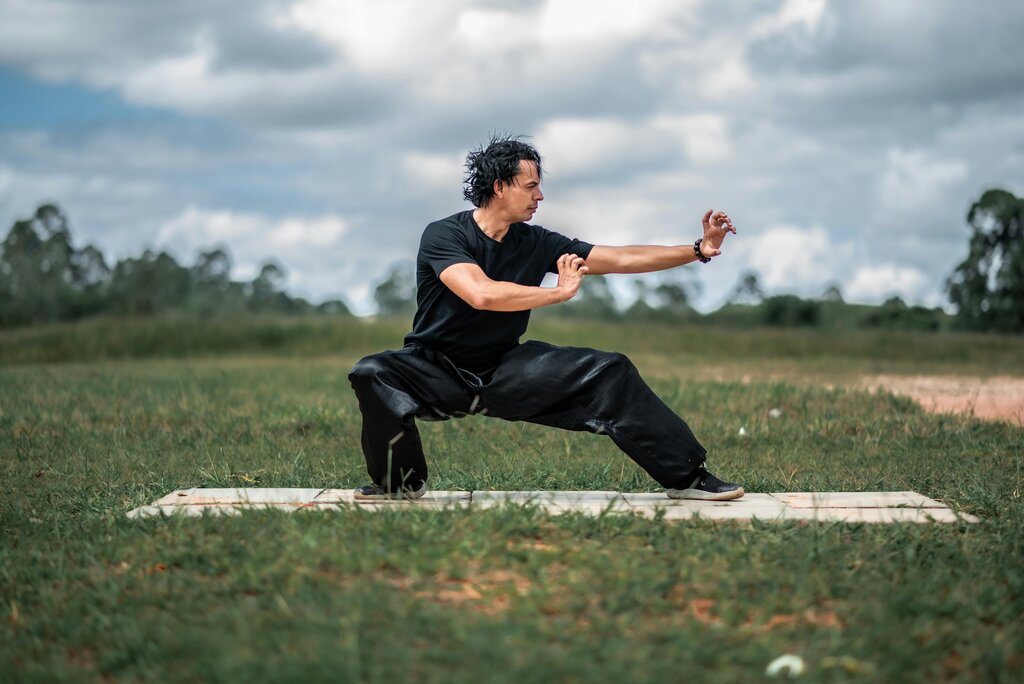
These movements, the Burst Step and the Lateral Pivot, are the building blocks of fluid combat. Practice them not as separate techniques, but as interconnected parts of a single, flowing system. The goal is to erase the pause between defence and attack, making them one and the same.
What is the primary principle behind turning a defensive move into a counter-attack?
The Burst Step is described as a 'controlled fall'. What action initiates this movement?