Mastering Systems Thinking
Introduction to Systems Thinking
Beyond the Obvious
We often try to solve problems by looking at a single cause and effect. If a plant is wilting, we give it water. If a team is missing deadlines, we tell them to work faster. This is linear thinking: a straight line from problem to solution. It works well for simple, straightforward issues.
But what about complex problems? A struggling business, a traffic-choked city, or a strained healthcare system. These aren't simple machines with one broken part. They are systems.
System
noun
A set of interconnected parts that work together to form a complex whole.
Systems are everywhere. A tree is a system of roots, trunk, branches, and leaves. A company is a system of departments, employees, and processes. Your family is a system of individuals with unique relationships and dynamics. The key is that the parts are interconnected, and their interactions produce results that the parts couldn't achieve alone.
Systems thinking is the practice of looking at these connections. Instead of just focusing on the wilting plant, we see the entire garden: the soil quality, the amount of sunlight, the presence of pests. It’s a shift from seeing isolated parts to seeing the whole picture.
Seeing the Whole Elephant
There's an old story about several blind men who encounter an elephant for the first time. One touches the leg and declares it's a tree trunk. Another feels the tail and insists it's a rope. A third touches the tusk and says it's a spear. They are all correct about their individual piece, but they are all wrong about the elephant.
This is the core limitation of linear thinking. It focuses so intently on one part that it misses the nature of the whole. It sees events, not patterns. By breaking a problem down into smaller and smaller pieces, you can lose sight of the crucial interactions between them.
Holistic analysis, the cornerstone of systems thinking, is about stepping back to see the whole elephant. It requires us to ask different questions. Instead of "What's the single cause of this problem?" we ask, "What are the forces at play here?" and "How do these different parts influence one another?"
Systems thinking reveals the underlying patterns and structures that drive behavior, rather than just reacting to individual events.
Unintended Consequences
When we fail to see the whole system, our solutions often create new problems. These are unintended consequences. For example, a city trying to reduce traffic congestion might build a new, wider highway. This is a linear solution to a complex problem.
What often happens? The new highway makes driving easier and more attractive, encouraging more people to drive. This phenomenon is called "induced demand." Before long, the new highway is just as congested as the old roads, and the city now has more cars and more pollution. The solution made the problem worse in the long run.
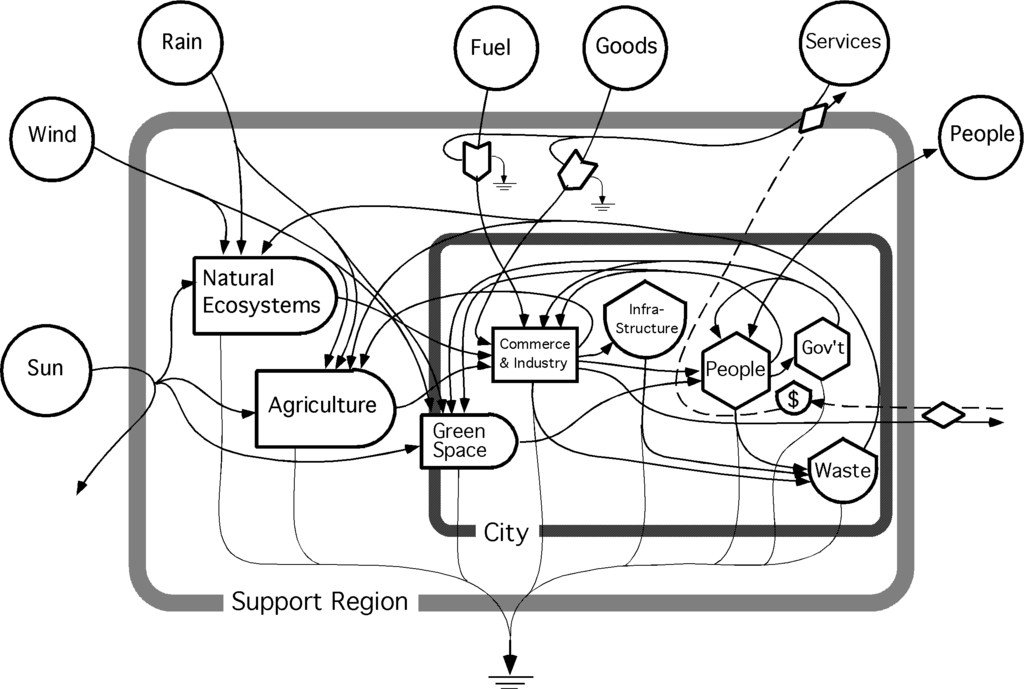
A systems thinker would analyze the entire transportation system. They would consider public transit, bike lanes, housing density, and workplace locations. The solution might not be a bigger road, but a combination of changes that make alternatives to driving more appealing. By understanding the interconnections, you can design more effective, lasting solutions.
This is the power of systems thinking. It moves you from being a firefighter, constantly putting out the same fires, to being an architect, designing a better, more resilient system where those fires are less likely to start in the first place.
Which statement best describes the primary focus of systems thinking?
In the example of traffic congestion, building a wider highway is a linear solution. What is the common unintended consequence of this action, born from a failure to see the whole system?
This introduction lays the groundwork for seeing the world differently. By recognizing systems and the limits of simple, linear explanations, you're taking the first step toward tackling complex challenges more effectively.