Mastering Systematic Phonics Instruction
Advanced Phonics Techniques
Engaging the Senses
Effective phonics instruction goes beyond just seeing letters and hearing sounds. It involves the whole learner. This is the core of multisensory learning, a technique that engages multiple senses at once to build stronger connections in the brain. When students see, hear, say, and physically interact with letters and sounds, the concepts stick.
Think of it as creating multiple pathways to the same destination. If one path is blocked, there are others to rely on. This approach is particularly powerful for students who learn in different ways.
Let's break down how to integrate visual, auditory, and kinesthetic elements into your lessons.
-
Visual: This is more than just looking at a book. Use color-coded letters to distinguish vowels from consonants. Create flashcards with memorable images that correspond to letter sounds. Encourage students to visualize the shape of a word as they say it.
-
Auditory: Focus on targeted listening. Have students close their eyes and listen for a specific phoneme in a series of words you say aloud. Practice blending sounds to form a word () and segmenting words back into sounds ().
-
Kinesthetic-Tactile: This is about movement and touch. Students can trace letters in sand, shaving cream, or on a textured surface. Use magnetic letters or letter tiles to physically build words. Simple actions like tapping their arm for each sound in a word can make an abstract concept tangible.
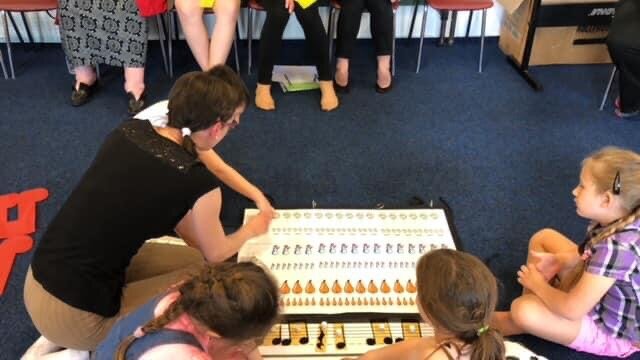
A multi-sensory teaching approach allows for each letter to be presented to children in a variety of integrated contexts (i.e. tactile, auditory, kinesthetic, and visual).
Direct and Deliberate
Multisensory techniques are most effective when paired with explicit instruction. This means teaching phonics in a direct, systematic, and sequential way. Instead of hoping students discover phonetic rules on their own, you teach them intentionally.
To be effective, phonics instruction must be "explicit and systematic": principles should be directly stated to students and instruction should follow a comprehensive scope and sequence.
A systematic approach introduces concepts logically, building from simple to complex. You wouldn't teach a student to read the word "frighten" before they've mastered the sounds of individual letters. A planned sequence ensures there are no gaps in a student's knowledge.
| Order | Concept | Example Words |
|---|---|---|
| 1 | CVC Words (Consonant-Vowel-Consonant) | cat, sun, pin |
| 2 | Consonant Blends (e.g., bl, st, tr) | stop, flag, trip |
| 3 | Consonant Digraphs (e.g., sh, ch, th) | ship, chat, thin |
| 4 | Silent 'e' (CVCe) | cake, bike, hope |
| 5 | Vowel Teams (e.g., ai, ea, oa) | train, team, boat |
This structured progression provides a clear roadmap for both the teacher and the student, building confidence at each step.
Classroom Activities
Here are a few activities that combine multisensory elements with an explicit, systematic approach.
Word Building with Tiles Give students a set of letter tiles and say a word, like "ship." Have them repeat the word, segment the sounds they hear (, , ), and then find the corresponding tiles to build the word. This combines auditory processing with a tactile experience.
Sand Tray Writing Say a sound, like /m/. Students repeat the sound, say the letter name ("M"), and then trace the letter shape in a shallow tray of sand or salt. This reinforces the sound-symbol connection through sight, sound, and touch.
Blending Drill with Body Movements
Write a series of letters on the board, like s-a-t. Have students touch their shoulder for the first sound, their elbow for the second, and their hand for the third, saying each sound as they touch the body part. Then, they slide their hand down their arm to blend the sounds together into the word "sat."
Ready to check your understanding of these advanced phonics techniques?
What is the primary goal of using a multisensory approach in phonics instruction?
An activity where a teacher says a word and students tap their arm for each sound they hear (, , for "ship") is an example of what?
By integrating these direct and sensory-rich strategies, you can create a more powerful and inclusive learning environment that helps all students master the code of reading.