Mastering System Design Patterns
Introduction to System Design
What Is System Design?
Imagine building a skyscraper. You wouldn't just start mixing concrete and stacking bricks. You'd begin with a detailed blueprint that outlines the foundation, the structure, the plumbing, and the electrical systems. This blueprint ensures the building is strong, safe, and can serve its purpose for years to come. System design is the blueprint for software.
It's the process of defining the architecture, components, modules, interfaces, and data for a system to satisfy specified requirements. The goal isn't just to make something that works, but to create a system that is reliable, can grow to handle more users, and is easy to update and maintain over time.
Without a solid design, a simple application can quickly become a complex, tangled mess that's difficult to change and prone to breaking.
Core Principles
Good system design isn't a free-for-all. It's guided by a few core principles that help manage complexity and create clean, robust structures. Three of the most important are modularity, abstraction, and separation of concerns.
Modularity
noun
The practice of breaking a large system down into smaller, independent, and interchangeable components called modules.
Think of a car. It has an engine, a transmission, wheels, and a steering system. Each is a distinct module. If the engine needs repair, a mechanic can work on it without having to redesign the entire car. In software, modularity lets developers work on different parts of an application independently, making development faster and troubleshooting easier.
Abstraction
noun
The concept of hiding complex reality while exposing only the essential parts. It simplifies things by providing a high-level view.
When you drive a car, you press the gas pedal to go faster. You don't need to know the details of fuel injection or internal combustion. The pedal is an abstraction that hides the underlying complexity. In system design, we create simple interfaces that hide complex internal logic. This makes the system easier to use and understand.
Finally, Separation of Concerns is a principle that dictates that a system should be divided into parts with distinct responsibilities. For example, in a web application, the code that manages the database should be separate from the code that defines what the user sees on the screen. This keeps the system organized and prevents changes in one part from accidentally breaking another.
Architectural Patterns
If principles are the rules of good construction, architectural patterns are the common types of blueprints. They are general, reusable solutions to commonly occurring problems in system design. You don't need to reinvent the wheel every time you build a system.
For example, the Client-Server pattern is fundamental to how the web works. Your web browser (the client) requests a webpage from a powerful computer (the server) that stores the site and sends it back. Another common pattern is a Layered Architecture, where components are organized into horizontal layers. A typical web application might have a presentation layer (what the user sees), a business logic layer (where the rules and processes live), and a data layer (the database).
Design patterns are proven solutions to common problems in software design.
There are many other patterns, each suited for different kinds of problems. The key is to understand the problem you're trying to solve and choose a pattern that provides a solid foundation.
Designing for Growth and Resilience
Two of the most critical goals in modern system design are scalability and reliability. They aren't afterthoughts; they must be planned from the beginning.
Scalability is the system's ability to handle an increasing amount of work. If you build an app that suddenly becomes popular, can it handle one million users as easily as it handled one hundred? A scalable system can. This is often achieved through horizontal scaling, which means adding more machines to your pool of resources, or vertical scaling, which means upgrading the power of an existing machine (e.g., adding more CPU or RAM).
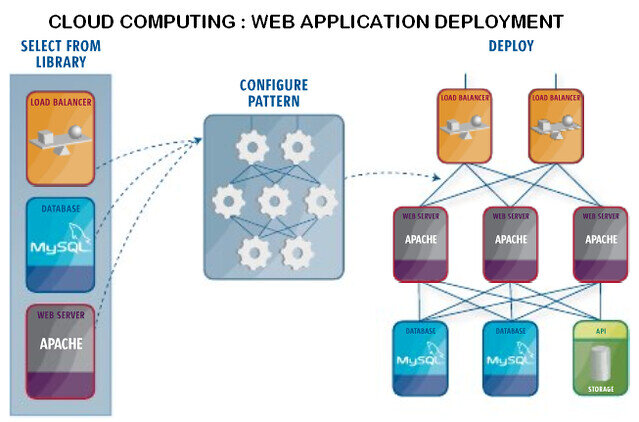
Reliability means the system keeps working, even when things go wrong. What happens if a server crashes or a network connection fails? A reliable system is designed to be fault-tolerant. This often involves redundancy, which means having backup components that can take over if a primary one fails. The goal is to ensure the user experiences little to no disruption.
System design is a deep and fascinating field. It's about making smart trade-offs to build systems that not only meet today's needs but are also ready for tomorrow's challenges.
What is the primary goal of system design?
In a web application, the code that handles user interface logic is kept separate from the code that interacts with the database. This is an example of which design principle?