Mastering System Design
Introduction to System Design
What Is System Design?
Think about building a house. You wouldn't just start throwing bricks and wood together. You'd start with a blueprint. That blueprint outlines the foundation, where the walls go, how the plumbing connects, and where the electrical outlets will be. It's a detailed plan that ensures the final house is sturdy, functional, and won't fall down in a light breeze.
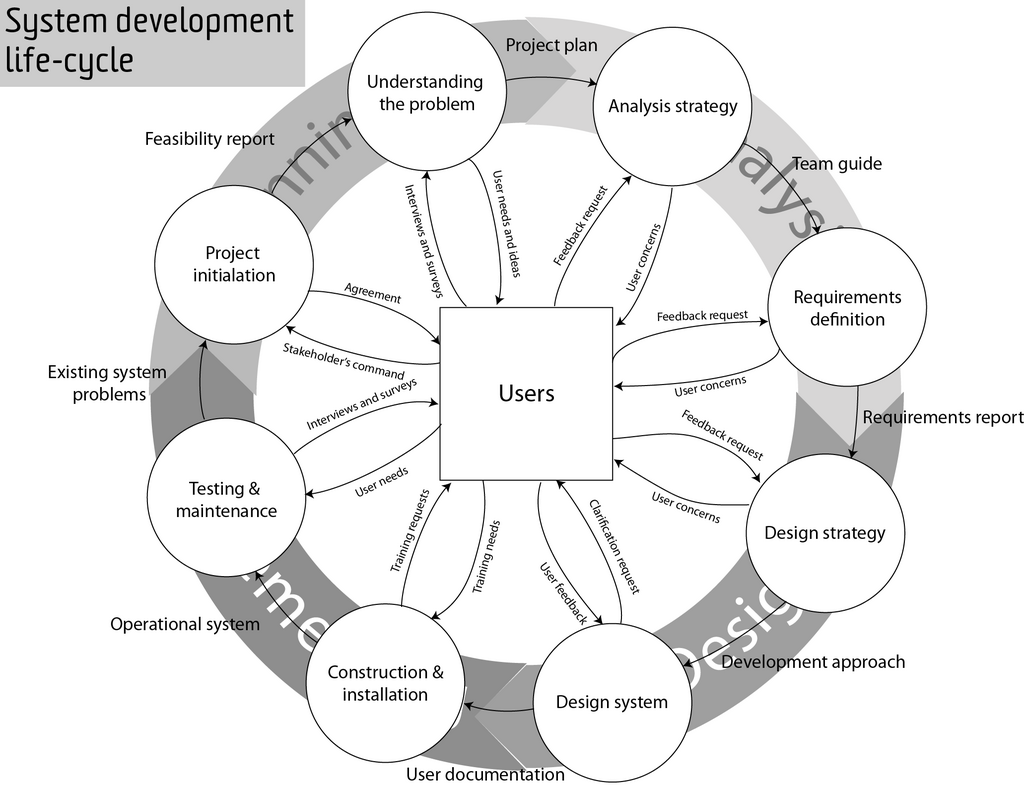
System design is the blueprint for software. It's the process of defining the architecture, components, modules, interfaces, and data for a system to satisfy specified requirements. A well-designed system is like that well-built house: it's reliable, it can grow and change without collapsing, and it's easy for new people to understand and work on.
The goal of system design is to create a system that is scalable (can handle more users or data), reliable (works consistently), and maintainable (can be easily updated or fixed).
Without a solid design, a software project might work at first, but it will quickly become a tangled mess. Adding new features becomes a nightmare, fixing bugs creates new problems, and the whole thing becomes slow and unstable. Good design is an investment that pays off for the entire life of the software.
Guiding Principles
To create good blueprints, architects follow proven principles of engineering and design. Software engineers do the same. These principles aren't strict rules, but rather guidelines that help developers make smart decisions and avoid common pitfalls. Let's look at a few of the most important ones.
DRY: Don't Repeat Yourself Every piece of knowledge must have a single, unambiguous, authoritative representation within a system. In simpler terms, avoid duplicating code. If you have the same logic in multiple places, a bug fix or update requires changing it everywhere. By keeping it in one place, you make the code easier to maintain and less prone to errors.
KISS: Keep It Simple, Stupid This principle states that most systems work best if they are kept simple rather than made complicated. Unnecessary complexity is the enemy of good design. A straightforward, simple solution is almost always better than a complex one. It's easier to understand, easier to test, and easier to maintain.
The SOLID principles are a set of five design principles that are fundamental to building understandable and maintainable software. They were introduced to help developers create systems that are easy to extend and modify over time.
| Acronym | Principle | Meaning |
|---|---|---|
| S | Single Responsibility | A class should have only one reason to change, meaning it should have only one job. |
| O | Open/Closed | Software entities (classes, modules, functions) should be open for extension, but closed for modification. |
| L | Liskov Substitution | Subtypes must be substitutable for their base types without altering the correctness of the program. |
| I | Interface Segregation | No client should be forced to depend on methods it does not use. It's better to have many specific interfaces than one general-purpose one. |
| D | Dependency Inversion | High-level modules should not depend on low-level modules. Both should depend on abstractions. |
Common Blueprints: Design Patterns
Just as architects have standard solutions for things like doorways and staircases, software engineers have design patterns. A design pattern is a general, reusable solution to a commonly occurring problem within a given context in software design. They aren't finished designs that can be transformed directly into code; they are descriptions or templates for how to solve a problem that can be used in many different situations.
Design patterns are proven solutions to common problems in software design.
Design patterns are typically categorized into three main groups based on their purpose.
-
Creational Patterns: These patterns provide various object creation mechanisms, which increase flexibility and reuse of existing code. They deal with how objects are made, decoupling a system from the specifics of its object creation.
-
Structural Patterns: These patterns explain how to assemble objects and classes into larger structures, while keeping these structures flexible and efficient. They focus on how classes and objects can be composed to form larger, more complex structures.
-
Behavioral Patterns: These patterns are concerned with algorithms and the assignment of responsibilities between objects. They describe how objects interact and distribute responsibility.
Understanding these principles and patterns is the first step toward thinking like a system designer. Now, let's test your knowledge.
What is the primary role of system design in software development, using the 'blueprint' analogy?
Which of the following is a common consequence of neglecting system design?
By applying these foundational concepts, developers can build software that is not only functional but also robust and easy to manage for years to come.