Mastering System Construction
Introduction to System Development Life Cycle
What is the SDLC?
Building a complex information system is a lot like building a house. You wouldn't just show up with a pile of lumber and start hammering. You'd start with a plan, create blueprints, lay a foundation, frame the walls, and so on. Each step follows a logical order to ensure the final structure is sound and meets the owner's needs.
The System Development Life Cycle (SDLC) is the construction plan for software and information systems. It's a structured framework that outlines the stages involved in creating, deploying, and maintaining a system. The primary goal is to produce a high-quality system that meets customer expectations on time and within budget.
Think of the SDLC as a roadmap that guides a project from an initial idea to a fully operational system and beyond.
Why Bother with a Process?
Without a structured process, software projects can easily fall into chaos. Deadlines get missed, costs spiral out of control, and the final product might not even solve the problem it was meant to address. The SDLC brings order and predictability to the complex task of software development.
It provides a clear framework for project planning, scheduling, and estimating. It ensures that all stakeholders have a shared understanding of the project's goals and requirements. This structure helps teams manage complexity, minimize risks, and deliver a reliable product.
At the core of software engineering is the SDLC—a structured process that guides projects from conception to deployment and beyond.
The Phases of the Cycle
The SDLC is typically broken down into a series of distinct phases. Each phase has its own set of activities and deliverables, and the completion of one phase usually provides the input for the next. While different models exist, the core phases are generally consistent.
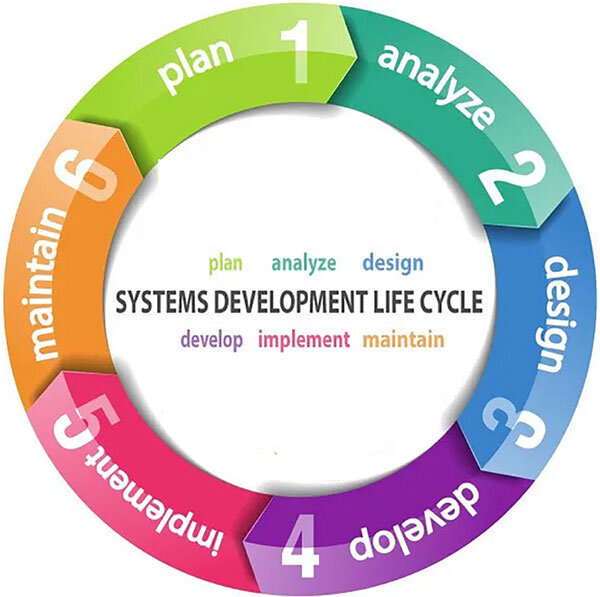
Let's walk through the key phases:
-
Planning: This is the starting point. The team defines the project's goals, determines its feasibility, and creates a high-level project plan. Key questions are asked: Why are we building this? What problem will it solve? Do we have the resources?
-
Analysis: Here, the team digs deep into the user's needs. They gather and document specific requirements for the new system. The goal is to figure out what the system needs to do, not how it will do it.
-
Design: This phase is all about the how. Based on the requirements from the analysis phase, developers and architects create a technical blueprint. They design the system's architecture, user interfaces, database schemas, and security measures.
-
Implementation (or Development): The blueprints from the design phase are used to build the actual system. Programmers write the code, developers create the databases, and all the individual components start coming together into a functional piece of software.
-
Testing: Once the system is built, it needs to be thoroughly tested to ensure it works correctly and meets all the requirements. Testers look for bugs, errors, and any gaps between what the system does and what it was supposed to do.
-
Deployment: After successful testing, the system is ready to go live. It's installed on production servers and rolled out to the end-users. This phase also includes training users on how to use the new system.
-
Maintenance: The work isn't over once the system is deployed. The maintenance phase involves making ongoing updates, fixing bugs that are discovered during use, and making enhancements to keep the system running smoothly over its entire life.
Understanding these phases provides a solid foundation for any system development project. It's a proven roadmap for turning a good idea into a great system.