Mastering Superforecasting
Introduction to Superforecasting
The Art of Prediction
Some people are better at predicting the future than others. Not because they have crystal balls, but because of how they think. This skill is called superforecasting. It’s the ability to make remarkably accurate predictions about complex events, from elections to market trends.
Superforecasting isn't about having secret information or a genius-level IQ. It’s a disciplined, open-minded approach to thinking about uncertainty. It’s a skill that can be learned and practiced.
The core idea is that forecasting is not a gift you're born with, but a skill that can be cultivated.
The Good Judgment Project
The concept of superforecasting gained prominence through a groundbreaking research study called the Good Judgment Project. It was part of a large-scale forecasting tournament sponsored by the U.S. intelligence community. The goal was to see if ordinary people could outperform professional intelligence analysts.
Psychologist Philip Tetlock and his colleagues recruited thousands of volunteers and asked them to predict the outcomes of hundreds of global events. The results were stunning. A small group of volunteers, dubbed “superforecasters,” consistently outperformed the experts. They beat the average of all other forecasters by more than 50%.
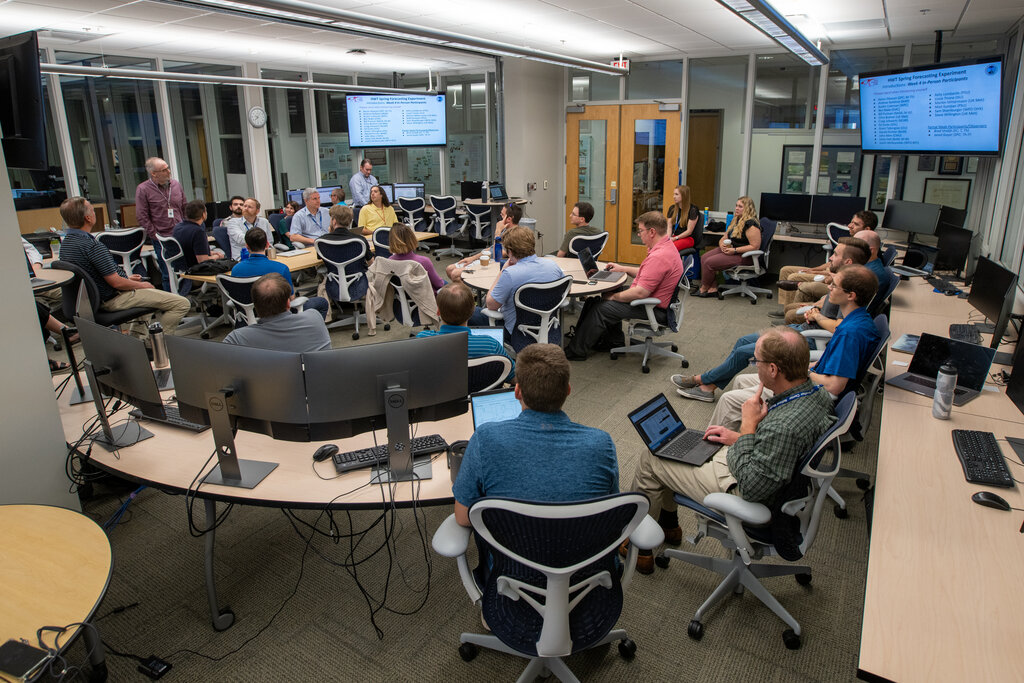
These weren't necessarily people with backgrounds in political science or economics. They were pharmacists, retirees, and filmmakers. What they had in common was a particular way of thinking and a commitment to improving their predictions over time.
Traits of a Superforecaster
So what sets superforecasters apart? It’s not one single thing, but a combination of traits and habits.
| Trait | Description |
|---|---|
| Actively Open-Minded | They seek out different perspectives and evidence that contradicts their own beliefs. They are willing to change their minds. |
| Intellectually Humble | They understand that reality is complex and that their own knowledge is limited. They aren't afraid to say, "I don't know." |
| Numerate | They are comfortable thinking in terms of probabilities and numbers, breaking down big questions into smaller, quantifiable parts. |
| Gritty | They are determined and persistent. Forecasting is hard work, and they put in the effort to get it right. |
| Growth Mindset | They believe their abilities can be developed through dedication and hard work. They view failures as learning opportunities. |
Perhaps most importantly, superforecasters are constantly updating their beliefs. They treat their predictions not as final statements, but as works in progress, always subject to revision as new information comes in. They embrace uncertainty and aim to be less wrong over time.
Why It Matters
The techniques used by superforecasters have broad applications. In business, accurate forecasting can improve strategic planning and resource allocation. In government, it can lead to better policy decisions. In finance, it can inform investment strategies.
Improvement of the forecasting accuracy, even by a small percentage, may have a substantial impact on companies' production and financial planning, marketing strategies, inventory controls, supply chain management, and eventually stock prices.
By adopting a more structured and humble approach to prediction, organizations and individuals can make better decisions in the face of an uncertain future.
Ready to test your knowledge? Let's see what you've learned about the fundamentals of superforecasting.
What is the core idea behind superforecasting?
The groundbreaking research study that identified 'superforecasters' was called:
Understanding these core principles is the first step toward improving your own ability to look into the future with greater clarity.