Mastering Superforecasting
Introduction to Superforecasting
The Art of Better Prediction
Some people are exceptionally good at predicting the future. They aren't psychics or prophets. They're ordinary people who have developed a specific skill: forecasting with uncanny accuracy. This skill is called superforecasting.
Superforecasting is the practice of making highly accurate predictions about geopolitical, economic, and technological events. It's not about having secret information. Instead, it's a systematic process of thinking, gathering evidence, and updating beliefs in response to new data. Unlike the vague predictions often made by pundits, superforecasts are specific, measurable, and consistently more accurate than those of typical experts or intelligence analysts.
The key takeaway is that forecasting is a skill that can be cultivated. It requires a combination of open-mindedness, careful reasoning, and a commitment to self-improvement.
The Good Judgment Project
The idea of superforecasting gained prominence through the work of psychologist Philip Tetlock. For decades, Tetlock studied the predictions of political experts and found them to be surprisingly poor, often no better than chance.
This led to a groundbreaking research effort in the 2010s called the Good Judgment Project. Sponsored by the U.S. intelligence community, this project was a large-scale forecasting tournament. Thousands of volunteers were asked to predict the outcomes of hundreds of global events, from whether Greece would leave the Eurozone to the likelihood of a specific country holding free elections.
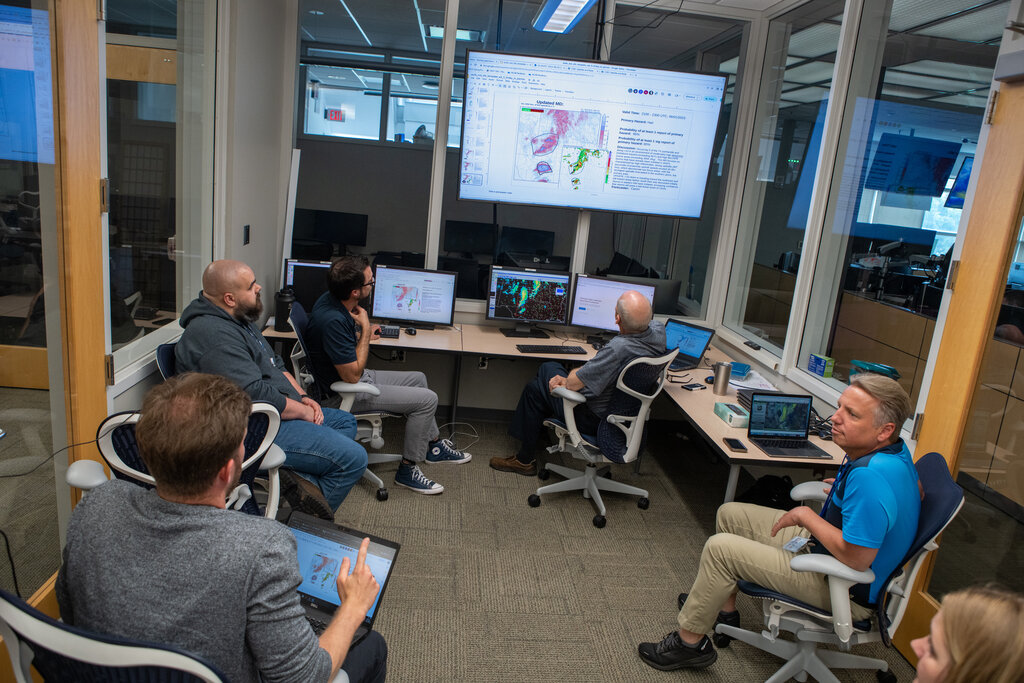
Within this large group of participants, a small subset consistently outperformed everyone else. They beat university experts, professional intelligence analysts, and prediction markets. Tetlock and his team called these individuals "superforecasters."
The Superforecaster Mindset
Superforecasters don't share a single profession or background. They are teachers, pharmacists, and engineers. What they do share is a particular way of thinking. They are actively open-minded, constantly seeking out information that might challenge their own beliefs.
They think in probabilities, not certainties. A superforecaster won't say an event "will" or "won't" happen. Instead, they might assign it a 70% probability and be ready to adjust that number up or down as new evidence emerges. They are intellectually humble, recognizing that their own view is incomplete and that changing their mind is a sign of strength, not weakness.
Other key traits include:
- Numerate: They are comfortable with numbers and use them to reason precisely.
- Curious: They possess a wide-ranging curiosity and read from diverse sources.
- Gritty: They have the determination to keep working on a problem and refining their forecasts over time.
Probabilistic Thinking
noun
The practice of assigning numerical probabilities to beliefs and outcomes rather than thinking in absolute certainties.
Why It Matters Today
In a world of increasing complexity and uncertainty, the ability to make better forecasts is invaluable. From business strategy and financial markets to public policy and national security, decision-makers rely on predictions about the future.
Superforecasting provides a proven method for improving the accuracy of those predictions. By adopting the principles of deliberate practice—breaking down the skill, getting clear feedback, and focusing on improvement—organizations can cultivate better forecasting abilities. This leads to more informed decisions, better risk management, and a clearer understanding of the path ahead.
Ready to test your understanding of these foundational ideas? Let's see what you've learned.
What was the primary finding of the Good Judgment Project, which led to the identification of 'superforecasters'?
Which of the following is a core characteristic of a superforecaster's thinking process?
This framework of rigorous, evidence-based prediction sets the stage for a deeper dive into the specific techniques that make superforecasters so effective.