Mastering Supabase Vector Buckets
Introduction to Vector Databases
A Library for Ideas
Imagine a library where books aren't organized by author or title, but by the ideas inside them. Books about adventure are in one section, while books about scientific discovery are in another. If you picked up a book about space travel, the books right next to it would be about exploring distant galaxies or building rockets, not a cookbook that just happens to have the same author.
This is the core idea behind a vector database. It’s a special type of database designed to organize information based on its meaning or conceptual similarity, not just its text or tags.
Instead of storing data in traditional rows and columns, a vector database stores it as a series of numbers called a vector embedding.
So, what's a vector embedding? It's simply a list of numbers that represents a piece of data, like a word, a sentence, an image, or even a song. An AI model creates this list, capturing the essential characteristics of the data. For example, the vectors for "king" and "queen" would be numerically closer to each other than to the vector for "banana".
From Words to Numbers
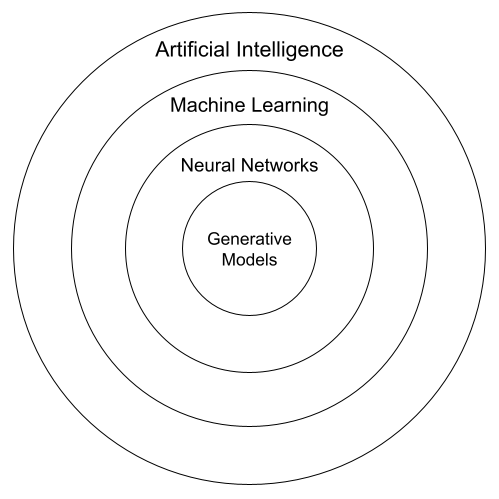
How do we convert complex things like text or images into a simple list of numbers? This is where machine learning models come in. These models are trained on vast amounts of data to understand the relationships and nuances within it.
When you feed a piece of data into one of these models, it outputs a vector embedding. This vector represents the data's position in a high-dimensional "meaning space." In this space, items with similar meanings are located close together.
Think of it like giving coordinates to an idea. The coordinates for "happy" might be [0.8, 0.2, 0.9], while the coordinates for "joyful" could be [0.7, 0.3, 0.8]—very close by. The coordinates for "sad" would be in a completely different part of the space.
This capability powers many features you use every day:
- Recommendation Engines: When a streaming service suggests a movie, it's often because its vector is close to the vectors of movies you've already watched.
- Image Search: You can search for "a dog catching a frisbee" and find images that don't contain those exact words, because the search engine is looking for images with similar vector representations.
- Chatbots: A chatbot can understand that "How much does this cost?" and "What's the price?" are asking the same thing because their vectors are nearly identical.
Searching for Similarity
A regular database is great at finding exact matches. For example, it can quickly find all users whose name is "John Smith." But it struggles with conceptual searches. It wouldn't know that a user named "Jon Smith" is probably the same person.
Vector databases excel at this. They don't look for exact matches; they perform a similarity search. When you provide a query (like a sentence or an image), the database converts it into a vector and then searches for the other vectors in its collection that are closest to it.
This search is often called a k-Nearest Neighbors (k-NN) search, where k is the number of similar items you want to find. But finding the absolute closest neighbors in a space with hundreds or even thousands of dimensions is incredibly difficult and slow. Imagine trying to find the three people closest to you, not in a room, but in a city—it's a massive task.
This leads to the main challenge of vector databases: efficiency. They can't check every single vector for every query. Doing so would be too slow for real-time applications. To solve this, they use clever algorithms and indexing techniques (like HNSW, or Hierarchical Navigable Small World graphs) to quickly narrow down the search to a promising region of the vector space. This provides an "approximate" nearest neighbor search that is incredibly fast and almost as accurate as a full search.
Now that we know what vector databases are and why they're useful, let's test your knowledge.
What is the primary way a vector database organizes data?
In the context of vector databases, what is a vector embedding?