Mastering Study Techniques
Understanding Learning Principles
How Your Brain Learns
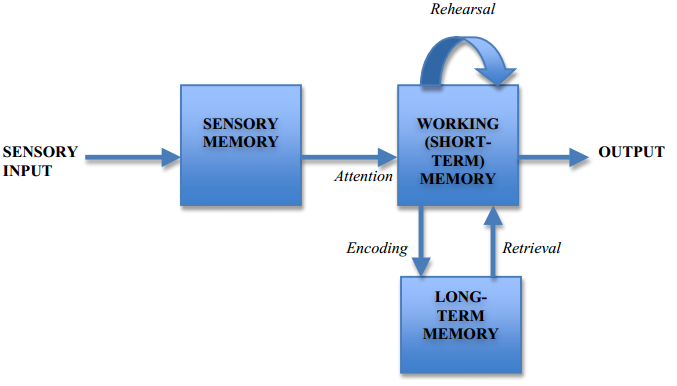
Think of your memory like a library. When you learn something new, you're not just throwing a book onto a pile. Your brain goes through a three-step process: encoding, storage, and retrieval.
First, encoding is like deciding what the book is about and giving it a title. Your brain takes in sensory information—sights, sounds, ideas—and converts it into a form it can work with. The more attention you pay during this stage, the better the encoding. If you're distracted while reading a definition, your brain might encode it poorly, like slapping a vague, unhelpful title on a book.
Next comes storage. This is where the book is placed on a shelf in the library, waiting to be used later. Your brain creates a neural pathway, a connection that represents the new memory. Some memories are stored for only a few seconds, while others can last a lifetime.
Finally, retrieval is the act of finding that book on the shelf and opening it. When you recall a fact or a skill, you're activating the neural pathway you created earlier. The more you retrieve a memory, the easier it becomes to find it again.
Give Your Brain Some Space
Have you ever pulled an all-nighter, cramming for an exam, only to forget everything a week later? That's because you've run into a fundamental principle of memory: the spacing effect.
The spacing effect shows that we learn and retain information more effectively when we spread our study sessions out over time, rather than cramming them all into one long session. It feels less productive in the moment, but it's far more powerful for long-term learning.
Think of it like building a muscle. You wouldn't go to the gym and lift weights for eight hours straight and then take a month off. You'd get tired, your form would suffer, and you wouldn't build much strength. Instead, you work out for shorter periods more frequently. Each session builds on the last, giving your muscles time to recover and grow stronger.
Learning works the same way. When you revisit a topic after a day or two, you force your brain to work a little harder to retrieve that information. This effort is what strengthens the memory, making the neural pathway more robust and permanent. Cramming is like building a house of cards—it might stand up for a short while, but it's not built to last.
Pull Information Out, Not Just In
Many of us study by rereading notes, highlighting text, or watching videos again. These activities feel productive because the information feels familiar. But familiarity is not the same as understanding. This is a passive approach to learning. A much more powerful method is based on the testing effect, also known as retrieval practice.
The testing effect is the discovery that long-term memory is increased when part of the learning period is devoted to retrieving the to-be-remembered information. In simple terms, the act of pulling information out of your brain strengthens your memory of it far more than just putting it in repeatedly.
Imagine you're trying to create a path through a dense forest. Just looking at a map of the path (rereading your notes) isn't the same as actually walking it. The first time you try to walk the path without the map (retrieving the memory), you might get lost. But each time you successfully find your way, you clear more branches and stomp down the dirt. The path becomes clearer and easier to travel. That's what retrieval practice does for your neural pathways.
Every time you successfully recall a piece of information, you're not just accessing a memory, you're making it stronger and easier to access in the future.
Become the Pilot of Your Own Learning
So, how do you apply these principles? The key is metacognition, which is a fancy word for 'thinking about your own thinking.' It's your ability to step back and observe your learning process. It’s the difference between being a passenger and being the pilot of your education.
Metacognition involves three key skills:
-
Planning: Deciding how you're going to approach a learning task. This means choosing your strategies and allocating your time. A student with good metacognition might say, "I'll study this chapter for 30 minutes each day for the next three days, instead of all at once."
-
Monitoring: Checking in on your progress as you learn. This is where you ask yourself questions like, "Do I really understand this concept, or does it just feel familiar?" and "Could I explain this to someone else?" This self-awareness helps you spot gaps in your understanding.
-
Evaluating: After a study session or an exam, you reflect on what worked and what didn't. "My plan to reread the chapter didn't help much on the quiz. Next time, I'll try quizzing myself to practice retrieval."
By developing your metacognitive skills, you can consciously apply principles like the spacing and testing effects. You start making smarter choices about how you learn, moving from passive, inefficient habits to active, effective strategies.
Understanding these core ideas—how memory works, the power of spacing, the importance of retrieval, and the role of metacognition—provides the foundation. With this knowledge, you're ready to build specific, effective study habits.