Mastering Stress Management Techniques
Understanding Stress
What Is Stress?
Stress is your body's response to a challenge or demand. Think of it like a rubber band. A little stretch makes it useful, but too much constant tension can cause it to snap. The challenges that cause this tension are called stressors.
Stress is a natural physiological and psychological reaction to demands or threats.
Stressors can be anything from a looming deadline at work to a traffic jam on your way home. They can be major life events, like moving to a new city, or small daily hassles, like misplacing your keys. Your body doesn't really distinguish between them—it just registers the demand for a response.
Acute vs. Chronic Stress
Not all stress is created equal. It's helpful to think about stress in two main categories: acute and chronic.
Acute stress is short-term and helps you manage dangerous situations. It's the jolt of energy you feel when you slam on the brakes to avoid an accident. This is your body's "fight-or-flight" response, designed to help you survive. Once the threat passes, your body returns to its normal state.
Chronic stress, on the other hand, is long-term and persistent. This happens when the source of stress is constant and you don't get a chance to recover. It could be a difficult job, ongoing financial problems, or a long-term illness. Your body stays in a state of high alert.
Acute stress is a brief, intense reaction to an immediate threat. Chronic stress is a prolonged, nagging pressure with no clear end.
Your Body's Alarm System
When your brain perceives a threat, it triggers a cascade of hormones. This response starts in a region of the brain called the hypothalamus, which signals the pituitary and adrenal glands. This network is known as the hypothalamic-pituitary-adrenal (HPA) axis.
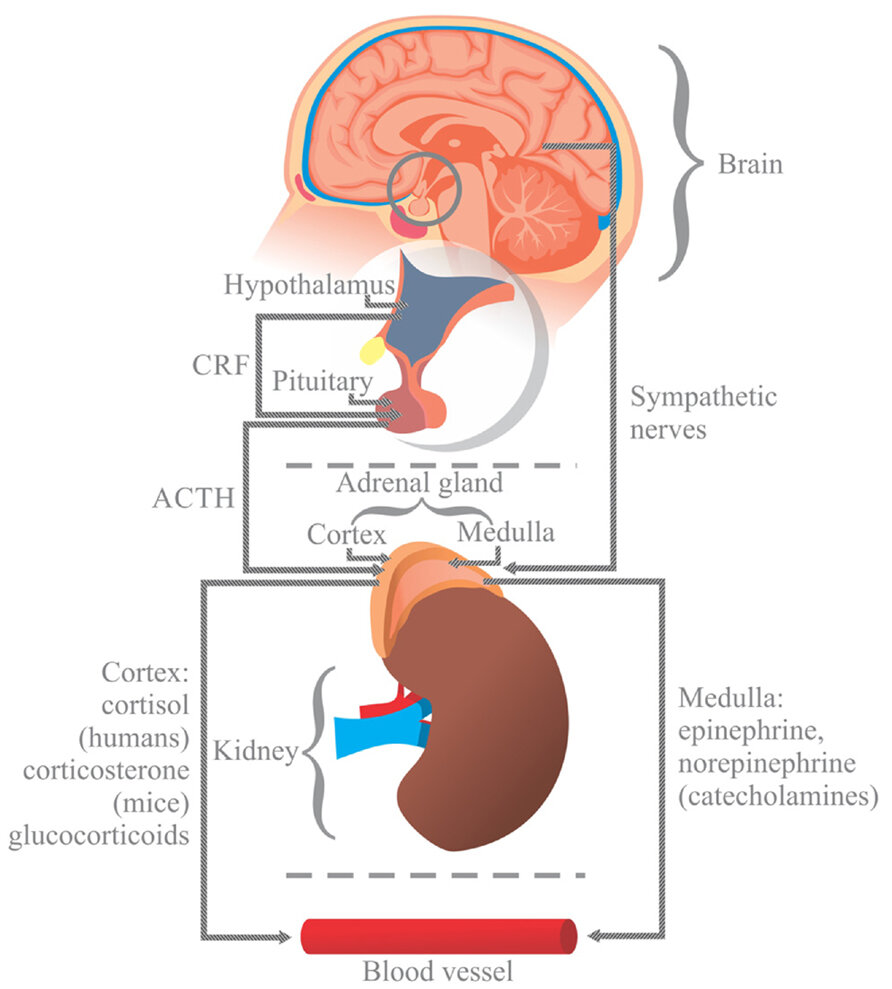
The adrenal glands release hormones like adrenaline and cortisol. Adrenaline increases your heart rate and blood pressure, boosting energy supplies. Cortisol, the primary stress hormone, increases sugars in the bloodstream and curbs functions that would be nonessential in a fight-or-flight situation. It alters immune system responses and suppresses the digestive system, the reproductive system, and growth processes.
| Physiological Effect | Acute Stress Response |
|---|---|
| Heart Rate | Increases to pump more blood |
| Breathing | Becomes faster to supply more oxygen |
| Muscles | Tense up, ready for action |
| Senses | Become sharper |
| Digestion | Slows down to conserve energy |
This system is brilliant for short-term survival. But when it's activated day after day due to chronic stress, it starts to cause problems.
The Impact on Health
Long-term activation of the stress response system can disrupt almost all your body's processes. This puts you at increased risk for many health problems.
On a psychological level, chronic stress can lead to irritability, anxiety, and depression. It can make it hard to concentrate, make decisions, or remember things. You might feel overwhelmed or constantly on edge.

Physically, the effects are just as serious. The constant presence of stress hormones can lead to digestive issues, headaches, muscle tension, and sleep problems. Over time, it contributes to more severe conditions.
Chronic exposure to stress, from workplace pressures to personal challenges, can persistently elevate cortisol levels, disrupting the body's most basic functions and leading to long-term health consequences.
Here are some of the long-term health risks associated with chronic stress:
- Heart Disease: Increased heart rate and blood pressure can damage arteries.
- Weakened Immune System: Chronic cortisol can suppress the immune system, making you more vulnerable to infections.
- Weight Gain: Cortisol increases appetite and may signal the body to store more fat, especially in the abdomen.
- Mental Health Disorders: It's a major risk factor for anxiety, depression, and other mental health conditions.
Recognizing what stress is and how it affects you is the first step. It allows you to see the connections between the pressures in your life and your physical and mental well-being.
Time to check your understanding of stress.
What is the best definition of a 'stressor'?
Which of the following is an example of acute stress?
Understanding these core concepts provides the foundation for learning how to navigate life's challenges more effectively.