Mastering Strategic Thinking
Introduction to Strategic Thinking
Thinking Ahead
Imagine two chess players. One thinks only about their next move, reacting to whatever their opponent does. The other sees the whole board, thinks several moves ahead, and has a clear plan for how to win. The second player is thinking strategically.
Strategic thinking is not just about making a plan; it's a way of approaching problems. It’s about understanding the current situation, envisioning a desired future, and mapping out a path to get there, all while anticipating potential obstacles and opportunities along the way. It’s the ability to step back from the day-to-day chaos and see the bigger picture.
Strategy
noun
A high-level plan to achieve one or more goals under conditions of uncertainty.
Without this kind of thinking, businesses and individuals are just reacting. They might work hard, but their efforts can be scattered and inefficient. Strategic thinking provides focus. It helps you decide where to put your energy and resources to have the greatest impact. It turns random actions into a coordinated effort aimed at a specific goal.
The core of strategic thinking is connecting today's actions with tomorrow's outcomes.
The Strategic Mindset
So, what does a strategic thinker look like? They aren't necessarily the person with the most complex spreadsheets or the thickest planning binder. Instead, they share a few key traits.
First, they are curious and constantly questioning. They don't accept assumptions at face value. They ask "Why?" and "What if?" to understand the deeper forces at play. This helps them spot trends, identify hidden risks, and uncover opportunities others might miss.
They are also able to synthesize information from many different sources. A strategic thinker can take a financial report, a customer survey, and an article about new technology and see how they all connect. They build a mental model of their environment, which allows them to anticipate how a change in one area might affect another.
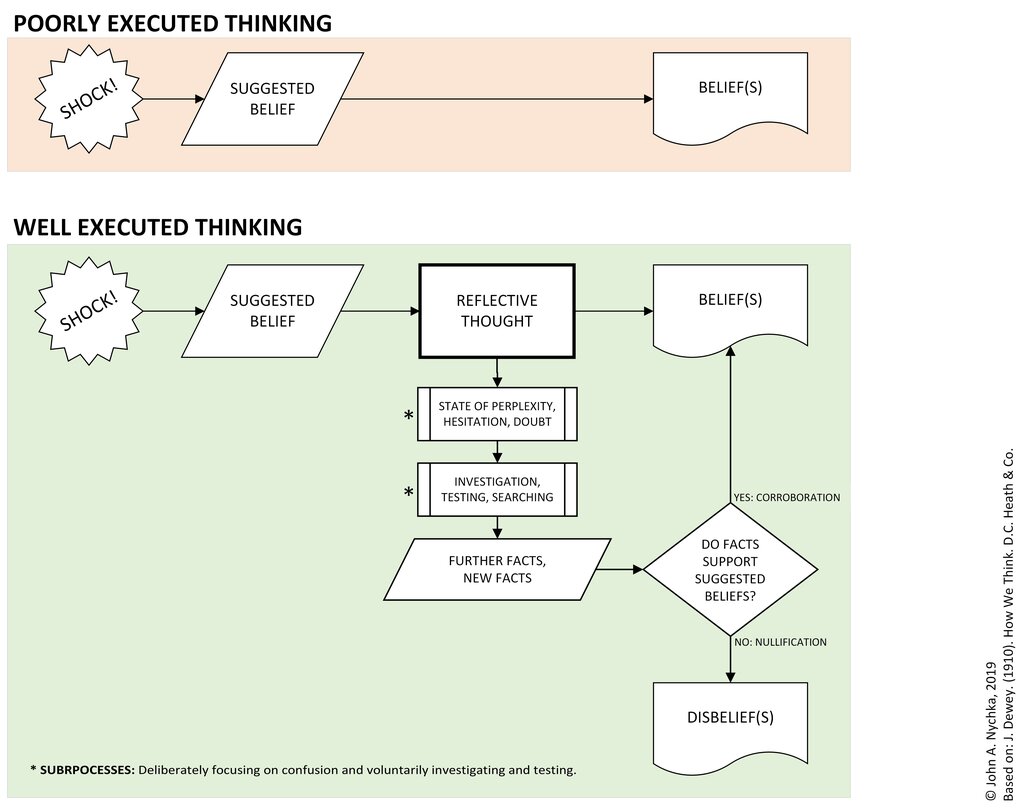
Finally, they are adaptable. A strategy isn't something you set in stone and follow blindly. The world changes, and strategic thinkers are ready to adjust their plans accordingly. They are comfortable with uncertainty and view challenges not just as problems, but as potential turning points.
Strategy in Action
In an organization, strategic thinking is the engine of success. When leaders think strategically, they can align the entire company around a shared vision. Everyone understands how their individual work contributes to the larger goals, which boosts motivation and efficiency.
Consider a small coffee shop competing with a large chain. A reactive owner might just lower prices, starting a race to the bottom they can't win. A strategic owner, however, would analyze the situation. They might realize they can't compete on price, but they can compete on quality and community. Their strategy might be to source unique, high-quality beans and create a welcoming space for local events. Every decision, from the choice of furniture to the barista's training, would support this strategy. That’s the power of thinking ahead.
This cycle of analyzing, planning, acting, and adapting is continuous. It’s a skill that can be developed and a mindset that can be cultivated, allowing you to navigate complexity and achieve your most important goals.
What is the core idea of strategic thinking, as described in the text?
Based on the coffee shop example, what does a strategic approach prioritize?