Mastering Strategic Supply Chain Management
Integrated Supply Chain Planning
Breaking Down the Silos
In many companies, different departments operate like separate kingdoms. The sales team chases ambitious revenue targets, marketing launches campaigns to generate leads, and the operations team tries to manage inventory and production schedules. Each group has its own goals, its own data, and its own plan. This is the world of functional silos.
When these plans don't align, value leaks from the business. Sales might sell a product that operations can't produce in time, leading to backorders and unhappy customers. Marketing might promote an item with low inventory, creating a surge in demand that can't be met. Operations, trying to be efficient, might produce large batches of a product that isn't selling, tying up cash in unsold goods. These aren't isolated mistakes; they're symptoms of a disconnected system.
The solution is Demand-Supply Integration (DSI). DSI is a framework for synchronizing these disparate parts of the business. It forces departments to collaborate and create a single, unified operational plan that aligns with the company's overall financial and strategic goals. The primary tool for achieving this integration is a process called Sales and Operations Planning, or S&OP.
The S&OP Cycle
Sales and Operations Planning isn't a one-time meeting; it's a recurring, monthly cycle of activities designed to balance supply and demand. The goal is to arrive at a single, consensus-based forecast and operating plan that every department agrees to execute. Think of it as the bridge between high-level strategy and day-to-day execution.
Across every part of the organization, the S&OP process provides a disciplined cadence for monitoring and synchronizing demand, production, supply, inventory and financial plans via a rigorous Plan-Do-Check-Act process.
While the exact details vary by company, the S&OP process typically follows a monthly five-step cycle:
| Step | Activity | Key Participants | Outcome |
|---|---|---|---|
| 1. Data Gathering | Collect historical sales data, review inventory levels, and update forecasts. | Analysts, Planners | A baseline data set for the cycle. |
| 2. Demand Planning | Sales and marketing teams review the data and collaborate to create a consensus demand forecast. | Sales, Marketing, Demand Planners | An unconstrained forecast of what the company could sell. |
| 3. Supply Planning | The operations team assesses the demand plan against production capacity, inventory, and supplier capabilities. | Operations, Procurement, Logistics | A constrained supply plan highlighting potential gaps or surpluses. |
| 4. Pre-S&OP Meeting | Mid-level managers from each function meet to reconcile differences between the demand and supply plans. | Functional Managers | Proposed solutions and scenarios to resolve imbalances. |
| 5. Executive S&OP Meeting | Senior leadership reviews the scenarios, makes final decisions on the plan, and authorizes it. | C-suite, VPs, Directors | One unified, approved operating plan for the next period. |
This iterative process forces difficult but necessary conversations. Can we secure more raw materials to meet a surge in demand? Should we use marketing promotions to sell off excess inventory? The S&OP cycle provides a structured forum to answer these questions collaboratively.
The Single Number Culture
The ultimate output of a successful S&OP process is a single set of numbers. One forecast. One production plan. One inventory plan. This is often called a 'single number culture'. It means the sales team isn't working off one forecast while the finance team uses another for revenue projections and the operations team uses a third for production scheduling.
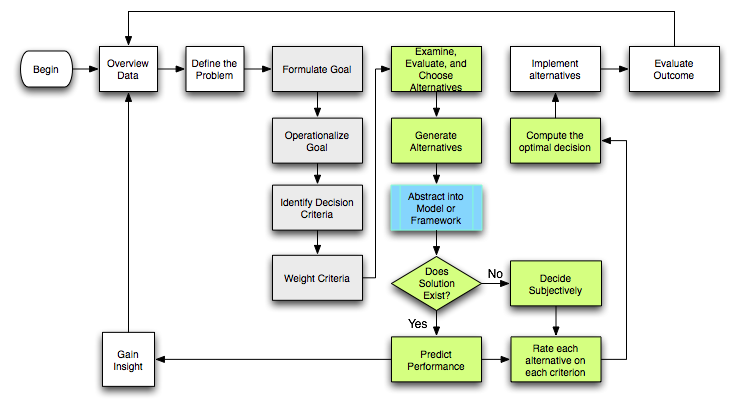
This alignment is powerful. When everyone is executing against the same plan, the business moves in a coordinated way. Financial projections become more accurate because they are directly linked to the operational plan. Customer service improves because production is aligned with actual demand signals. Inventory levels are optimized because the company isn't holding goods it doesn't plan to sell.
A misaligned plan is a recipe for value leakage. For example, a consumer goods company once launched a major promotion without informing the supply team. The campaign was a huge success, driving demand up 300%. But because the factory and suppliers were unaware, the company could only fulfill a fraction of the orders, resulting in millions in lost revenue and countless frustrated customers.
Achieving this level of integration is a journey. It requires strong executive sponsorship, a commitment to collaboration, and the discipline to follow the process every month. But for companies that succeed, the reward is a supply chain that isn't just a cost center, but a true competitive advantage.
Let's check your understanding of these core concepts.
What is the primary problem that Demand-Supply Integration (DSI) is designed to solve?
The ultimate output of a successful Sales and Operations Planning (S&OP) process is a concept known as a 'single number culture'. What does this mean?
By mastering these principles, you can help steer an organization toward a more synchronized and profitable future.