Mastering Strategic Planning
Strategic Analysis
Understanding Your Battlefield
Before you can make a plan, you need to understand the landscape. In business, this means getting a clear picture of your company's situation, the industry it operates in, and the wider world. Strategic analysis is the process of gathering and examining this information to make smarter decisions. It's about asking the right questions to understand where you stand right now.
We'll look at three powerful tools that help organizations do this: SWOT analysis, Porter's Five Forces, and PESTEL analysis. Each one provides a different lens for viewing the business environment, and together they create a comprehensive understanding.
SWOT: The Internal and External View
One of the most popular tools for strategic analysis is the SWOT analysis. It’s a simple yet effective framework that helps you organize your thoughts about a company's position. SWOT is an acronym for Strengths, Weaknesses, Opportunities, and Threats.
The framework is split into two parts: internal factors and external factors.
Internal Factors: These are things the organization has some control over. They are specific to the company itself.
- Strengths: What does the company do well? This could be a strong brand reputation, a talented team, efficient processes, or proprietary technology.
- Weaknesses: Where does the company struggle? Examples include outdated technology, a lack of funding, a poor location, or gaps in expertise.
External Factors: These are things happening outside the organization, in the market or the world at large. The company can't control them, but it can react to them.
- Opportunities: What external trends could the company take advantage of? This might be a new market opening up, a competitor going out of business, or changing customer tastes that favor your products.
- Threats: What external factors could harm the company? This could be a new competitor, changing regulations, an economic downturn, or negative press.
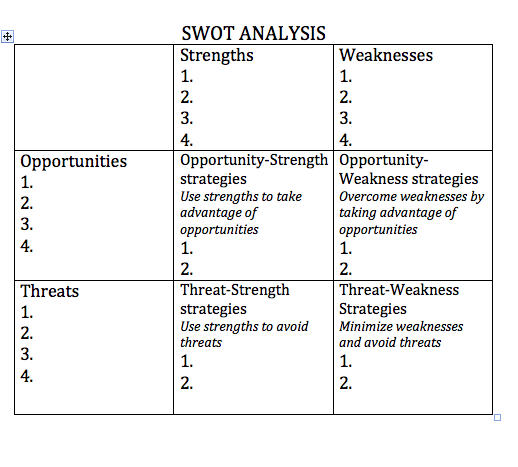
The key is to remember that Strengths and Weaknesses are internal to your organization, while Opportunities and Threats are external.
By mapping these four areas, a company gets a well-rounded view of its current situation. This helps them leverage what they're good at, address their shortcomings, capitalize on favorable conditions, and guard against potential dangers.
Porter's Five Forces: Sizing Up the Competition
While SWOT looks at the company and its environment broadly, Porter's Five Forces model zooms in on the industry itself. Developed by Harvard Business School professor Michael Porter, this framework helps businesses understand the competitive pressures in their market. It reveals how attractive an industry is—in other words, how easy it is to make a profit.
The five forces are:
-
Threat of New Entrants: How easy is it for new competitors to enter your market? If it’s easy, profitability will be lower because new players will constantly challenge existing ones. Industries with high barriers to entry, like needing a huge factory or complex patents, are more protected.
-
Bargaining Power of Buyers: How much power do your customers have to drive down your prices? If you have only a few large customers, they have a lot of power. If you have millions of individual customers, their power is much lower.
-
Bargaining Power of Suppliers: How much power do your suppliers have to raise their prices? If there's only one supplier for a critical component you need, that supplier has significant power over your costs.
-
Threat of Substitute Products or Services: Is it easy for customers to find a different way of doing what you do? For example, video conferencing is a substitute for business travel. A high threat of substitution can cap the prices you can charge.
-
Rivalry Among Existing Competitors: How intense is the competition among the players already in the industry? In a market with many companies selling similar products, rivalry is high, which often leads to price wars and lower profits.
PESTEL: The Big Picture
Our final tool, PESTEL analysis, helps you zoom out and look at the macro-environment. These are the broad, external factors that can affect an entire industry or even the whole economy. PESTEL is an acronym that stands for Political, Economic, Social, Technological, Environmental, and Legal.
By systematically considering each of these areas, a company can spot opportunities and threats coming from far outside its direct industry.
- Political: This includes government policy, political stability, trade tariffs, and tax policies. A new trade agreement could open up export opportunities, for instance.
- Economic: These are factors like economic growth rates, inflation, interest rates, and currency exchange rates. A recession might reduce consumer spending across the board.
- Social: This refers to societal attitudes, cultural trends, and demographics. The growing public interest in health and wellness is a social trend that has created markets for new products.
- Technological: This involves new technologies, automation, and the pace of technological change. The rise of the internet completely reshaped the retail industry.
- Environmental: These factors include weather, climate change, and environmental regulations. A company might face pressure to reduce its carbon footprint or use sustainable materials.
- Legal: This covers laws such as consumer protection, employment law, and health and safety regulations. New data privacy laws, for example, require companies to change how they handle customer information.
PESTEL analysis is about understanding the major forces of change that are shaping the world your business operates in. It helps you anticipate future challenges and opportunities.
Ready to test your knowledge on these strategic analysis tools?
A company develops a new, patented technology that makes its production process 50% more efficient than its competitors. In a SWOT analysis, what would this be considered?
Which strategic analysis tool is primarily used to understand the competitive pressures and profitability within a specific industry?
These three frameworks—SWOT, Porter's Five Forces, and PESTEL—are foundational tools. They don't give you the answers, but they help you ask the right questions to understand your strategic position.