Mastering Strategic Finance
Strategic Finance Fundamentals
Finance as a Compass
Most people think of finance as accounting—counting beans, balancing books, and making sure taxes are paid on time. That's part of the picture, but it's like looking at a ship's logbook to understand its voyage. It tells you where the ship has been, but not where it's going.
Strategic finance is the compass. It's the forward-looking discipline of using a company’s financial resources to achieve its long-term goals. It’s less about recording history and more about shaping the future.
Strategic finance answers the big questions: Where should we invest our money to grow? Should we enter a new market? Can we afford to acquire a competitor? It connects money to mission.
Strategic Finance
noun
The practice of managing a company's financial resources to achieve its long-term business objectives and create shareholder value.
Think of it this way: a company’s overall strategy might be to become the market leader in electric vehicles. Strategic finance translates that vision into a financial roadmap. It determines how much capital is needed, where it will come from (e.g., debt, equity), and how it will be allocated across projects like R&D, new factories, and marketing campaigns. This financial plan is the blueprint for turning an ambitious goal into a reality.
Strategic Finance is focused on optimizing a company’s underlying business model to create long-term business value by increasing revenue and decreasing costs.
Strategy vs. Operations
To fully grasp strategic finance, it's helpful to contrast it with its counterpart: operational finance. If strategic finance is the architect designing the skyscraper, operational finance is the construction crew making sure the building goes up safely and on budget.
Operational finance deals with the day-to-day financial activities of a business. This includes processing payroll, managing accounts payable and receivable, preparing monthly financial statements, and ensuring compliance with regulations. It’s essential for keeping the business running smoothly. Without efficient operations, even the best strategy will fail.
| Feature | Strategic Finance | Operational Finance |
|---|---|---|
| Time Horizon | Long-term (Years) | Short-term (Days, Weeks, Months) |
| Focus | Growth, value creation, direction | Efficiency, accuracy, control |
| Key Questions | What should we do next? | Are we doing things right? |
| Goal | Steer the ship | Keep the engine running |
Imagine a coffee shop chain. The operational finance team ensures each store has enough cash in the register, pays its suppliers for coffee beans on time, and generates accurate weekly sales reports. The strategic finance team, meanwhile, is analyzing whether to expand into a new country, deciding how to finance the purchase of 100 new espresso machines, or modeling the financial impact of launching a new line of bottled drinks.
Both are critical. One manages the present, while the other builds the future. They work together to create a stable, growing business.
Aligning Money with Mission
A company's goals and its financial plans can't exist in separate worlds. When a company says its goal is to be the most innovative in its industry, its financial strategy must back that up. This is called alignment.
Misalignment is a recipe for failure. If the stated goal is innovation, but the budget for research and development is repeatedly cut to boost short-term profits, the strategy is just empty words. The financial decisions a company makes are the truest expression of its priorities.
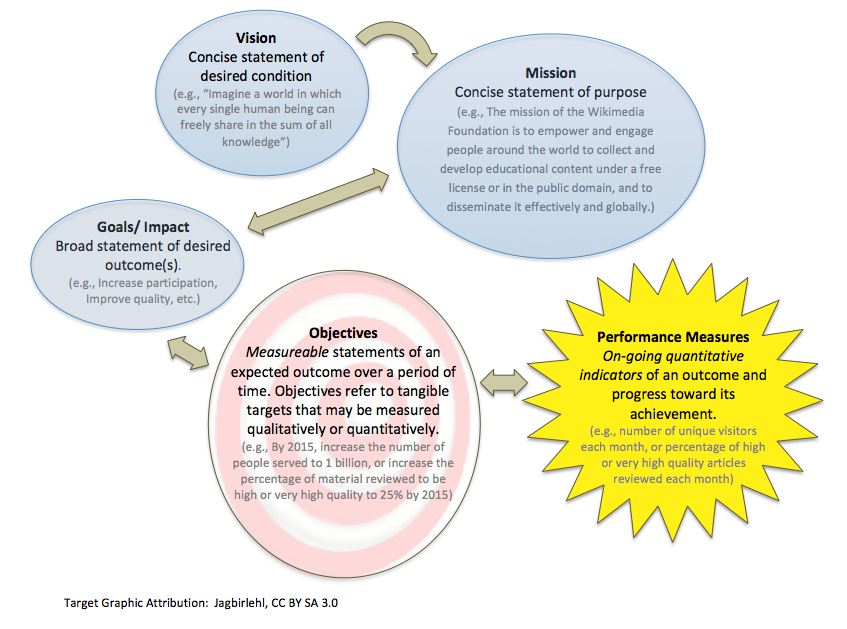
Financial planning is the tool that achieves this alignment. A good financial plan acts as a bridge between the company's vision and its daily activities. It outlines measurable financial targets—like revenue growth, profit margins, or return on investment—that are directly linked to strategic objectives.
This process forces clarity. It makes leaders ask tough questions and make deliberate trade-offs. Should we spend more on marketing to acquire new customers or on engineering to improve the product for existing ones? The financial plan provides a framework for making these decisions logically, ensuring that every dollar spent is pushing the company in the right direction.
The provided text uses a nautical analogy to describe finance. According to this analogy, strategic finance is the ship's compass, while traditional accounting is the...
Which of the following tasks falls under the responsibility of an operational finance team?
With these fundamentals in place, you can begin to see how financial management is not just a support function but a driving force behind business success.