Mastering Strapi for Headless CMS
Introduction to Strapi
What Is Strapi?
Imagine a traditional website as a restaurant. The kitchen (backend) prepares the food (content), and the dining room (frontend) is how customers experience it. In this setup, the kitchen and dining room are part of the same building. A traditional Content Management System (CMS) like WordPress works this way—the backend where you manage content and the frontend where it's displayed are tightly linked.
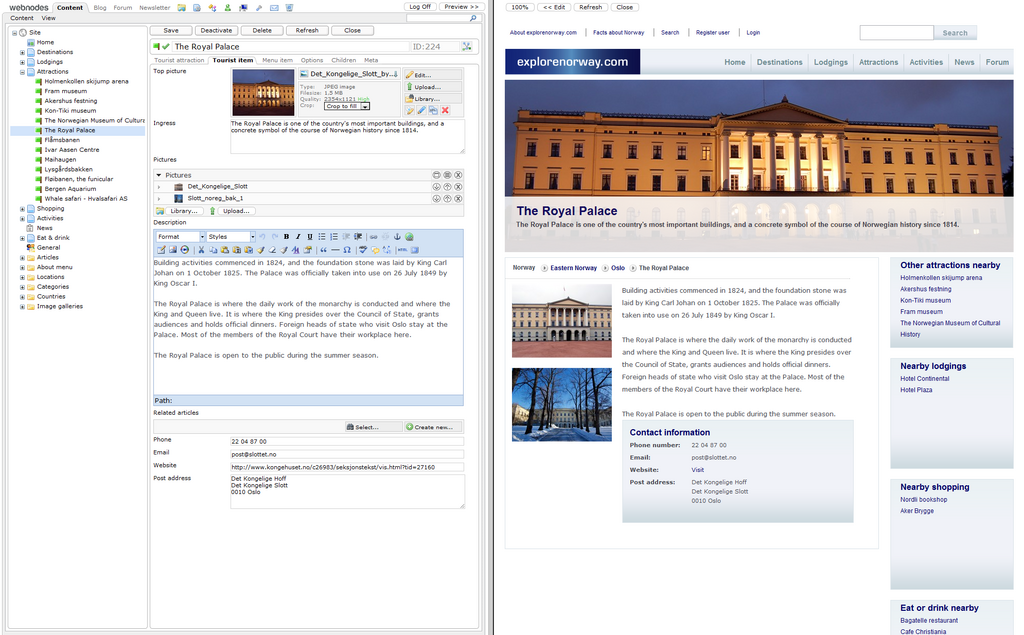
Strapi is a headless CMS. Using our restaurant analogy, a headless CMS is just the kitchen. It focuses solely on creating, storing, and managing the food (your content). It doesn't have a built-in dining room. Instead, it serves the food through an API, which is like a delivery window. Any 'dining room'—a website, a mobile app, a smartwatch display—can come to the window, pick up the content, and present it however it likes.
This separation, or decoupling, of the content management (backend) from the presentation layer (frontend) is the core idea of a headless CMS.
Built with Node.js, Strapi gives developers complete control over their content and how it's delivered. It's open-source, which means it's free to use and has a strong community supporting it.
Why Use a Headless CMS?
Decoupling your backend from your frontend has several major advantages. It changes how teams work and what's possible for your digital presence.
Faster Development: Frontend and backend developers can work at the same time. The backend team can build the content models and API in Strapi, while the frontend team builds the user interface. They just need to agree on the API structure. This parallel workflow significantly speeds up project timelines.
Omnichannel Experiences: Your content is no longer trapped in a single website template. The same content managed in Strapi can be pulled into a React website, an iOS app, an Android app, an email campaign, or even an IoT device. You write it once and deliver it everywhere.
Improved Performance & Security: Because the frontend is separate, it can be built using modern, fast technologies like static site generators (Gatsby, Next.js) or single-page applications (React, Vue). These sites are often much faster than traditional CMS-driven sites. The separation also reduces the attack surface on your content database, as it's not directly exposed to the user-facing side.
Key Features of Strapi
Strapi comes with a powerful set of features right out of the box.
Its API-first approach is central. Strapi automatically generates REST APIs or GraphQL endpoints for any content you create. You design your data structure, and Strapi builds the way for your applications to access it. No manual coding required for basic API setup.
The customizable admin panel is another standout feature. You can easily modify the user interface where content editors work, changing logos, colors, and the overall layout to match your brand. More importantly, you define your own 'Content Types.' Need a 'Product' with a name, price, and image? Or an 'Author' with a bio and a profile picture? You can build these structures in a few clicks through a visual interface.
Finally, Strapi offers flexible database options. It supports several popular databases, including PostgreSQL, MySQL, MariaDB, and SQLite. This means you can choose the database that best fits your project's needs and your team's expertise.
Let's check your understanding of these core concepts.
Using the restaurant analogy, how is a headless CMS like Strapi best described?
Which of the following is the primary reason a headless CMS enables 'omnichannel experiences'?
By separating content management from content presentation, Strapi provides a flexible and powerful foundation for modern digital projects.