Mastering Stoichiometry for 10th Grade Chemistry
Introduction to Stoichiometry
The Recipe of Chemistry
Think of a chemical reaction like a recipe. To bake a cake, you need specific amounts of flour, sugar, and eggs. If you use the wrong amounts, you won't get the cake you want. Chemistry works the same way. You can't just throw random amounts of chemicals together and hope for the best.
Stoichiometry
noun
The calculation of reactants and products in chemical reactions. It's the quantitative relationship between the different substances involved.
Stoichiometry is the chemistry version of a recipe. It allows us to predict the exact amounts of reactants needed and products formed in a chemical reaction. To do this, we rely on a tool you're already familiar with: the balanced chemical equation.
Balancing chemical equations is essential in understanding chemical reactions, ensuring that the law of conservation of mass is followed.
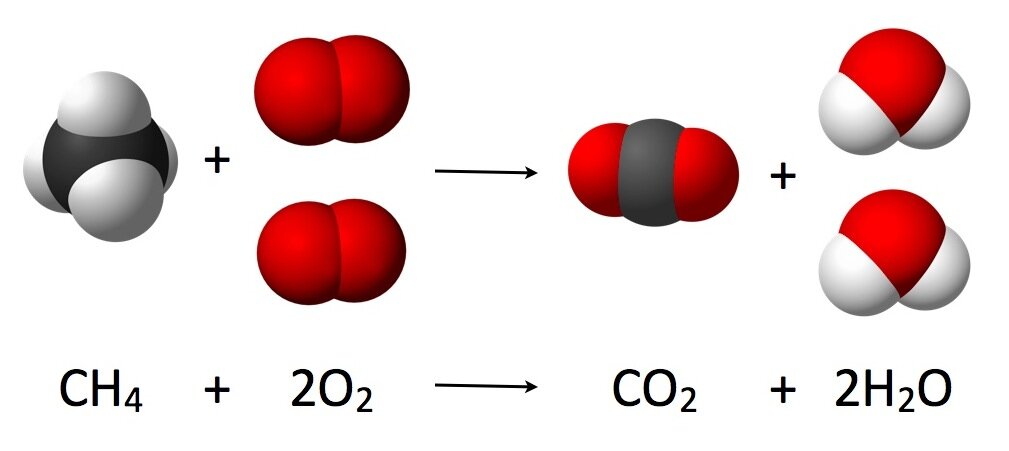
A balanced equation is the foundation of all stoichiometric calculations. It tells us the precise proportions in which substances react and are produced, ensuring that no atoms are created or destroyed. The numbers in front of each chemical formula, the coefficients, are the key to unlocking these proportions.
Reading the Ratios
The coefficients in a balanced equation don't just count individual atoms or molecules; they represent the ratio of moles. This is the heart of stoichiometry. A mole is simply a unit for a specific quantity ( particles), just like a dozen is a unit for 12. Using moles allows us to scale up from the atomic level to the amounts we can actually measure in a lab.
Let's look at the combustion of methane again. The balanced equation gives us powerful information about the mole ratios.
These mole ratios act as conversion factors. If you know the number of moles of any one substance in the reaction, you can use the mole ratio from the balanced equation to find the number of moles of any other substance.
For example, the ratio between and is 1:2. This means for every 1 mole of methane you burn, you will produce 2 moles of water.
Stoichiometry in the Real World
Stoichiometry isn't just an academic exercise; it's essential for countless practical applications. In manufacturing, engineers use it to calculate how much product they can make from their starting materials, which helps them control costs and minimize waste.
Pharmacists use it to formulate drugs with precise amounts of active ingredients. Environmental scientists use it to measure the concentration of pollutants in the air and water, like calculating the amount of acid rain produced from sulfur dioxide emissions.
Understanding these fundamental relationships is the first step toward mastering chemical reactions. It allows chemists to move from simply observing what happens to precisely controlling and predicting the outcomes.
Ready to check your understanding? Let's see what you've learned.