Mastering Stock Market Trading Fundamentals
Market Dynamics and Execution
The Price Isn't The Price
When you look up a stock, you see a single price. But when you go to trade it, there are always two: the price to buy and the price to sell. The price you can sell for is the bid, which is the highest price any buyer is currently offering. The price you can buy for is the ask (or offer), the lowest price any seller is currently accepting.
The ask price is always higher than the bid price. This gap between them is called the bid-ask spread.
Think of the spread as a built-in transaction cost. If you buy a stock at the ask price and immediately sell it at the bid price, you will lose money. The size of this spread tells you a lot about a stock's — how easily it can be bought or sold without affecting its price.
| Market Condition | Bid-Ask Spread | Implication |
|---|---|---|
| High Liquidity | Narrow (e.g., $10.00 / $10.01) | Low transaction cost, easy to trade. |
| Low Liquidity | Wide (e.g., $10.00 / $10.50) | High transaction cost, harder to trade. |
This spread exists because of — firms or individuals who provide liquidity by being willing to buy and sell the same stock simultaneously. They profit from the spread. In exchange, they ensure there's almost always someone to trade with, making the market run smoothly.
Executing Your Trade
When you decide to trade, you need to tell your broker how to execute the order. The type of order you place has a huge impact on the price you ultimately get.
Market Order
noun
An instruction to buy or sell a stock immediately at the best available current price. It prioritises speed over price.
A market order is simple: you get your shares, and you get them now. But this speed comes with a risk called slippage. This is the difference between the price you expected to get when you clicked the button and the price you actually got. In a fast-moving or illiquid market, that difference can be significant. The price can move against you in the milliseconds it takes to execute the trade.
Limit Order
noun
An instruction to buy or sell a stock at a specific price or better. It prioritises price over speed.
A limit order gives you control. If you want to buy a stock that's trading at $10.05, you can place a limit order at $10.00. Your order will only execute if the price drops to $10.00 or lower. The trade-off is that your order might never get filled if the price never reaches your limit.
Managing Your Risk
Stop orders are designed to limit losses or lock in profits. The most common is the stop-loss order.
A stop order is an instruction to place a market order once a stock's price reaches a specific point, known as the stop price.
Let's say you own a stock trading at $50 and want to limit your potential loss. You could place a stop-loss order at $45. If the price drops to $45, your stop order is triggered, and it immediately becomes a market order to sell.
This is a crucial point. It does not guarantee a sale at $45. In a severe downturn or a , the price could gap down instantly. Your stop at $45 triggers, but the next available bid might be $40. Your market order executes there, resulting in a much larger loss than you anticipated.
To understand why prices can move so quickly, it helps to look beyond the best bid and ask. The order book shows the full list of buy and sell limit orders waiting to be filled. This is sometimes called Level 2 data.
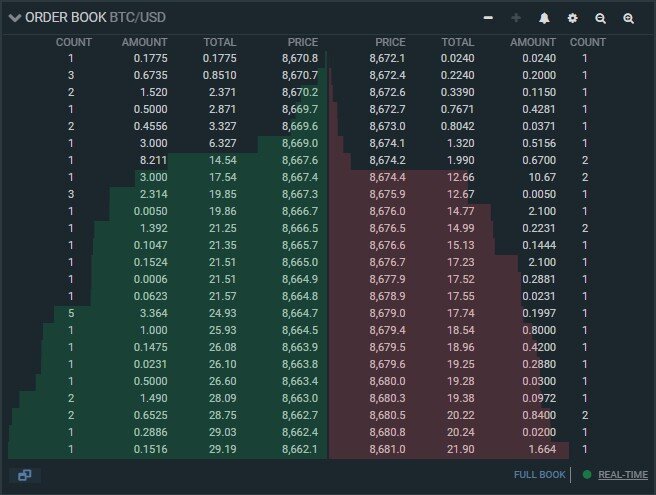
The order book reveals market depth. If you see large buy orders clustered just below the current price, that's called support. If you see large sell orders above, that's resistance. In a flash crash, the buy orders (the bids) can vanish instantly, leaving a vacuum that the price falls through until it hits a new set of buyers.
If you wish to buy a share on the stock market, which price will you typically pay?
A share has a bid price of £10.45 and an ask price of £10.50. If you buy one share and immediately sell it, what would be the result of your transactions, ignoring any broker fees?
Understanding these mechanics is the first step toward moving from simply buying stocks to actively trading them.