Mastering Stock Market Fundamentals for Confident Investing
Stock Market Basics
What Is the Stock Market?
The stock market isn't a physical place, but a huge network where shares of public companies are bought and sold. Think of it as a giant auction house that connects companies needing money to grow with people who want to invest their savings.
A company can decide to go "public" by selling small pieces of itself, called shares or stocks. When you buy a share, you become a part-owner of that company. The company gets the cash it needs to hire people, build factories, or develop new products.
This process serves two main functions: helping companies raise capital and allowing investors to share in their potential success.
The first time a company offers its stock to the public is called an Initial Public Offering, or IPO. This happens in the primary market, where the company sells its shares directly to investors and receives the money.
After the IPO, things move to the secondary market. This is what most people think of as the stock market. Here, investors buy and sell shares from one another. The company isn't directly involved in these transactions, but the trading activity determines the stock's current price.
Where Does Trading Happen?
Stock trading happens on stock exchanges. These are the organized marketplaces where buyers and sellers come together. While the term might conjure images of crowded, noisy floors, most trading today is done electronically.
The New York Stock Exchange (NYSE) is one of the most famous. It started under a buttonwood tree in 1792 and still has a physical trading floor, though electronic trading now dominates.
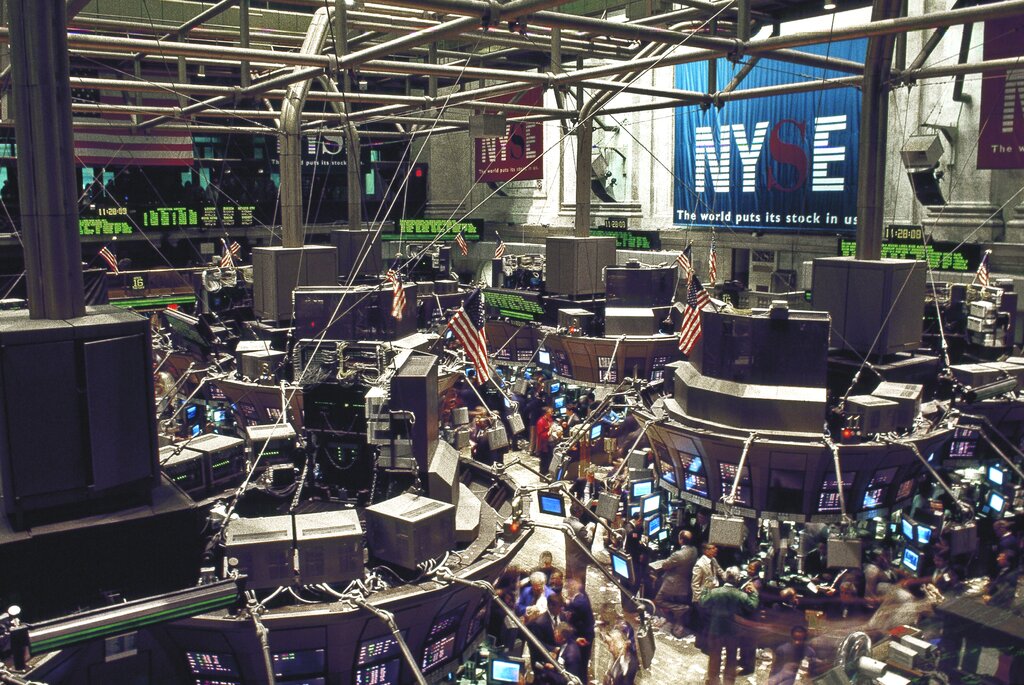
Another major U.S. exchange is the NASDAQ. Unlike the NYSE, the NASDAQ has always been a fully electronic market. It's known for listing many of the world's biggest technology companies.
Every major economy has its own stock exchanges, like the Tokyo Stock Exchange in Japan, the London Stock Exchange in the UK, and the National Stock Exchange in India.

The People in the Middle
If you want to buy or sell stocks, you can't just walk onto the floor of the NYSE. You need to go through an intermediary, which is usually a broker.
A stockbroker is a licensed professional or firm that buys and sells stocks on your behalf. When you place an order to buy 10 shares of a company, your broker executes that trade for you on the exchange. Think of them like a real estate agent for stocks; they connect buyers and sellers and typically charge a small fee or commission for the service.
You'll also hear about dealers. The main difference is that dealers trade for their own accounts, buying and holding inventories of stocks to sell to their clients. Brokers act as agents, while dealers act for themselves.
Measuring the Market's Mood
With thousands of companies to track, how can you tell if the market is generally having a good day or a bad one? That's where stock indices come in.
A stock index is a curated list of stocks that represents a portion of the market. Its performance gives you a quick snapshot of how that specific market segment is doing. It’s like a report card for the market.
When you hear on the news that "the market is up today," they are usually referring to the performance of a major index.
Two of the most frequently cited indices are the Dow Jones Industrial Average and the S&P 500.
| Index | What it Tracks | How it's Calculated |
|---|---|---|
| Dow Jones (DJIA) | 30 large, well-established U.S. companies. | Price-weighted: higher-priced stocks have more influence. |
| S&P 500 | 500 of the largest U.S. companies. | Market-cap-weighted: companies with a higher total value have more influence. |
The S&P 500 is often considered a better representation of the overall U.S. market because it includes many more companies and its weighting method reflects a company's actual size. The Dow is historically significant but represents only a small slice of the economy.
Now that you have a grasp of the basic parts of the stock market, let's test your knowledge.
When a company offers its shares to the public for the very first time in an Initial Public Offering (IPO), this transaction occurs in the:
True or False: The NASDAQ has always operated as a fully electronic stock exchange without a physical trading floor.
Understanding these core concepts—what the market is for, where it happens, who the players are, and how we measure it—is the first step toward becoming a knowledgeable investor.