Mastering Stage 9 Mathematics for Cambridge IGCSE
Algebraic Reasoning
Expanding double brackets
When you multiply two linear expressions, you are finding the product of two binomials. A reliable way to do this is to ensure every term in the first bracket multiplies every term in the second. Think of it like a grid.
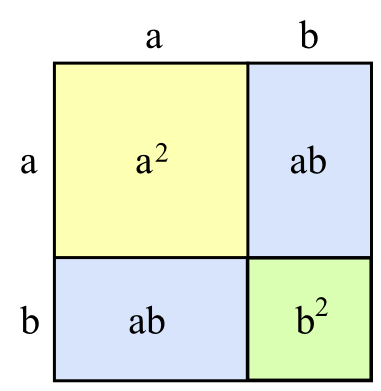
For an expression like , we multiply each part systematically:
- First terms:
- Outer terms:
- Inner terms:
- Last terms:
Then, we collect the like terms (usually the 'outer' and 'inner' products) to simplify the final expression.
Let's try an example: Expand .
First: Outer: Inner: Last:
Combining them gives . Simplifying the middle terms, we get .
Factorising expressions
Factorising is the reverse of expanding. It's about finding the expressions that were multiplied together to get the one you're looking at. The first step is always to look for a common factor across all terms.
Consider . What's the highest common factor of and ? Both terms can be divided by 3 and by . So, the highest common factor is . We can write the expression as .
Sometimes, there isn't a common factor for all terms. For expressions with four terms, we can try factorising by grouping. We group the terms into pairs and factorise each pair separately. If it works, you'll find a common binomial factor.
A special and very useful pattern to recognise is the difference of two squares.
For example, to factorise , we notice that is and is . So, using the pattern, we get . This shortcut saves you from more complex methods and appears frequently.
Indices and algebraic fractions
The laws of indices you know for numbers also apply to algebraic terms. They are essential for simplifying more complex expressions, especially fractions.
| Rule | Formula | Example |
|---|---|---|
| Multiplication | ||
| Division | ||
| Power of a Power | ||
| Zero Index |
These rules are the key to simplifying algebraic fractions. The main strategy is to factorise the numerator and the denominator completely, and then cancel out any common factors. A term can only be cancelled if it is a factor of the entire numerator and the entire denominator.
Once factorised, we can see the common factor of in both the numerator and the denominator. We can cancel these out.
Expand and simplify the expression .
Factorising is the reverse of expanding brackets.
These techniques for manipulating expressions form the foundation for solving equations and working with functions in more advanced mathematics.