Mastering Spoken English Fluency
Pronunciation Basics
The Building Blocks of Sound
When you look at the English alphabet, you see 26 letters. But when you listen to English being spoken, you hear many more sounds. This is because the relationship between letters and sounds isn't always one-to-one. The word "through," for example, has seven letters but only three sounds.
These basic units of sound are called phonemes. Think of them as the individual Lego blocks that build spoken words. English uses about 44 of them. Once you start to hear these distinct sounds, you can improve your pronunciation dramatically.
Phoneme
noun
The smallest unit of sound in a language that can distinguish one word from another.
Understanding these phonemes is the first step to speaking more clearly and confidently. We'll break them down into two main categories: vowels and consonants.
Vowel Sounds
Vowels are sounds produced with an open vocal tract. Your tongue, lips, and jaw move to change the shape of your mouth, but they don't block the air from flowing out. This is what gives each vowel its unique sound.
English has around 20 vowel sounds, which are often grouped into categories like short vowels and long vowels.
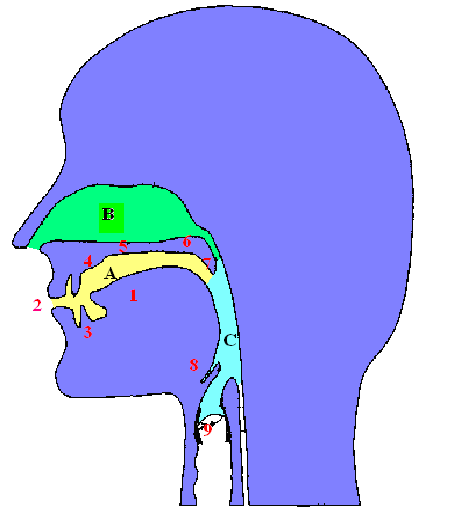
Short vowels are quick, punchy sounds. You can hear them in words like cat, bed, and sit. Long vowels often sound like you're saying the name of the letter itself, as in lake (long 'a'), see (long 'e'), or ice (long 'i').
One of the most common challenges for learners is telling the difference between the short 'i' sound in 'ship' /ʃɪp/ and the long 'ee' sound in 'sheep' /ʃiːp/. The key is the length of the sound. The vowel in 'sheep' is held for a fraction longer.
| Short Vowel Sound | Example | Long Vowel Sound | Example |
|---|---|---|---|
| /ɪ/ as in pit | pit | /iː/ as in feet | feet |
| /æ/ as in cat | cat | /eɪ/ as in late | late |
| /ɒ/ as in hot | hot | /oʊ/ as in boat | boat |
| /ʊ/ as in put | put | /uː/ as in boot | boot |
Consonant Sounds
Consonants are sounds made by partially or completely blocking the airflow from your mouth. There are 24 consonant sounds in English. One of the most useful ways to understand them is by separating them into two groups: voiced and voiceless.
Voiced consonants use your vocal cords to create a vibration or buzz. Voiceless consonants do not; they are just puffs of air shaped by your mouth.
Many consonants come in pairs, where the only difference is this vibration. For example, /p/ and /b/ are made with the same mouth shape, but /b/ is voiced. The same is true for /t/ and /d/, and for /s/ and /z/.
| Voiceless Sound | Example | Voiced Sound | Example |
|---|---|---|---|
| /p/ | pat | /b/ | bat |
| /t/ | tap | /d/ | dog |
| /k/ | cat | /g/ | go |
| /f/ | fan | /v/ | van |
| /s/ | sip | /z/ | zoo |
Some of the trickiest consonants for learners are 'th', 'r', and 'l'.
For the 'th' sound (like in think or that), your tongue tip should gently touch the back of your top front teeth.
For the 'r' sound (like in red), the tip of your tongue should curl up and back slightly in your mouth, without touching the top.
For the 'l' sound (like in light), the tip of your tongue presses firmly against the ridge right behind your top teeth.
How to Practice
Improving pronunciation takes practice, but it doesn't have to be boring. The goal is to build muscle memory in your mouth.
Listen and Repeat: Find audio of native speakers and mimic what you hear. Pay close attention to the rhythm and melody of the sentences, not just the individual words. This is often called shadowing.
Record Yourself: Use your phone to record yourself saying tricky words or phrases. Then, compare your recording to a native speaker's. It might feel strange at first, but it's one of the best ways to hear what you need to work on.
Focus on Minimal Pairs: These are pairs of words that differ by only one sound, like 'ship' and 'sheep', or 'fan' and 'van'. Practicing them back-to-back helps train your ear and your mouth to notice and produce the subtle differences.
Now, let's test what you've learned about the fundamental sounds of English.
What is a phoneme?
How is a consonant sound produced?
Keep practicing these building blocks. With a little attention each day, you'll hear and feel a real difference in your speaking.