Mastering Spoken English
English Sound System
The Building Blocks of Sound
Spoken English is built from small units of sound called phonemes. Think of them like Lego bricks for words. While the English alphabet has 26 letters, there are around 44 of these distinct sounds. This mismatch is why spelling can be so confusing. The letter 'a' sounds different in cat, father, and late. To clear things up, we can use a special tool that gives every sound its own unique symbol.
The International Phonetic Alphabet, or IPA, is a system where one symbol equals one sound, every time. It's like a universal cheat sheet for pronunciation.
Every sound in English falls into one of two categories: vowels or consonants.
Vowel
noun
A speech sound produced with an open vocal tract, so that the tongue does not touch the lips, teeth, or roof of the mouth.
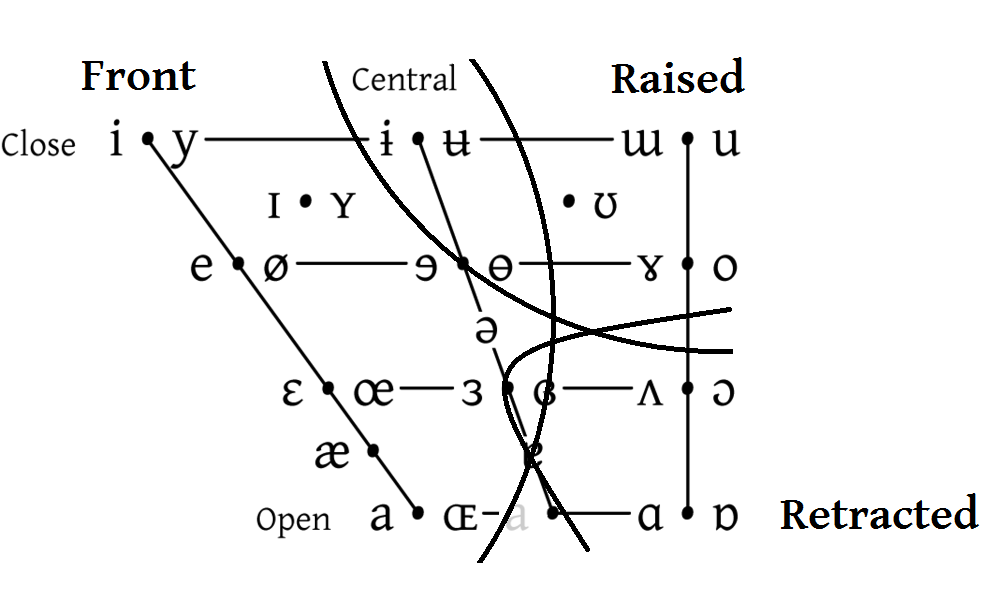
Vowels are the open, flowing sounds that form the core of a syllable. When you say a vowel, the air flows freely from your lungs and out of your mouth. The specific sound you make depends on the shape of your mouth—how high or low your tongue is, whether it's pushed forward or pulled back, and whether your lips are rounded or spread.
Consonant
noun
A speech sound that is articulated with complete or partial closure of the vocal tract.
Consonants are sounds made by partially or completely blocking the flow of air. This blockage can happen with your lips (like in /p/ and /b/), your teeth and tongue (like in /θ/ for thin), or other parts of your mouth. Unlike vowels, consonants create friction and interruption in the sound.
Tuning Your Ear
Some English sounds are very similar, and telling them apart can be tricky. A great way to practice is by using minimal pairs. These are pairs of words that differ by only a single sound.
For example, ship and sheep. The only difference is the vowel sound. Ship uses the short vowel /ɪ/, while sheep uses the long vowel /iː/.
Hearing the difference between these sounds is the first step. The next step is learning to produce them accurately yourself. Let's look at a few common minimal pairs that often challenge learners.
| Word 1 (IPA) | Word 2 (IPA) | The Key Difference |
|---|---|---|
| ship (/ʃɪp/) | sheep (/ʃiːp/) | Short vs. long vowel sound. Your lips are relaxed for /ɪ/ and spread for /iː/. |
| bad (/bæd/) | bed (/bɛd/) | Tongue position. Your jaw is lower and mouth wider for the /æ/ in bad. |
| think (/θɪŋk/) | sink (/sɪŋk/) | Tongue placement. For /θ/, the tip of your tongue touches your top teeth. For /s/, it's behind them. |
| van (/væn/) | ban (/bæn/) | Articulation. For /v/, your top teeth touch your bottom lip. For /b/, your lips press together. |
Practicing these pairs helps train your ear and your mouth to recognize and create the subtle differences that are crucial for clear English pronunciation.
Listen to native speakers, practise key sounds, use phonetic transcriptions, and break words into syllables.
By focusing on individual sounds first, you build a strong base. This foundation makes it much easier to tackle full words, sentences, and the natural rhythm of spoken English.
What is a phoneme?
Why can English spelling be confusing when compared to its pronunciation?